Hello.
We are Hanstep Korean Medicine Clinic, researching and treating ulcerative colitis since 2007.
Today is a follow-up.
Do you remember the patient I introduced last January? The one whose calprotectin came down very slowly.
At the time I said: “I think this patient will keep improving like this and finish treatment.”
What happened after that? That is today’s story.
Let me reintroduce her briefly.
A middle-aged woman.
Her ulcerative colitis symptoms began in June 2023. Her local clinic told her to go to a larger hospital, and she was diagnosed with ulcerative colitis at a general hospital.
She started on a 5-ASA preparation together with suppositories. Within one month her pancreatic enzyme levels rose as a side effect, so she stopped the Western medication.
5-ASA is the first drug used in ulcerative colitis treatment. Pentasa, Asacol and Mezavant all belong to this class. It is known as a relatively safe drug.
But that does not mean it has no side effects.
The most common are rash and diarrhea. Diarrhea is reported in about 8% of people taking 5-ASA.
And about 10% of people who take 5-ASA cannot tolerate it well enough to continue. That is one in ten.
Rarer but more serious side effects have also been reported: pancreatitis, liver toxicity, kidney injury, lung-related symptoms, and hair loss. Kidney injury occurs in about 0.3% of cases.
And then there is what happened to this patient — a rise in pancreatic enzymes.
Pancreatitis caused by 5-ASA is rare, occurring in fewer than one in 500 people.
But it has a particular characteristic: it happens regardless of dose.
Taking a smaller amount does not prevent it. It is the body reacting hypersensitively to the drug, so it can happen at any time.
And it usually appears within a few weeks of starting treatment. In her case it appeared at exactly one month.
Fortunately, in cases like this, stopping the drug usually leads to recovery.
I say this always: Western medications, large or small, all have side effects.
Of course, when they are needed, they should be used.
What matters is not ignoring the signal when a side effect appears.
This patient noticed that signal in time and stopped the drug.
After that she went without Western medication. But from late 2024 her inflammation markers began climbing, and by March 2025 calprotectin had risen to 322.
She had received six months of treatment at another Korean medicine clinic without meaningful improvement, so at the end of March 2025 she came to Hanstep Korean Medicine Clinic.
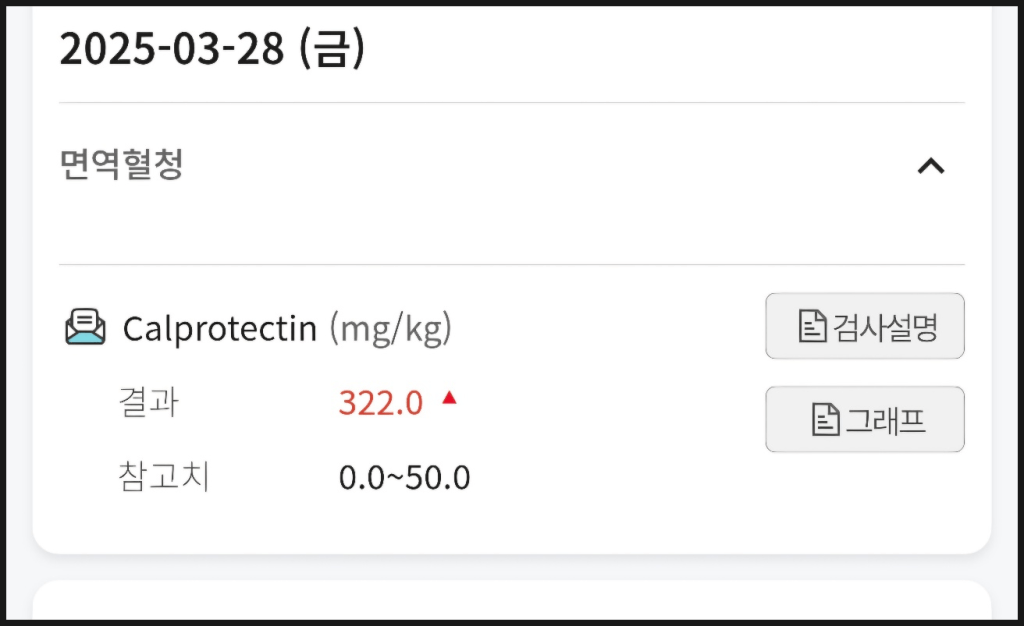
March 28, 2025. Calprotectin 322.
Height 160 cm, weight 45 kg. A BMI of only 17.5 — quite underweight.
Her appetite was moderate, but she ate only half a normal portion. In other words, her digestion was not working well.
Bowel movements were once a day, with mucus in the stool.
On April 2, a fecal occult blood test came back positive at 256.
She had thought there was only mucus in her stool, but there was bleeding she could not see.
Looking only at symptoms, it was easy to assume she was fine because nothing was severe. In reality there was both inflammation and bleeding.
Here is the full record over the seventeen months that followed. Values marked (H) were measured at the hospital; the rest at our clinic.
2025
Mar 28 — 322
Apr 2 — occult blood 256, positive
May 7 — 187
Jun 16 — 76 / occult blood 16, negative
Jul 10 — 132 (H)
Jul 21 — 197 / occult blood 27, negative
Aug 25 — 94
Sep 15 — 85
Oct 13 — 69 / occult blood 6, negative
Oct 16 — 33, CRP 0.2, ESR 10 (H)
Nov 10 — 63
Dec 8 — 25
2026
Jan 5 — 32
Feb 2 — 611
Feb 25 — 24
Mar 5 — 64 (H)
Mar 27 — 71
May 4 — 130
Jun 1 — 114
Jun 29 — 63
Jul 27 — 40
Aug 27 — 15, CRP 0.1 (H)
Now let me walk through what those numbers meant.
Treatment began with the digestive problem first.

May 7. Calprotectin 187.
In six weeks it had come down from 322 to 187. Not a dramatic drop — a modest one.
At this point her food intake increased to a full portion. Her digestion had improved considerably, so I changed the prescription to one that treats the inflammation itself.

June 16. Calprotectin 76.
This is a level we can consider normal.
And the fecal occult blood test came back at 16 — negative. The bleeding that had measured 256 was gone.
Less than three months into treatment, she had improved a great deal.
But this is where the story changes.
On July 10 a hospital test showed 132. Slightly up.
On July 21 our test showed 197. Occult blood was 27, still negative, but the inflammation marker had risen.
At times like this the prescription has to change. I changed it.
August 25. Calprotectin 94. Down somewhat.
September 15. Calprotectin 85.
Nearly a month had passed, and it went from 94 to 85. That is an ambiguous result. It had not failed to fall — but it fell far too little.
I gave real thought to changing the prescription.
But you must not abandon a prescription that is working out of impatience, so I decided to watch for one more month.
October 13. Calprotectin 69, occult blood 6, negative. At 69 it is essentially normal.
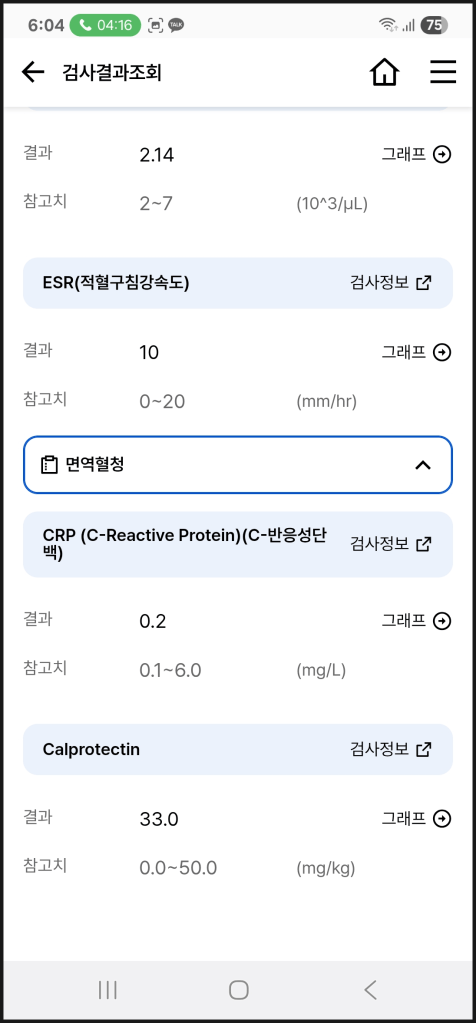
And three days later, on October 16, a hospital test showed calprotectin 33. Completely normal.
CRP was 0.2, also normal, and her ESR — which had been elevated at 27 when she first came — had come down to 10.
November 10. Calprotectin 63.
And on December 8, calprotectin 25. Completely normal.
That is where last January’s video ended.
So what happened after that?
January 5, 2026. Calprotectin 32. Still within the normal range.

Then the February 2 test came back at 611.
Surprising, isn’t it? It jumped from 32 to 611.
And in early February she did have some mild burning in her stomach and a little blood in her stool.
In cases like this, food is usually the problem. I had her be careful with food and adjusted the prescription.
This is not treatment failure.
In a patient with multiple causes, once the first and second causes have been cleared, the next one surfaces. That signal shows up as a number like this.

February 25. Calprotectin 24.
From 611 to 24 in three weeks.
A hospital test on March 5 also came back at 64 — within the normal range.
March 27. Calprotectin 71.
May 4. Calprotectin 130.
The numbers rise and fall a little. That was her pattern from the beginning — slowly, and in small oscillations.
Here I adjusted the prescription again.
June 1. Calprotectin 114.
June 29. Calprotectin 63. It began coming down.

And on July 27, calprotectin 40. Finally 40.
Clearly below 50.
Her weight kept increasing too. She came to us at 45 kg and had reached 48 kg.
Symptoms remained good throughout: one normal stool a day, no sense of incomplete evacuation, no blood and no mucus.
So one last confirmation remained. The colonoscopy.
She was examined at the hospital on August 27.
First the lab values: calprotectin 15, CRP 0.1. At 15, calprotectin is completely normal.
And she had the colonoscopy the same day. She told me they took biopsies from eight separate sites.
She went to hear the results on September 8.
The colonoscopy showed nothing abnormal. The hospital said there was no problem.
Let’s look at the images.
These are from before treatment.
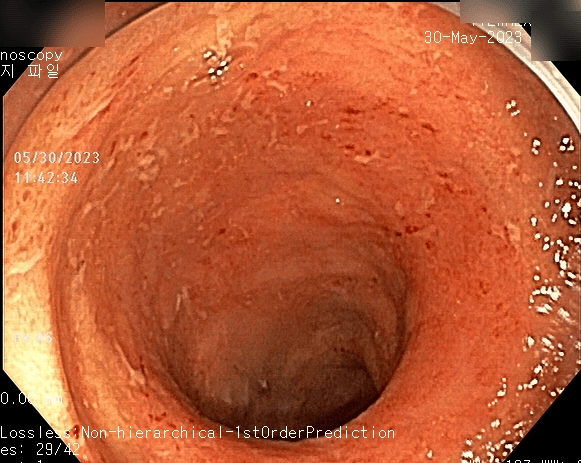
In 95% of ulcerative colitis patients, the inflammation sits in the sigmoid colon and the rectum.
This is a view of the sigmoid colon. The bowel wall is extensively eroded, and you can see inflammation and bleeding.
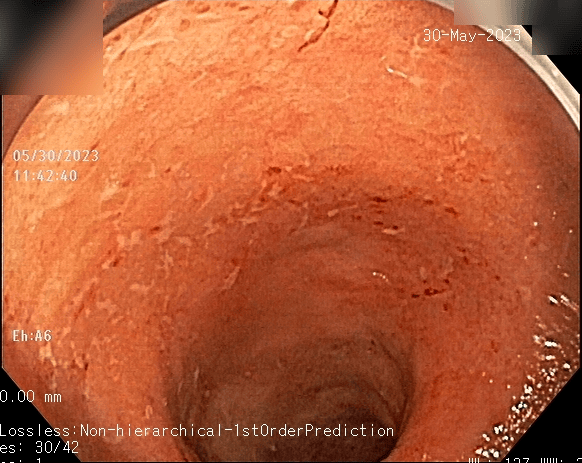
Here too you can see inflammation and bleeding on the bowel wall.
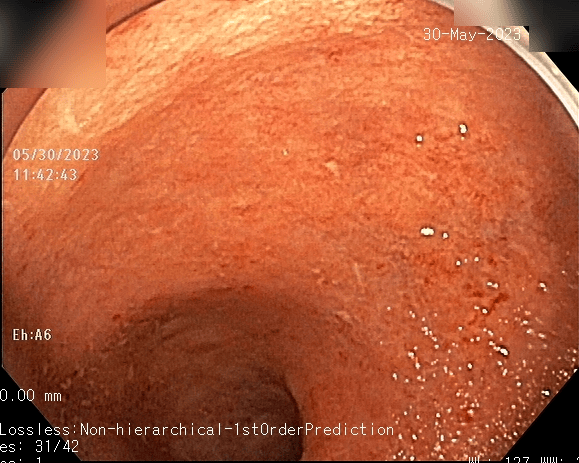
The bowel wall is eroded here as well.
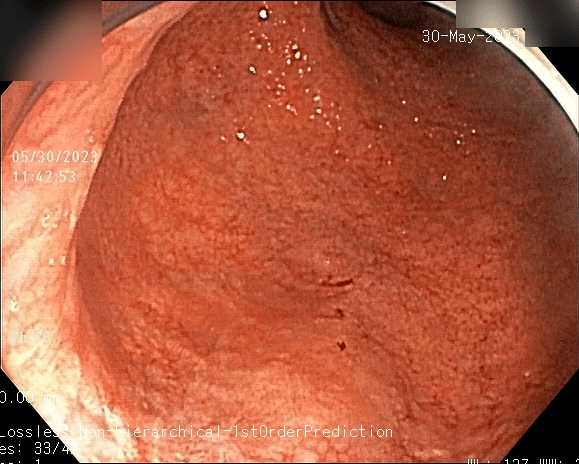
And the wall is swollen.
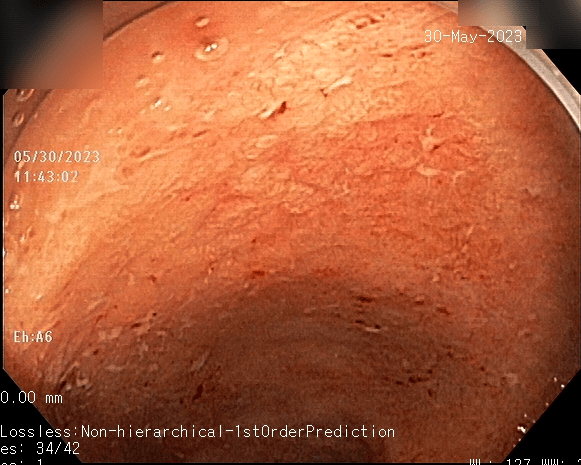
Swollen here too, with bleeding visible.
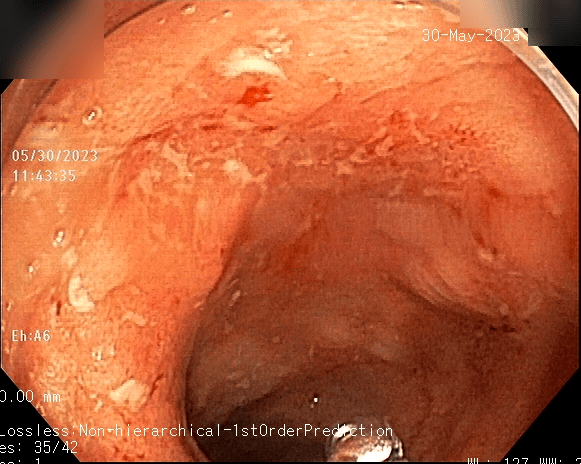
The rectum is swollen and eroded too, with bleeding visible.
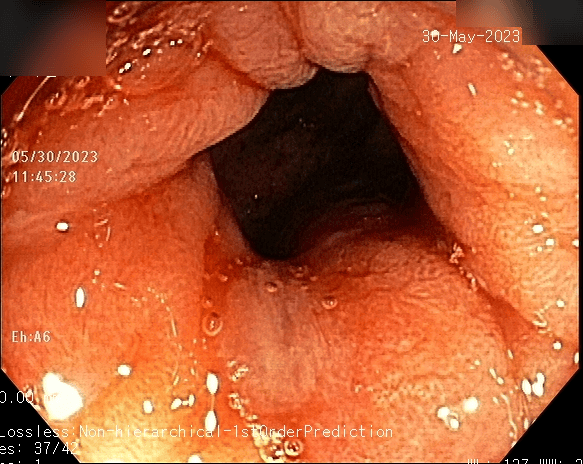
That is where the examination ends.
And these are from the colonoscopy performed in August 2026.
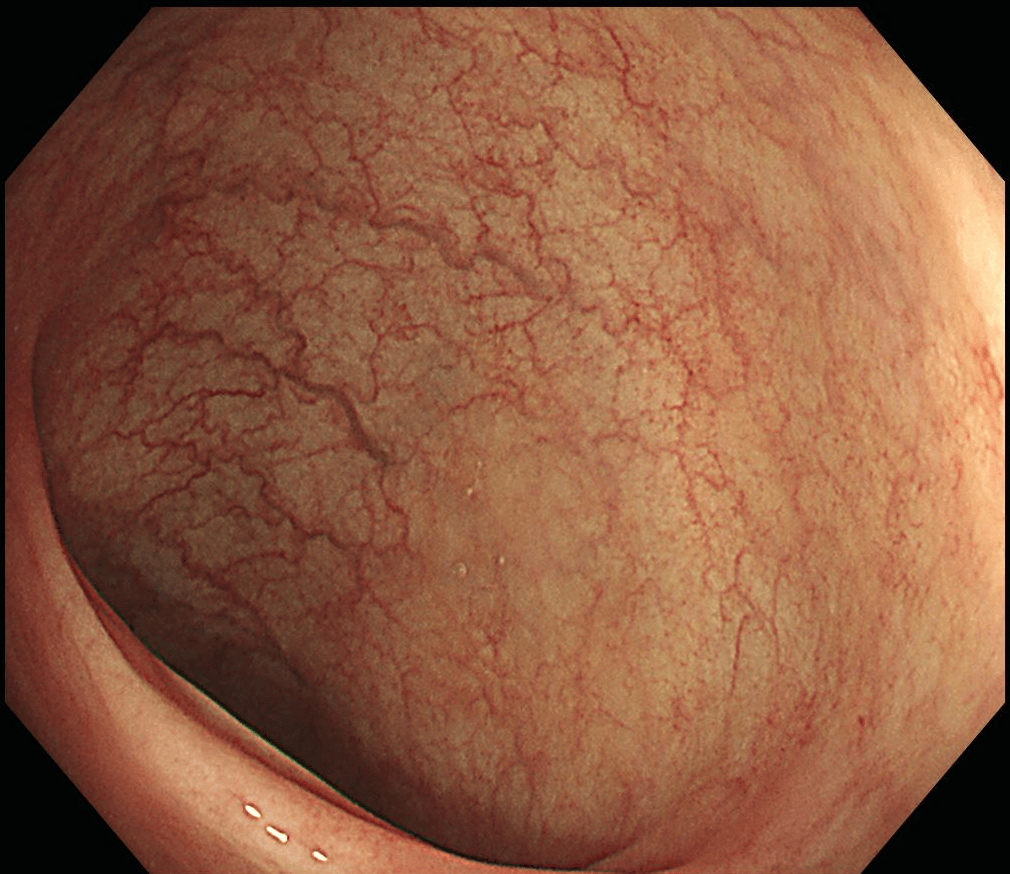
This is the sigmoid colon again. The bowel wall is clean, and the vascular pattern is sharp.
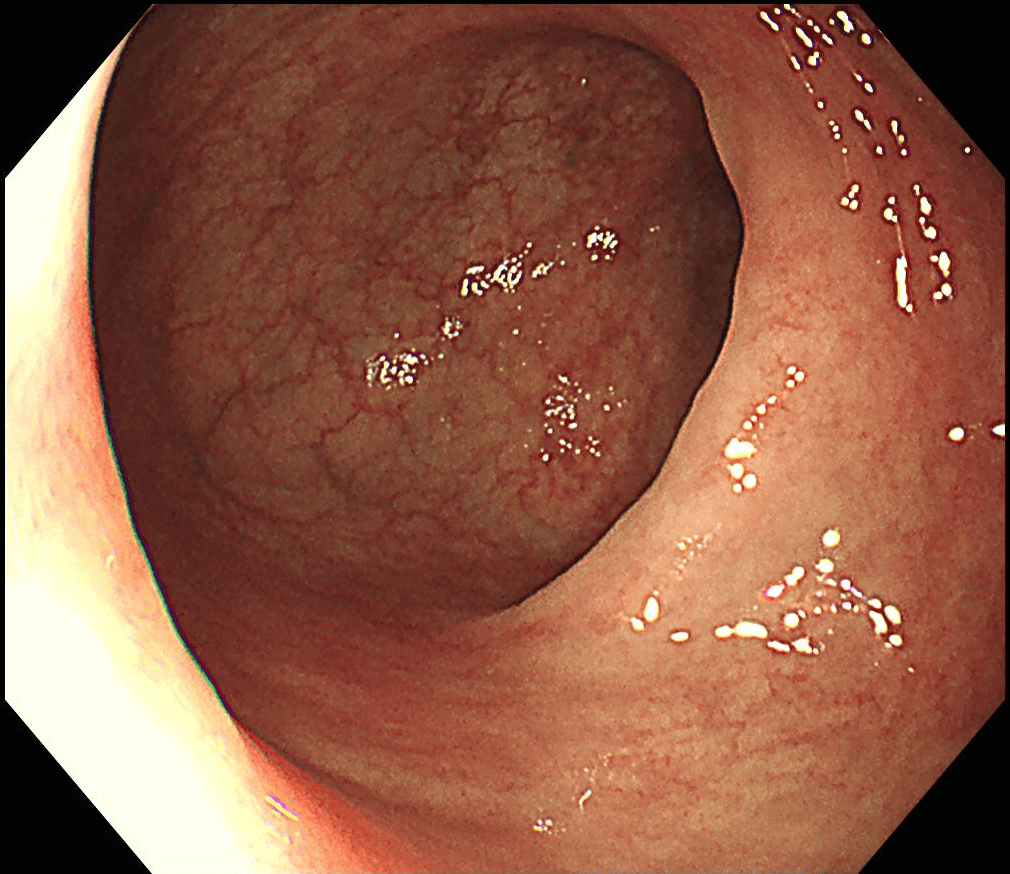
Here too the blood vessels show clearly.
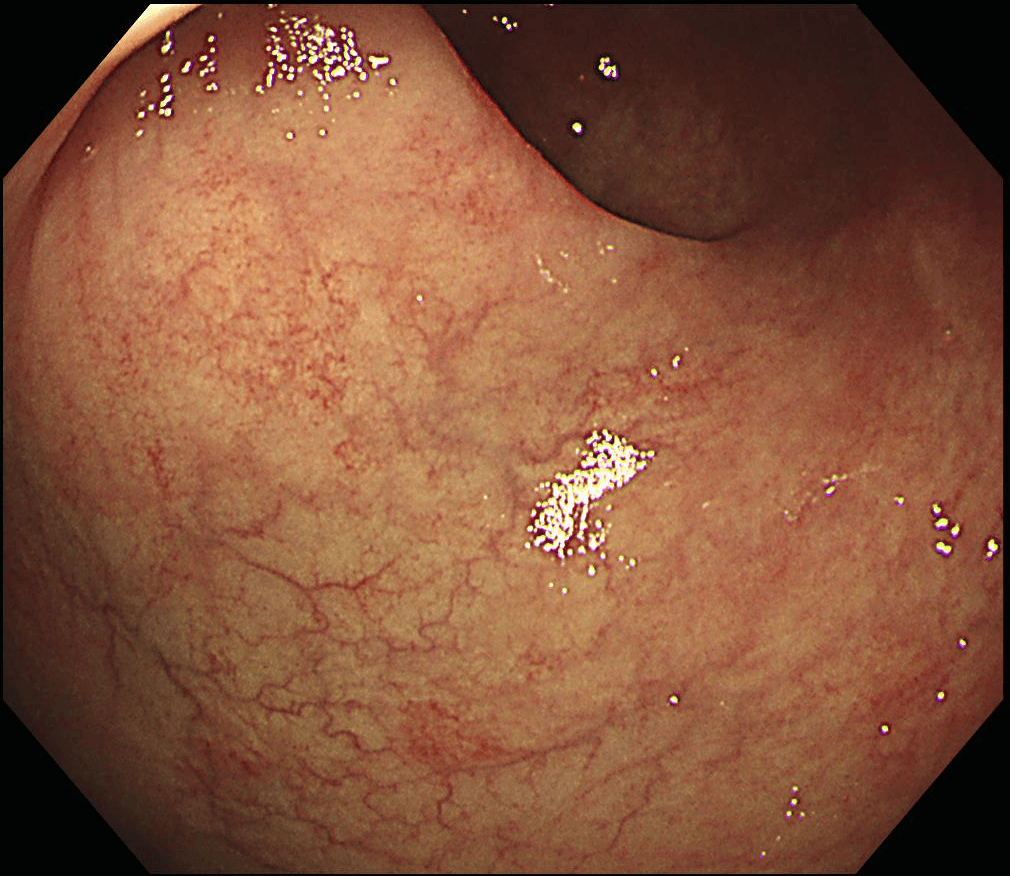
Nothing swollen and nothing eroded here either.
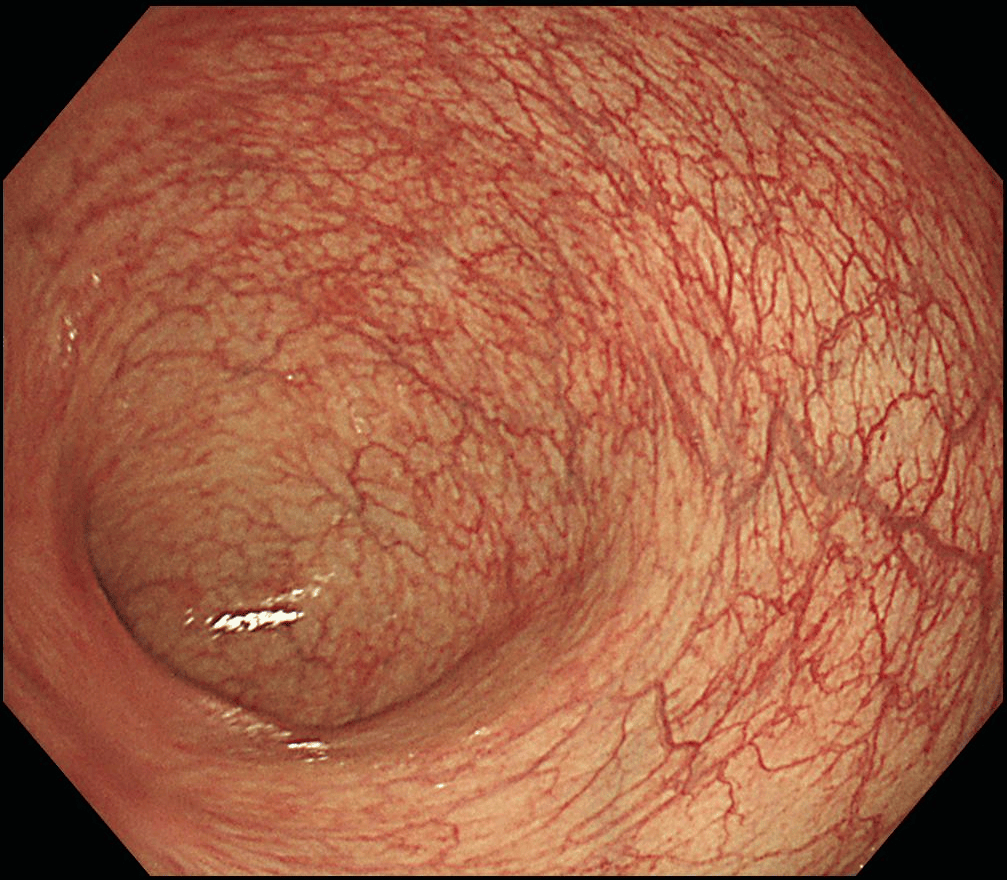
The wall is clean and the vascular pattern is sharp.
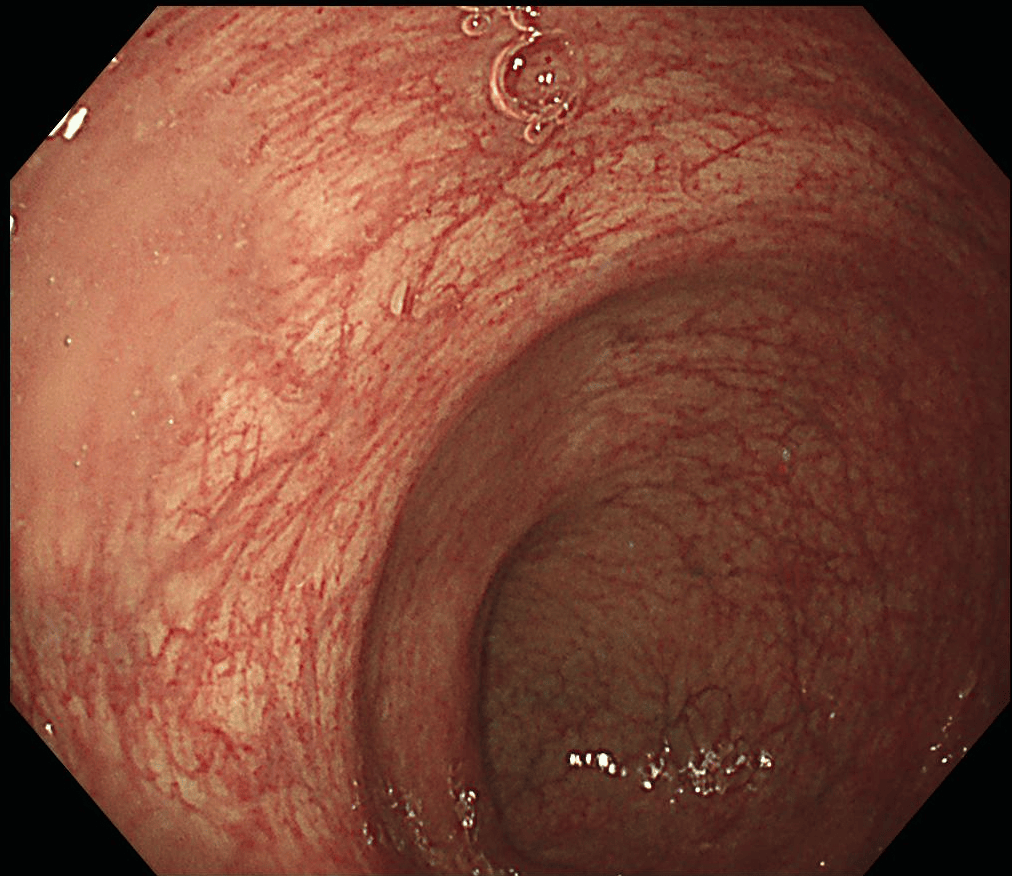
There is no bleeding anywhere.
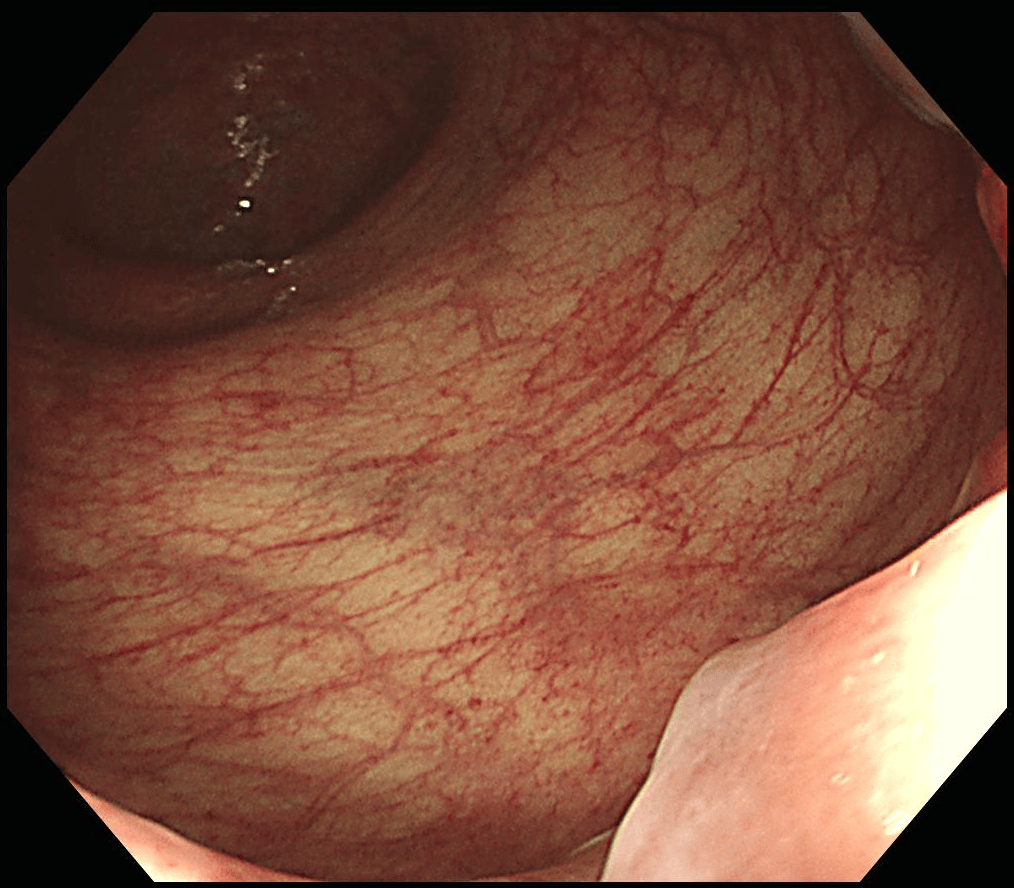
This is the rectum, and it looks completely clean and sharp. There is no eroded area anywhere.
Compared with the colonoscopy before treatment, the blood vessels are clearly visible throughout, there is no swelling of the bowel wall, and there is no mucus and no bleeding.
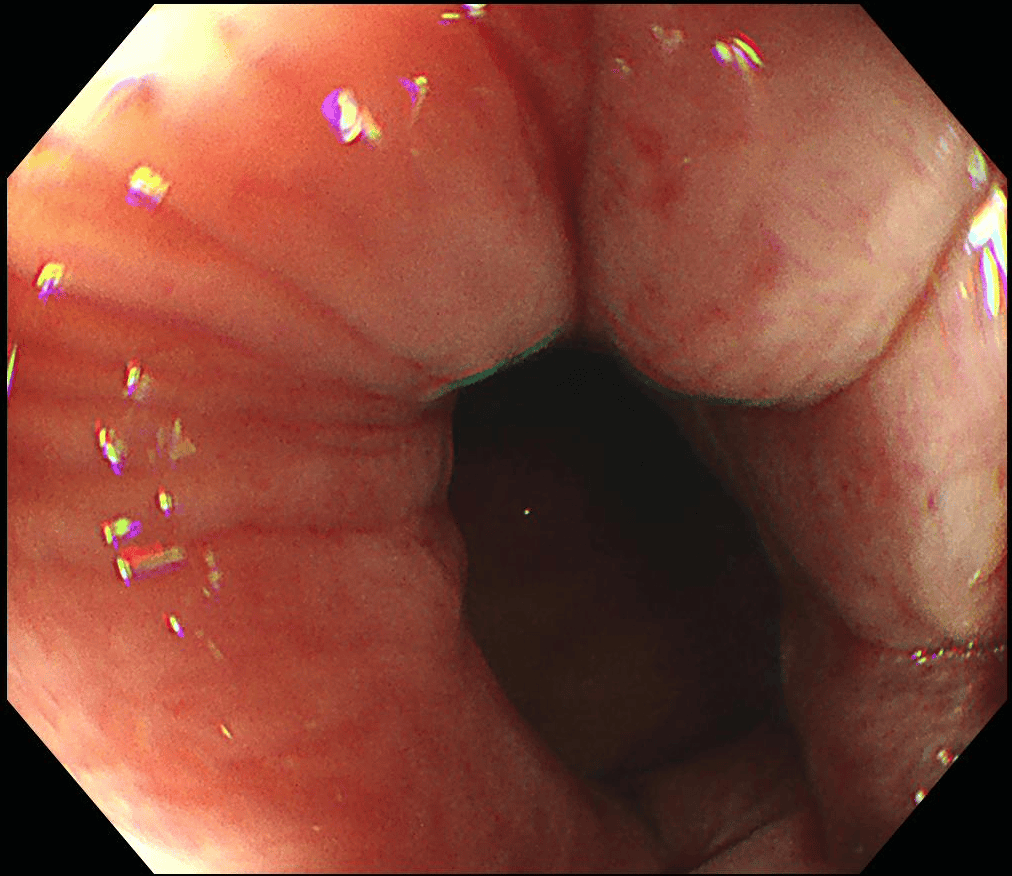
That is where the examination ends.
And with that, we brought the treatment to a close.
There are a few things I want to say about this case.
First. There are individual differences in ulcerative colitis treatment.
Among the cases I have shared, there are patients whose calprotectin was 2,000 or 3,000 and fell to single digits within two or three months.
When you see a case like that, it is easy to think, “I’ll get better that quickly too.”
But this patient started at 322 and it took seventeen months.
Her number was far lower, and yet it took longer.
Response speed differs from person to person. Some fall quickly, some fall slowly.
What matters is not speed. It is direction.
Second. And this is the part I most want to say today.
Patience is required.
Do you remember? In September, when it went from 94 to 85 — a drop of only nine points — I said I gave it real thought.
What if I had changed the prescription out of impatience at that moment?
I would have abandoned a prescription that was working and moved to one that was not.
And then the treatment would not have worked.
Falling slowly and not falling at all are completely different things.
If the direction is right, even slowly, you have to wait.
Third. Do not be too alarmed when the number rises in the middle.
This patient was at 32 in January and 611 in February.
Nearly a twentyfold increase.
But once the prescription was changed, it was 24 within three weeks.
A rising number is a signal that the next cause has surfaced.
At that point, you change the prescription.
One last thing.
This patient did not take a single Western pill.
Since she stopped Western medication because of side effects in 2023, she has been treated with herbal medicine alone, right through to today.
And now her calprotectin is 15 and her colonoscopy is normal.
Her weight has returned to nearly what it was.
To those who have been struggling with ulcerative colitis or Crohn’s disease for a long time: do not be impatient because you are not improving quickly.
If the direction is right, you will get there in the end.
If you have questions about ulcerative colitis or Crohn’s disease, how to interpret calprotectin values, or when to change a prescription, please leave a comment.
I will read them and take them up as topics.
▶️ Watch our YouTube video on this case:
https://youtu.be/j_ZkvwiD9lI
Please turn on subtitles to watch.
HanStep Korean Medicine Clinic – Inflammatory Bowel Disease Clinic
https://hanstep.co.kr/en/


Leave a comment