Hello.
We are Hanstep Korean Medicine Clinic, researching and treating ulcerative colitis since 2007.
In August this year, 2026, I got a phone call from the mother of a patient whose treatment we had finished.
The patient is a woman in her thirties. She first came to us in March 2025, and we ended her treatment in October 2025.
Nearly a year had passed with nothing at all — and then, suddenly, a call.
When a call like that comes in, my first reaction is a little bit of worry. The thought that goes through your head is: has she relapsed?
But if she had relapsed, the patient herself would have called. It was not the patient. It was her mother.
A little odd, isn’t it?
So I called back, and it turned out her daughter is doing very well these days. She is doing well at work. Her daily life is exactly what it was before ulcerative colitis started.
So why the call?
The mother said that things are very good right now — and that is exactly why she worries that they might get worse again.
She wanted to give her daughter a tonic herbal prescription, in advance, as a preventive measure.
In fact, this mother had called once before, near the end of the treatment, asking about a tonic prescription then too.
She worries a great deal about her daughter.
In Korean medicine there is a phrase: “Bul-chi-i-byeong, chi-mi-byeong” — do not treat the disease that has already formed; govern the disease that has not yet formed.
Put simply: you look for the small imbalances in the body ahead of time and correct them, so they never get worse.
It is like taking a car in for a scheduled service instead of waiting for it to break down and be towed.
And the reason I can treat ulcerative colitis at all comes from the same principle.
Western medicine says the cause is still unknown.
But seen through Korean medicine, there is clearly something out of order in the body.
Weak digestion. A cold abdomen. A constitution that forms inflammation easily.
These imbalances shake the immune system.
Correct the imbalance, and the immune system settles. When the immune system settles, the inflammation in the bowel subsides as well.
So I examined this patient again.
There was nothing much wrong.
Bowel movements once a day. No blood, no mucus.
The gas she used to get was gone. The cold hands and feet were gone.
The only things left were a little facial swelling in the morning, and occasional fatigue.
So I sent her a simple prescription to tonify the body and restore its balance.
Now — let’s look at what her condition was when she first came.
Around May 2024, she began occasionally passing mucus in her stool.
It got gradually worse from July and August, and from October there was blood in her stool.
In November she was diagnosed with ulcerative colitis at a general hospital.
She was given Pentasa suppositories and Pentasa sustained-release tablets, but the effect was not convincing, so in March 2025 she came to Hanstep Korean Medicine Clinic.
At the first visit she was 167 cm and 54 kg. On the thin side.
She was taking Pentasa sustained-release 1 g, morning and evening.
Cold hands and feet.
When the disease was bad, severe chronic fatigue.
Mouth ulcers whenever she got tired.
Reflux esophagitis; when she was bad, belching, and the sound of water sloshing in her abdomen.
More than ten episodes of flatulence a day.
Spicy food made her abdomen uncomfortable and brought on blood and mucus in the stool.
Her face swelled easily in the morning.
A feeling of something caught in her throat during the change of seasons.
Quite a mixture, isn’t it?
A cold abdomen. A stomach-side problem. And inflammation that rises when she eats spicy food.
This is a case where the cause is not one thing but several, layered on top of each other.
The first prescription I started with was a respiratory-type prescription.
That is, treating the cold hands and feet and the cold abdomen first.
But about ten days in, she said she felt bloated and gassy.
The flatulence had actually increased a little.
That is the body saying: “this is not the right direction.”
So I switched her straight away to an upper-digestive prescription.
Once I did, the gas settled down again.
And I gave her one more piece of advice.
She had been taking something in the morning that she thought of as a digestive aid — it was a gastric acid suppressant.
I told her to stop taking it.
Why?
Because stomach acid is the body’s first line of sterilization.
Stomach acid kills the bacteria that come in with food.
If you keep suppressing stomach acid, that sterilization does not happen properly, and more of the burden falls on the intestine.
In mid-April something interesting happened.
Kimchi udon, kimchi rice noodles, and mala soup — one meal each, three days in a row.
She says she ordered them not spicy…
Still, three days in a row.
The next day there was a little mucus in her stool.
But the day after that, it was fine again.
In the past, that would have brought on frank bleeding. This time it recovered in a single day.
That is a sign that the body is building up its capacity to absorb a hit.
Now, let’s look at the numbers.

March 24, at her first visit. Fecal calprotectin 11.0. Normal is under 50, so this is normal. Fecal occult blood 48 — negative.

May 2. Fecal calprotectin under 3.8. Even better.
But look carefully.
This patient’s numbers were normal from the very beginning.
She had symptoms, but the numbers were normal.
What does that mean?
I will come back to this part later.
Since the numbers were good, from May 13 we reduced her Pentasa from two tablets to one.
And then the fatigue got worse, she felt dizzy, and there were two episodes of very slight blood and mucus in the stool.
This commonly happens when Western medication is being reduced.
So we watched how it developed.

June 9. Fecal calprotectin 42.0.
Still inside the normal range — but it had climbed from 3.8 to 42.
The inflammation side was starting to lift its head.
So on June 11, I switched her to an inflammation-type prescription.
And from June 14 she stopped all of her Western medication, Pentasa included.
After stopping the Western medication, another rough patch came.
In early July, bowel movements became difficult, she had to strain a lot, and there was mucus in the stool twice.
And a mild cramping in the lower abdomen before passing stool.
Sometimes she woke in the morning because of abdominal pain.
Now, this is the point where a lot of people worry: “ah, it has relapsed.”
But in my experience, this kind of dip in the middle of treatment is usually the next cause revealing itself.
It is like peeling an onion.
Take off one layer and the next layer appears.
So on July 9, I changed her to a different prescription for treating inflammation.
The result?
Within two weeks the abdominal pain was gone, and the gas was gone.
Her stool improved from normal to slightly loose.

August 8. Fecal calprotectin under 3.8. Fecal occult blood 11 — negative.
And those numbers came with all Western medication stopped.

September 5. Fecal calprotectin 13.0 — normal again.
So on September 13 we did a colonoscopy.
And what did it show?
Compared with before, the inflammation had almost entirely disappeared.
Here is the part I said I would come back to.
On the first colonoscopy, the calprotectin was normal — but the endoscopy showed inflammation.
Calprotectin is a test that measures an inflammatory substance that comes out mixed into the stool.
If the inflammation is widespread and severe, the number shoots up.
But if the inflammation is very small and mild, the amount that comes out in the stool is small, and the number can come back normal.
To put it simply: a smoke alarm is good at catching a big fire, but it can miss a small ember.
So calprotectin and endoscopy do not always agree.
That is especially true for patients like this one, whose numbers were normal from the start.
This is exactly why you must not end treatment on the strength of the numbers alone.
And it is why, at the end, we always confirm with endoscopy.
So rather than finishing right there, I treated her for two more months.
And on October 17, 2025, treatment was completed.
Now let’s compare the colonoscopy images.
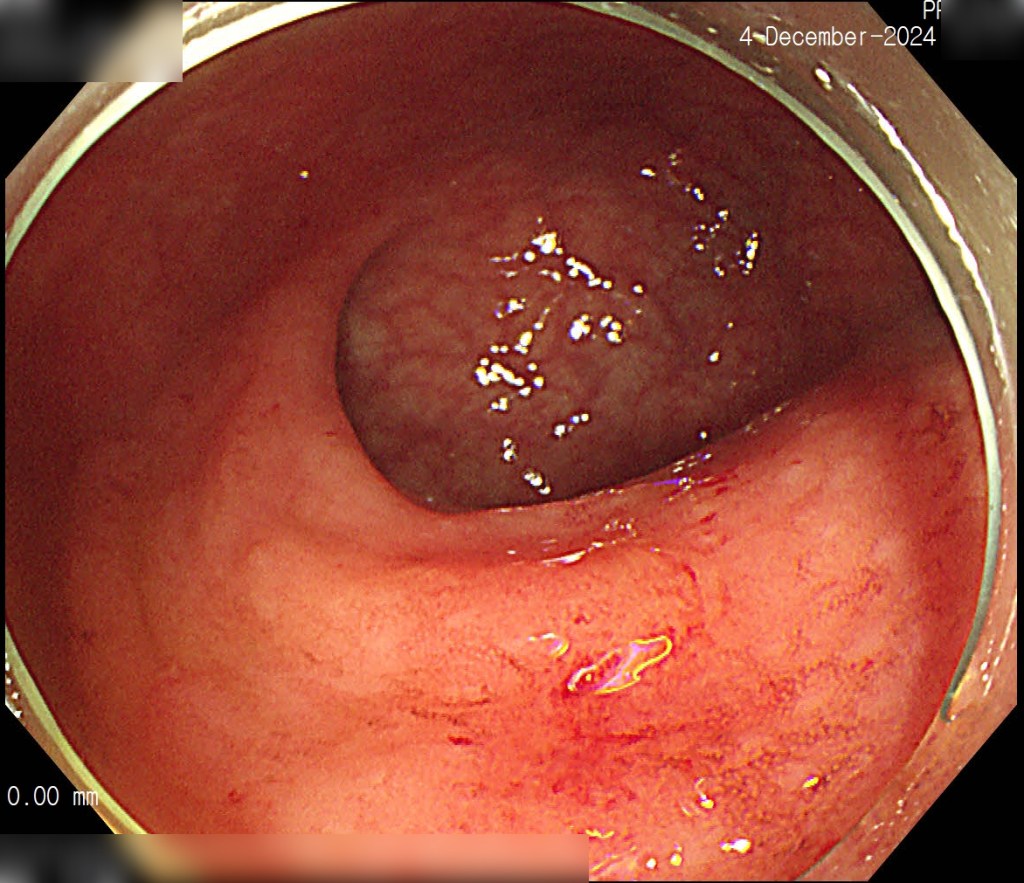
These are from December 2024.
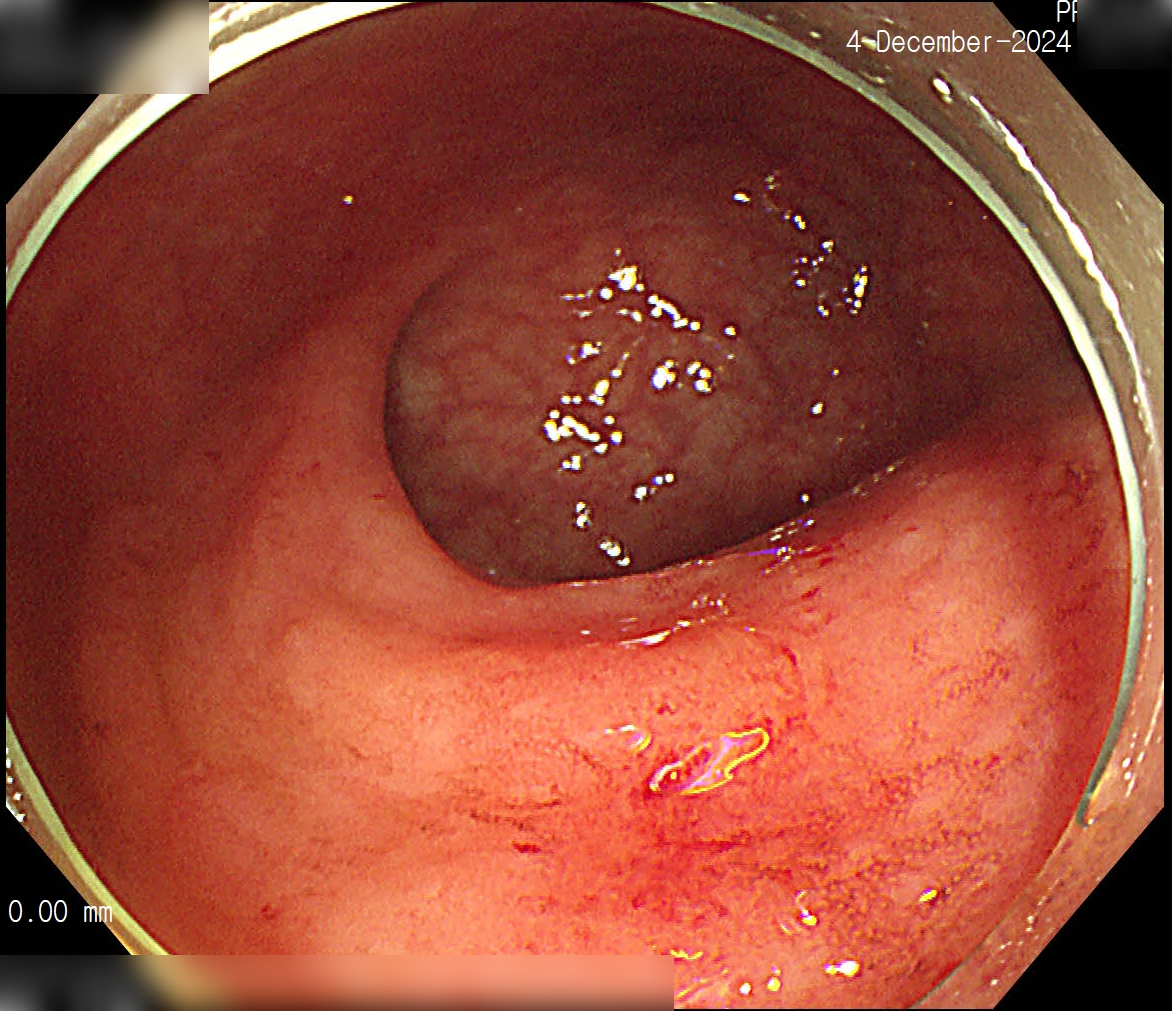
There is inflammation and bleeding in the sigmoid colon.
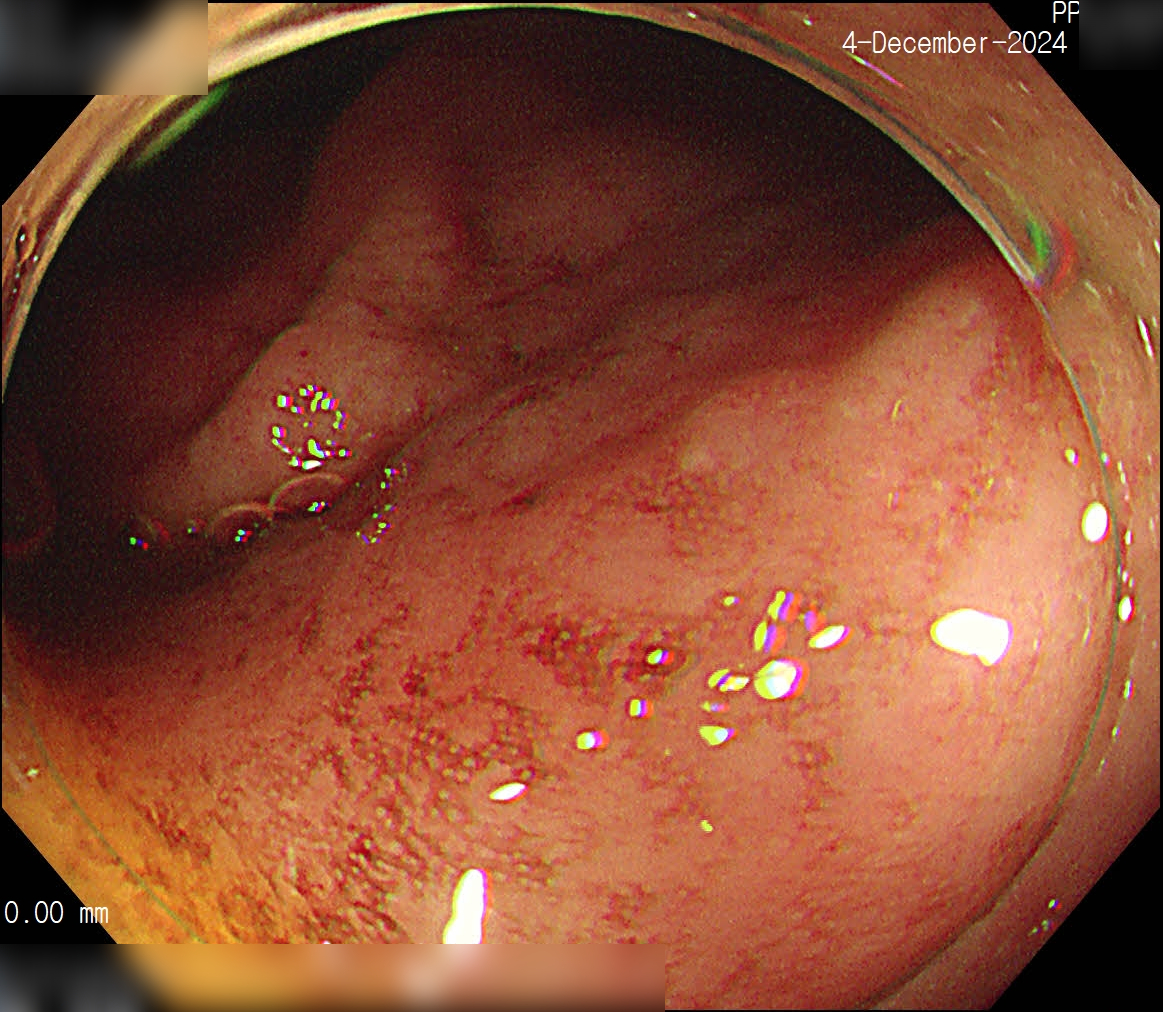
You can see the inflammation here.
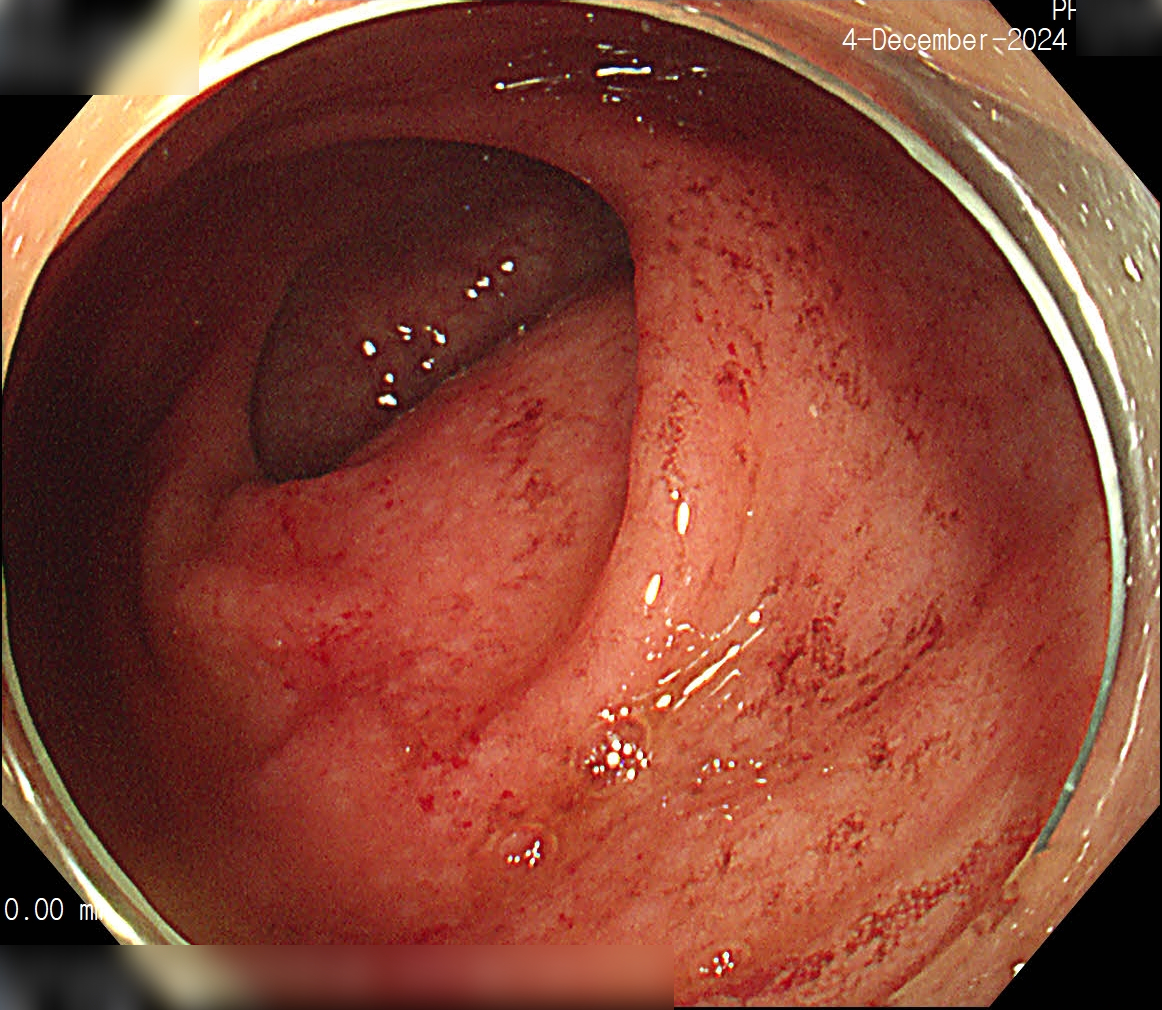
Bleeding and inflammation here as well.
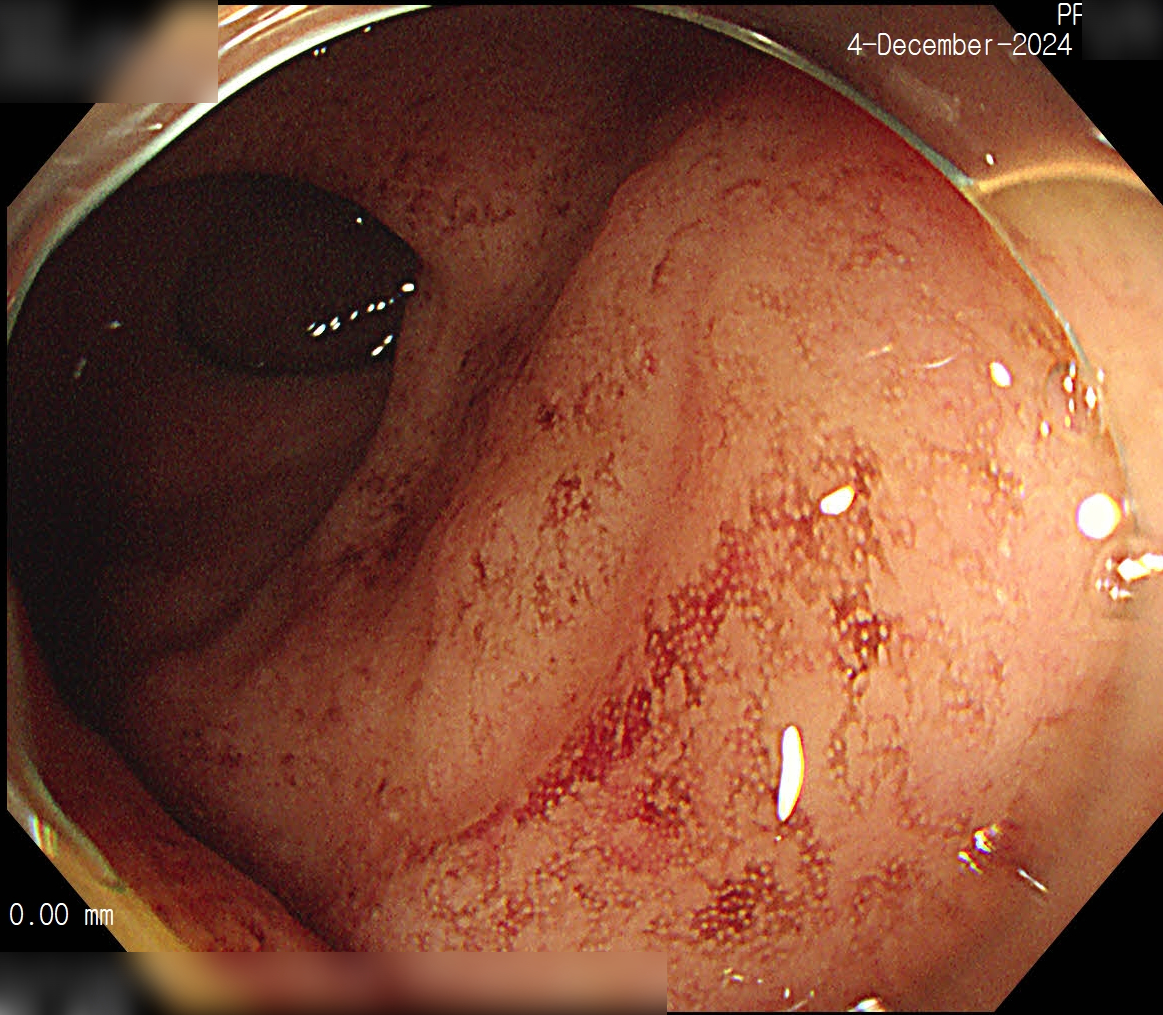
A lot of inflammation visible here too.
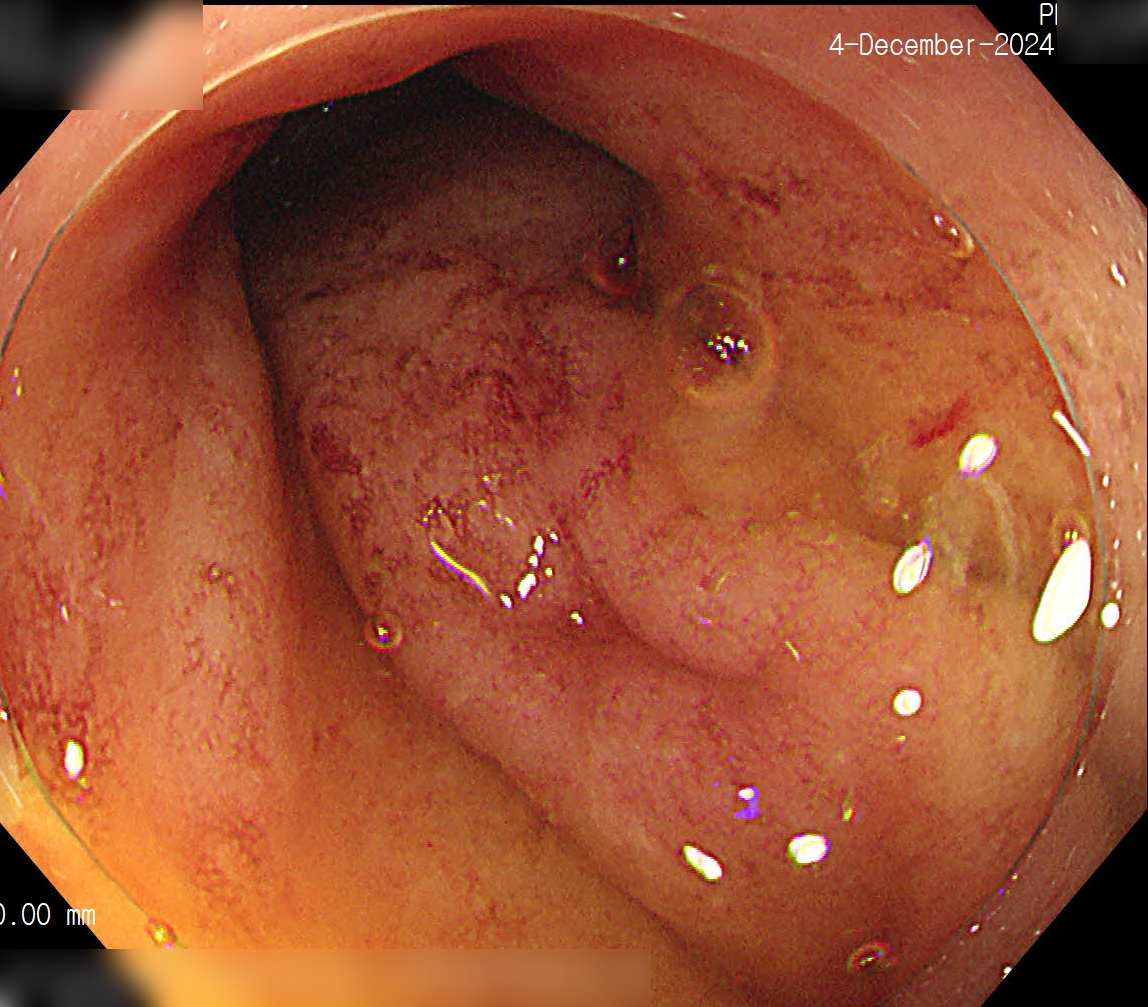
This last one is the rectum — inflammation and bleeding here as well.
And these are from September 2025.
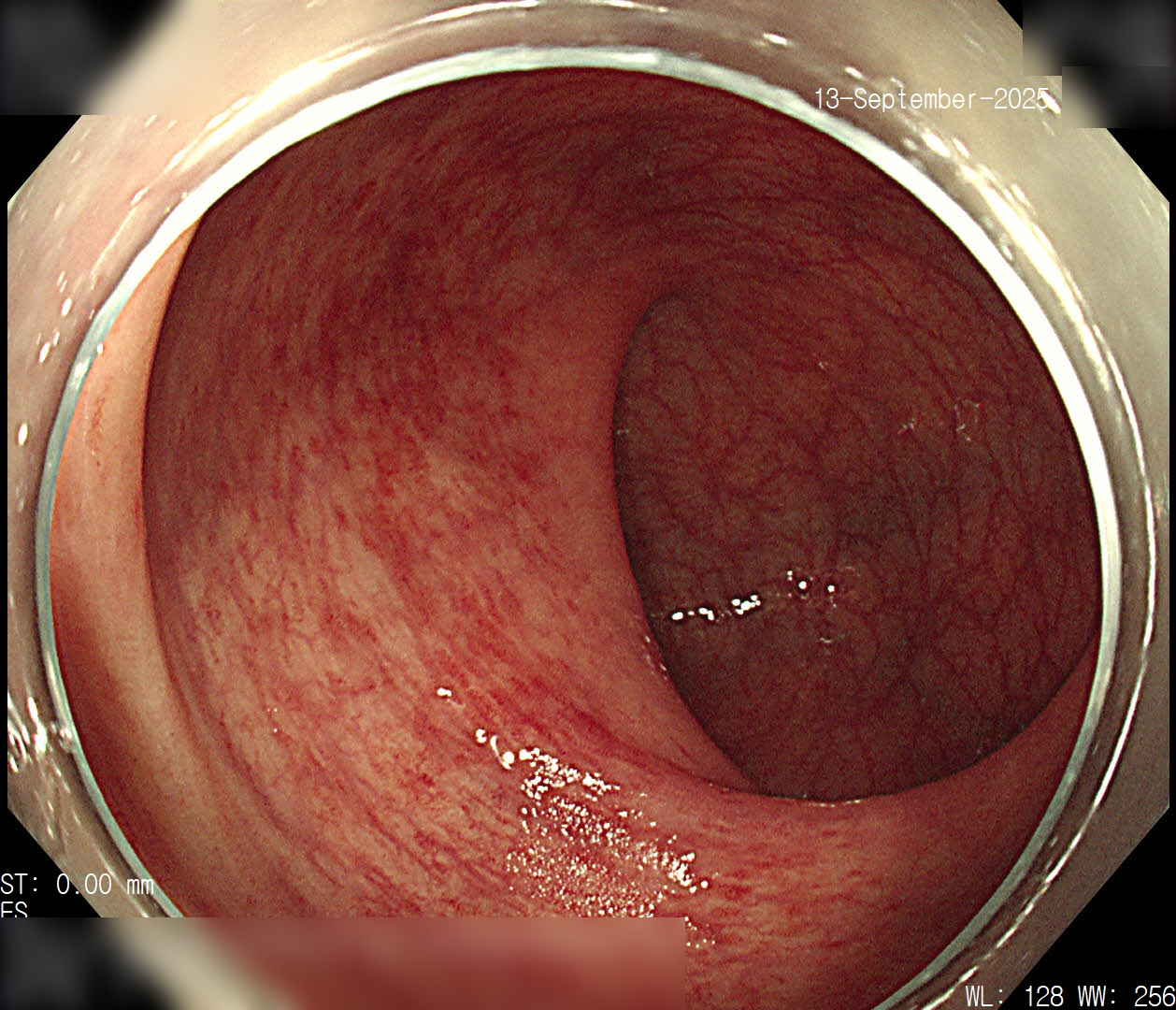
This is the sigmoid colon. None of the inflammation and bleeding we saw before.
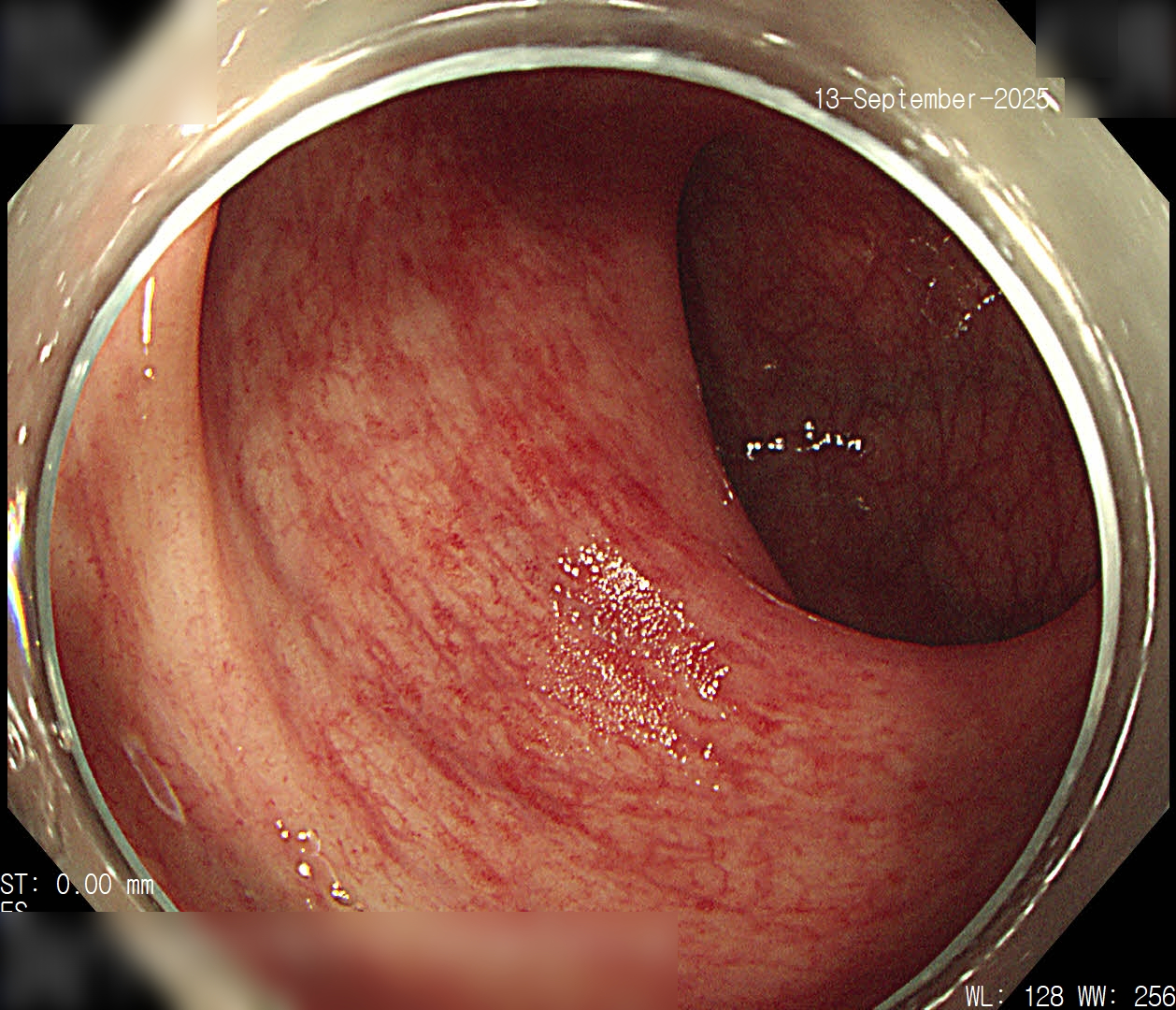
Clean here too.
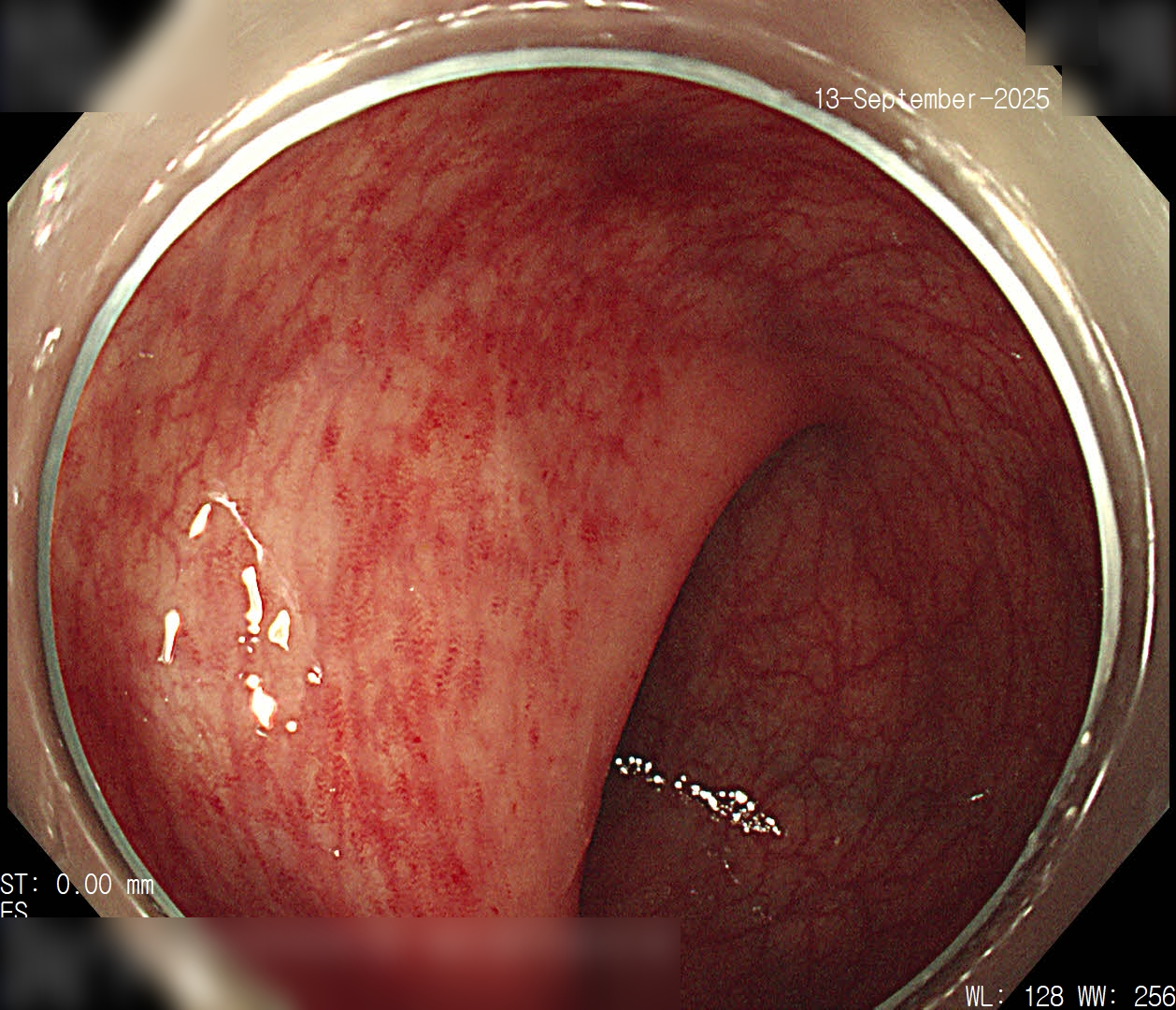
This one is slightly red, but compared with before it is very much improved.
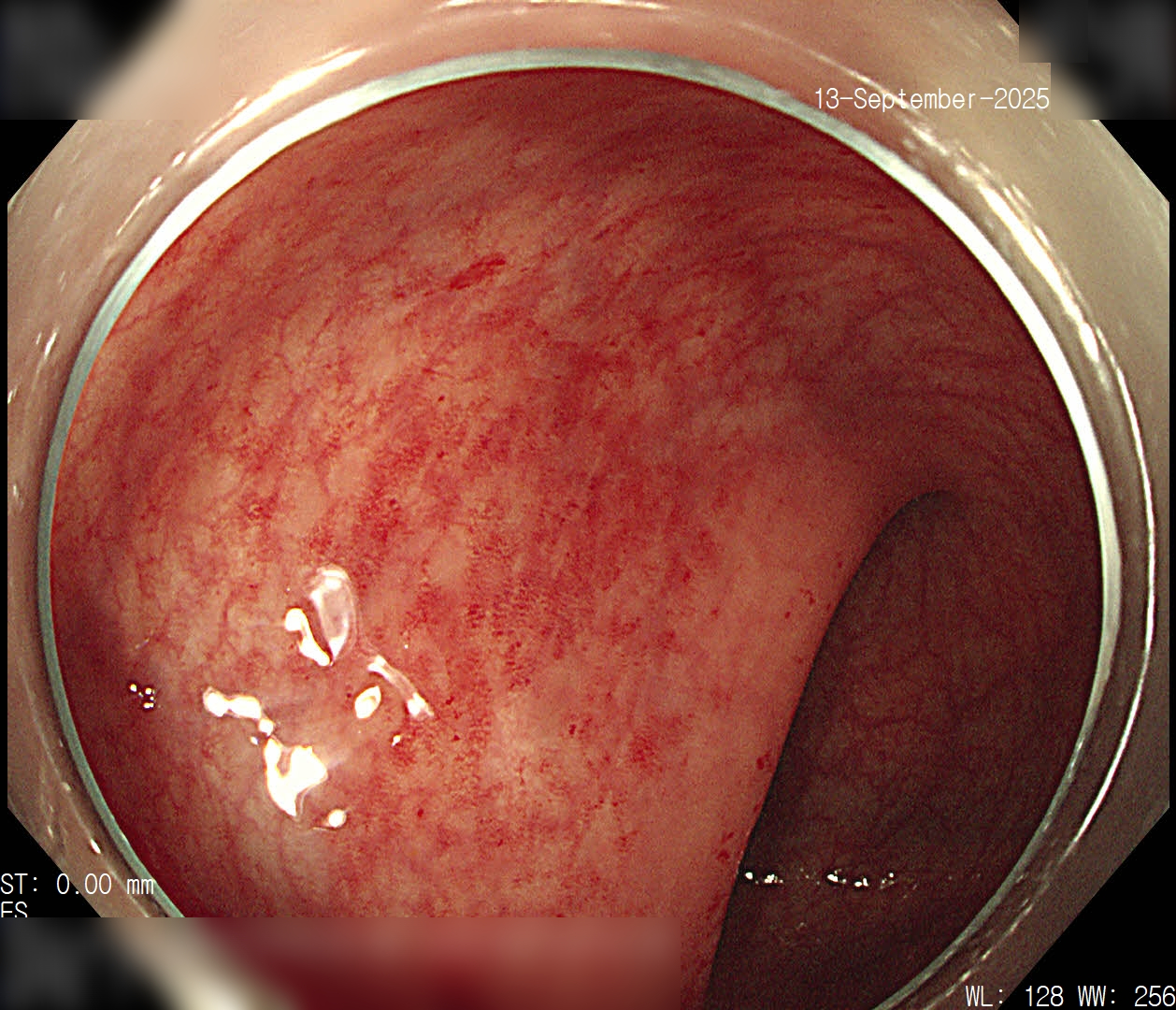
The same here.
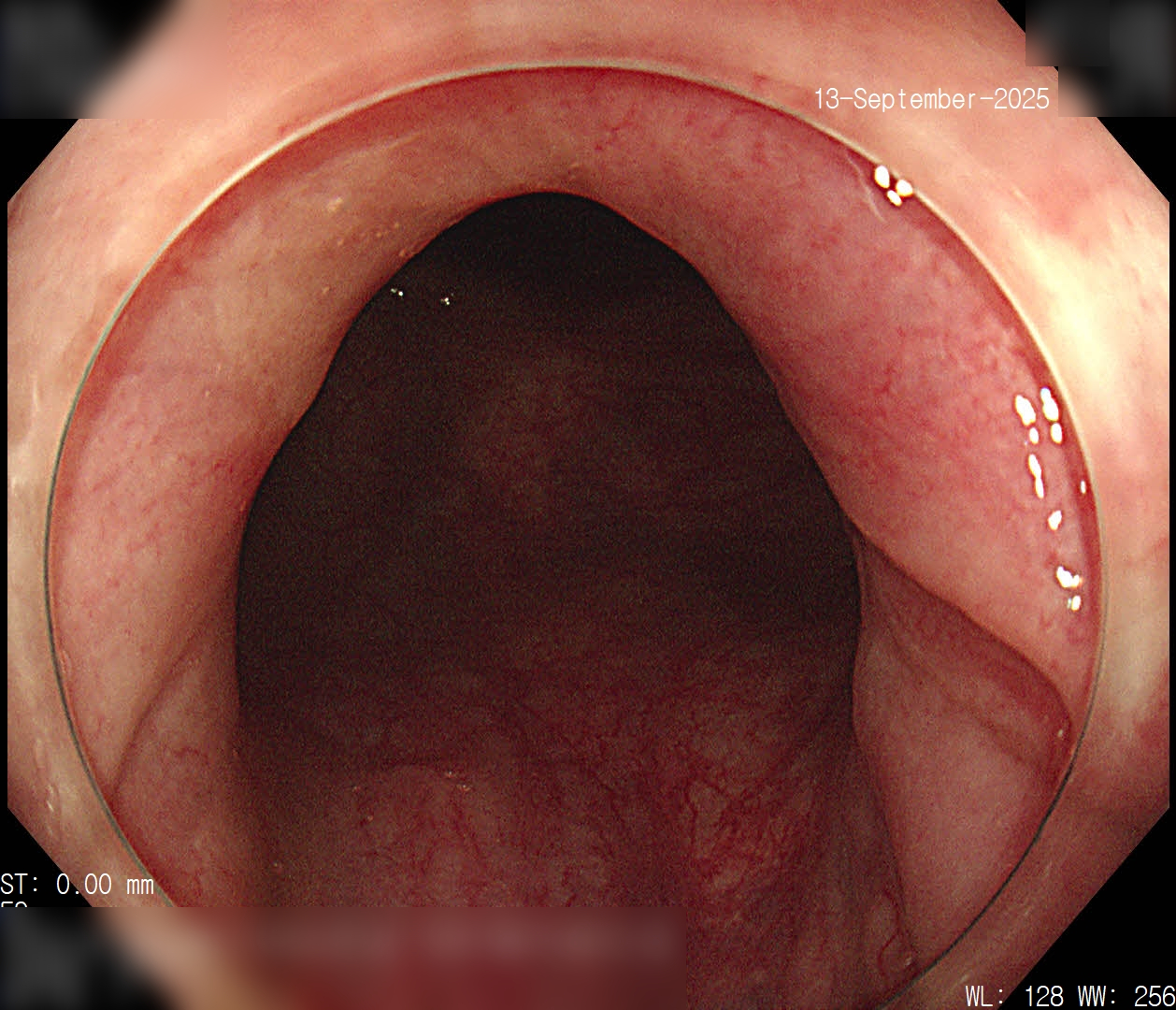
And the rectum at the end — no inflammation or bleeding like before.
Let me sum up.
For this patient too, the cause was not one thing.
A cold abdomen. A stomach-side problem. An inflammation-type problem.
Resolve one cause and the next one shows itself; resolve that one and the one after it appears.
Following that order and changing the prescription accordingly was the heart of the treatment.
And now, with no Western medication at all, she has spent close to a year living just as she did before the disease began.
Finally, back to the mother.
Treatment is finished — is there any point in giving her a tonic?
Yes. There is.
Ulcerative colitis is a disease that begins from an imbalance in the immune system.
Finishing treatment does not mean that a person’s constitution has been completely rewritten.
When there are small signals — occasional fatigue, a swollen face in the morning — you check them in advance and bring the balance back.
That is exactly chi-mi-byeong: the wisdom of Korean medicine, governing illness before it arrives.
If you have questions about Crohn’s disease, ulcerative colitis, or calprotectin testing, please leave them in the comments. I read them, and I take them up as topics.
This is Hanstep Korean Medicine Clinic.
Thank you.
▶️ Watch our YouTube video on this case:
Please turn on subtitles to watch.
HanStep Korean Medicine Clinic – Inflammatory Bowel Disease Clinic
https://hanstep.co.kr/en/


Leave a Reply