Hello.
We are Hanstep Korean Medicine Clinic, researching and treating ulcerative colitis since 2007.
I have talked before about how difficult it is to treat adolescent patients with ulcerative colitis.
Today I want to look at a case of an adolescent patient who is now in the final stage of treatment.
There is a small secret behind why this patient’s treatment succeeded. I will tell you at the end.
She is a 16-year-old high school student.
In September 2025 the abdominal pain began.
She was treated at a local clinic with no improvement — and instead, blood began to appear in her stool.
The local clinic most likely thought it was simple enteritis. Antibiotics are prescribed easily in that situation, and in ulcerative colitis, antibiotics make the symptoms worse.
How severe was the diarrhea? She lost 9 kg in two to three weeks.
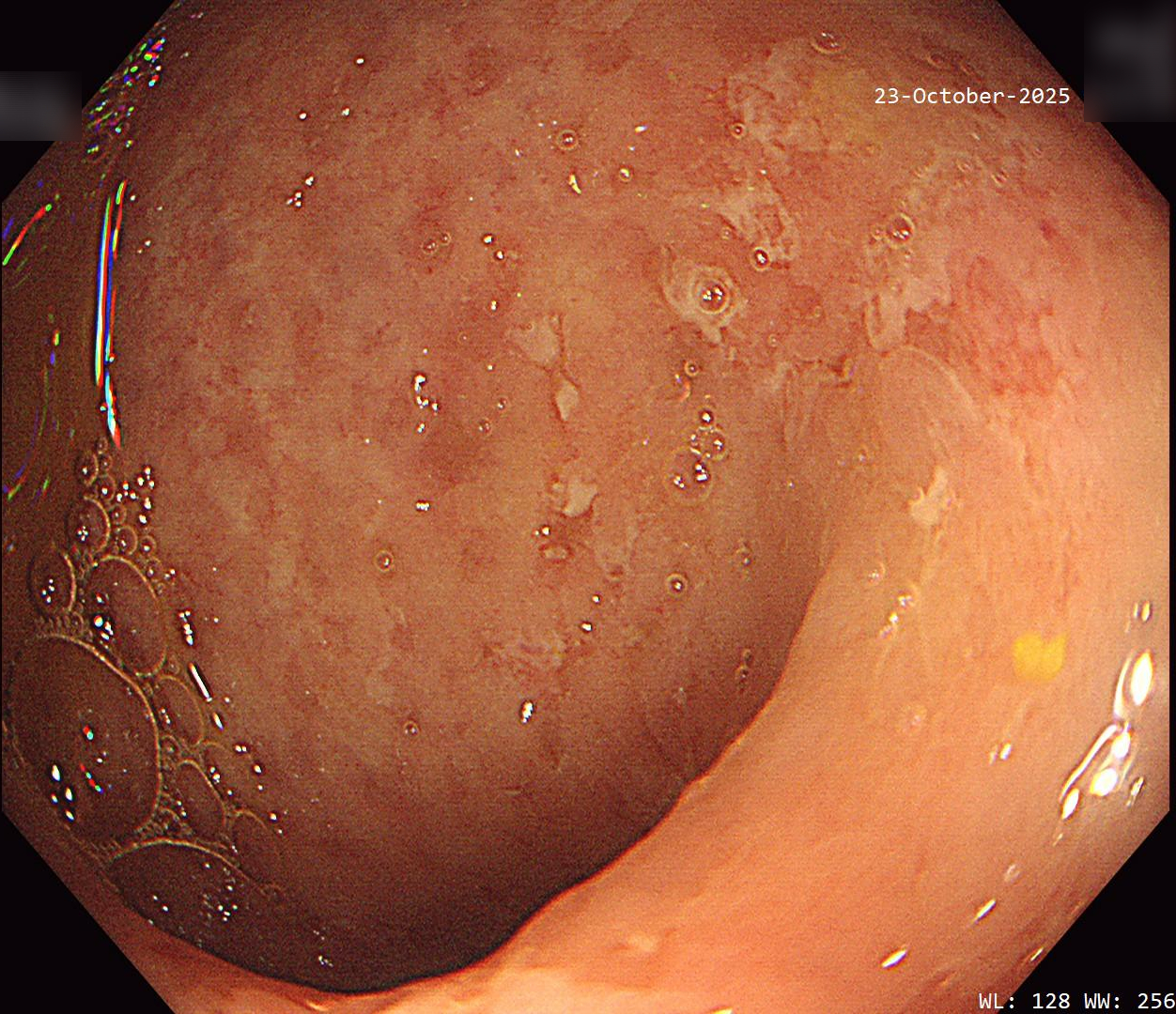
These are the colonoscopy images from October 2025. Here the mucosa is relatively intact, but the vascular pattern is blurred and small erosions are scattered across it.
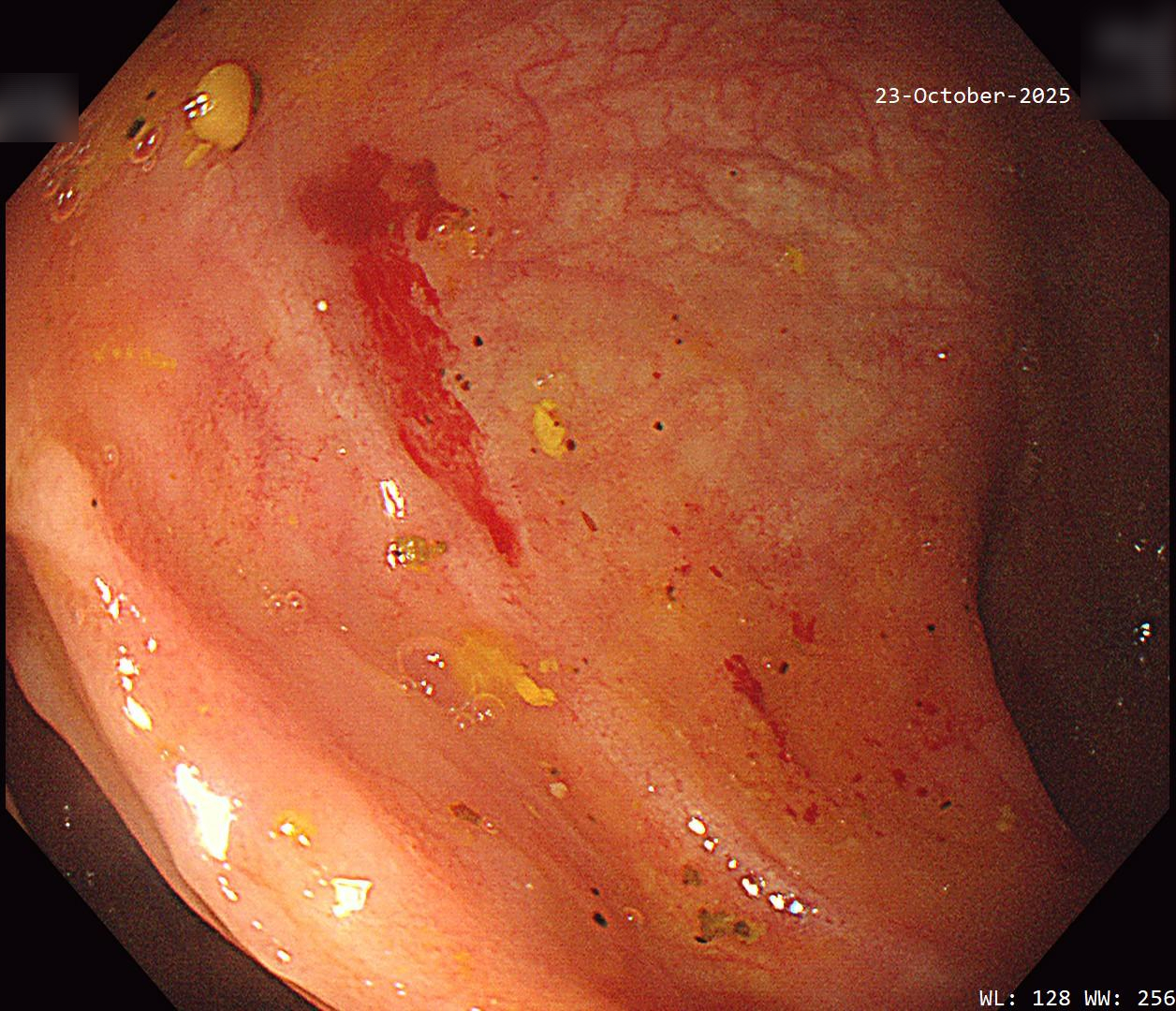
Here there is linear bleeding and yellowish exudate stuck to the bowel wall.
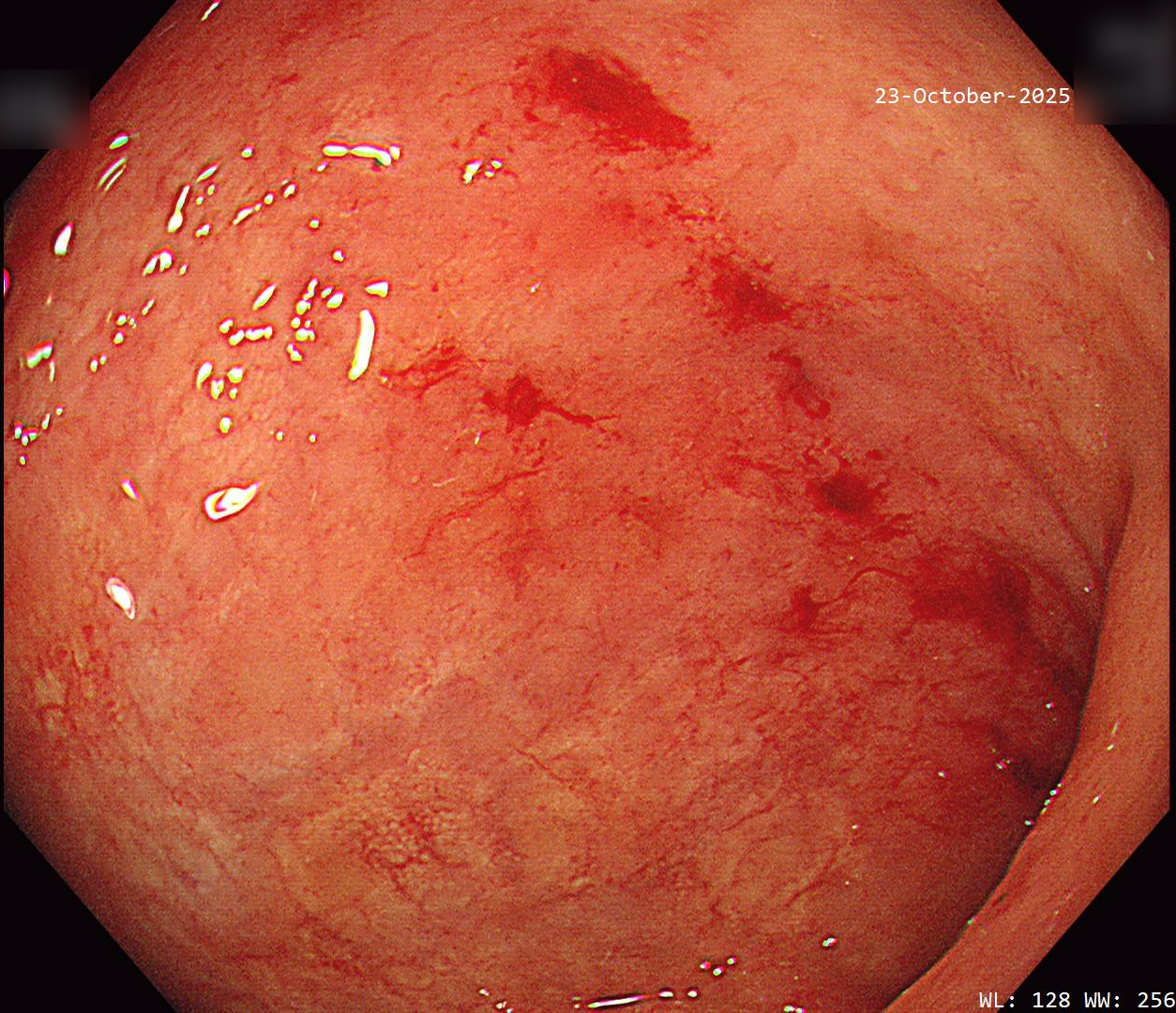
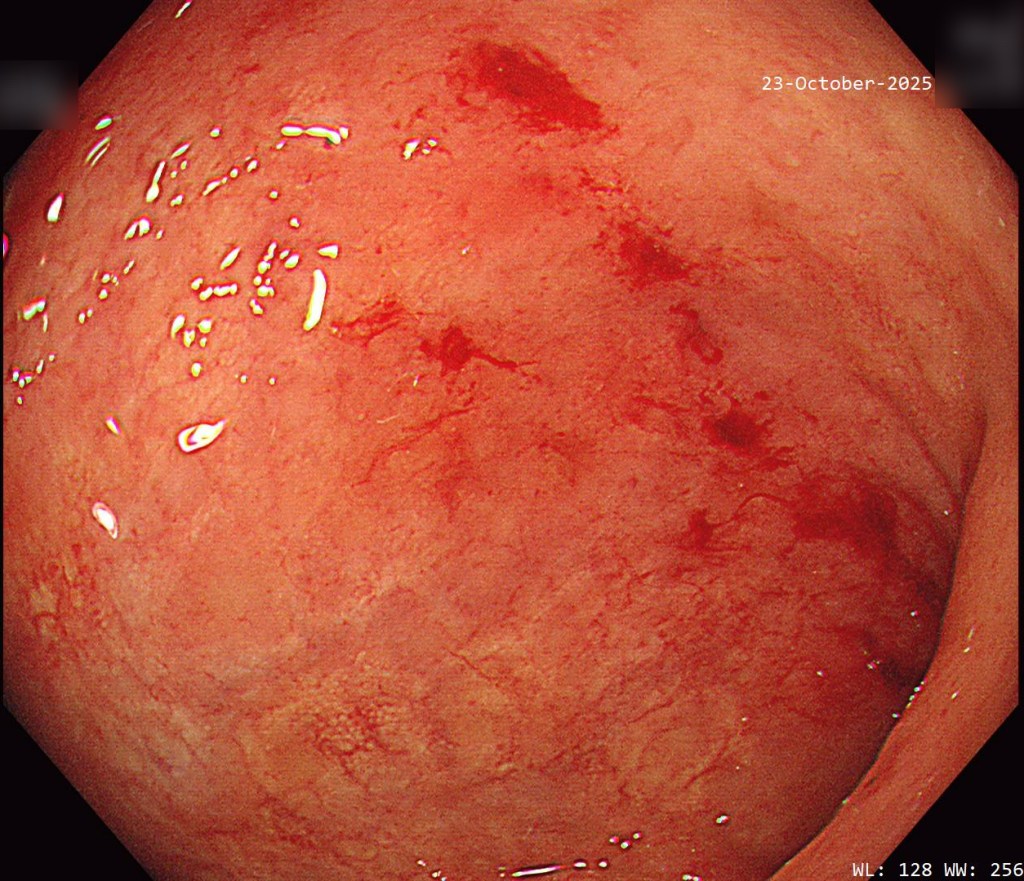
And here the whole wall is red, with fresh bleeding in patches.
In October she went to a general hospital, where she had a colonoscopy, CT, blood tests and stool tests, and was diagnosed with ulcerative colitis.

November 3, hospital test. Fecal calprotectin 1,152.

After steroids were started, it fell to 269 by November 25.

Then the steroids were tapered and stopped — and on January 15, 2026 the calprotectin went back up to over 2,720.
That is the pattern: suppress it with steroids, reduce the steroids, and the inflammation climbs again.
Since steroids were not working, Remicade was started at the end of January 2026.

January 23, calprotectin 2,086. On February 6 she had her second Remicade infusion — and the calprotectin was 2,590.
The number is not coming down even on Remicade.
People usually say you have to watch for three months after starting a biologic.
But with Remicade giving no improvement, she came to Hanstep Korean Medicine Clinic on February 11, 2026.
At that point she was taking Solondo (a steroid) 1 tablet, Mezavant 4 tablets, Azabio 25 mg 1 tablet, and Imutera 50 mg 1 tablet.
Her weight was 50 kg — still 7 kg below where she had started.
Bowel movements 10–12 times a day. Completely watery diarrhea, with blood.
A feeling of incomplete evacuation.
Constant pain in the lower abdomen.
Within 15 minutes of eating, the pain got worse.
The pain was always there, but 10–12 times a day it became severe.
Her condition was very bad. The abdominal pain and the diarrhea were both severe.
Spicy food gave her heartburn.
Her feet were somewhat cold. In winter she had to wear socks indoors.
Appetite was good.
The Western medication gave her heartburn and acid reflux.
She went to the bathroom within 15 minutes of eating. Two to three times a week she felt nauseated.

February 11, blood test. CRP 1.3 — high.
The inflammation was severe, so the inflammatory marker in the blood came back high too.

She collected a stool sample on February 13 and kept it frozen; the test was run on February 20. Fecal calprotectin 4,958.
That is extremely bad.
She was having such a hard time that the hospital increased her steroids again.
She went up to 6 tablets of steroid a day.
Because I normally have patients come off their Western medication after treatment, I ask them not to add more medication beyond what they are already on when treatment starts.
But when a patient is suffering this much, I tell them it is actually fine to increase the steroid a little at the beginning.
As you know, steroids only work while you are taking them.
They suppress inflammation, so while they are in use the effect looks very good.
But when the steroid is tapered and stopped, the symptoms come back.
Usually this on-and-off cycle with steroids is repeated while the patient keeps getting worse.
But when proper herbal medicine enters the picture at this point, the story changes.
You use the steroid early to hold the symptoms down.
And while the symptoms are held down by the steroid, you use the herbal medicine properly — and real treatment happens.
Then, when the steroid is later tapered and stopped, the symptoms do not flare badly again.
In fact this combination is what puts the patient through the least suffering.
Hold the urgent symptoms down with the steroid, and while they are held down, do the real treatment with herbal medicine.
So for this patient — a high school student having 12 episodes of diarrhea a day in the middle of studying, which is unbearable — we went back to 6 steroid tablets a day at the start.
March 3, 2026. On the steroid, bowel movements were back to 3–4 a day.
She was taking Azabio 25 mg, an immunosuppressant, and Mezavant 4 tablets.

March 7, hospital test. Calprotectin came back as over 2,720.
The upper limit this hospital’s assay can detect is 2,720.
So the real figure was far higher than 2,720.
In the end, on steroids and after three or more Remicade infusions, the inflammation was still essentially unchanged.
Through all of this, the herbal prescription stayed the same.
Treatment had started on February 11, so this was about two months in.

April 6, 2026. Fecal calprotectin drops suddenly to 273.
Fecal occult blood is 1,100 — still positive.
The inflammation had come down a great deal; the bleeding was still there.
The steroid, which had started at 6 tablets in mid-February, was reduced by one tablet a week and stopped at the end of April.
May 2026. The Remicade trough level kept coming back low, and the numbers had not fallen even while she was receiving the infusions in March, so we discussed it with the hospital and decided to stop Remicade.

With both the steroid and Remicade stopped — May 22, 2026 hospital test, calprotectin 95. A big drop.
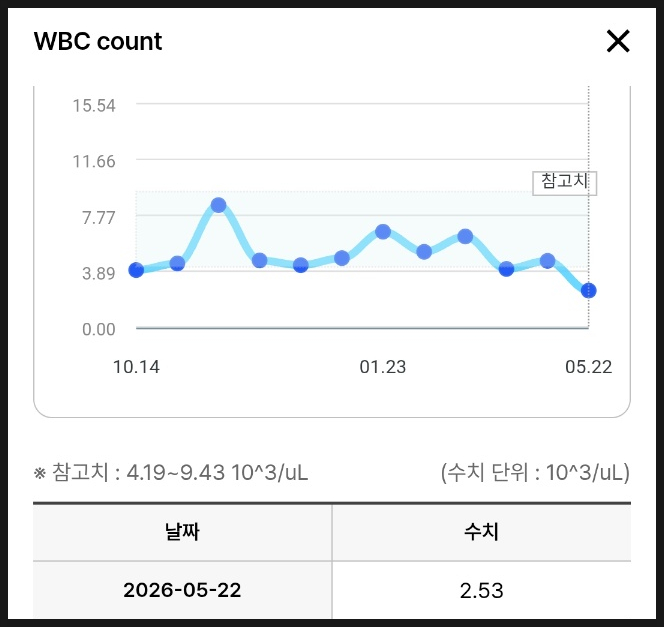
But her white blood cell count fell to 2.53.
It needs to be above 4. At 2.53 it is far too low.
This is a side effect of the immunosuppressant. Immunity drops, and the white cell count drops with it.
There were a lot of difficult turns in this case.
Since it was clearly a side effect of Azabio, the immunosuppressant, the answer in this situation is simply to stop Azabio.
The hospital stopped the immunosuppressant.
Remicade was stopped because it did not work; the steroid was stopped because it cannot be used long term; and the immunosuppressant was stopped because of a side effect.
June 1, 2026.
Bowel movements twice a day. Normal stool. A slight feeling of incomplete evacuation.
No blood, no mucus.
Eating and digestion good, and no more running to the bathroom within 15 minutes of a meal.
The lower abdominal pain that had always been there was gone. No pain before passing stool either.
We had treated the respiratory type for four months from February; now we switched to the digestive type.
From June 5 she stopped all of her Western medication.
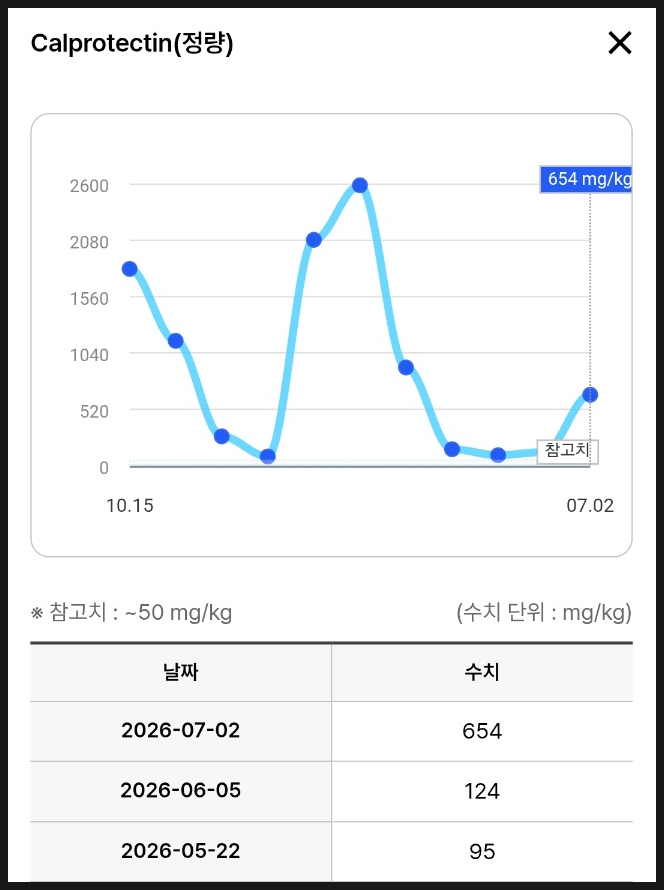
May 22 hospital test, calprotectin 95. June 5, 124. July 2, 654.
All Western medication stopped and the symptoms completely good — but the calprotectin is creeping up.
So we switched to an inflammation-type prescription.

August 28. Fecal calprotectin 51.
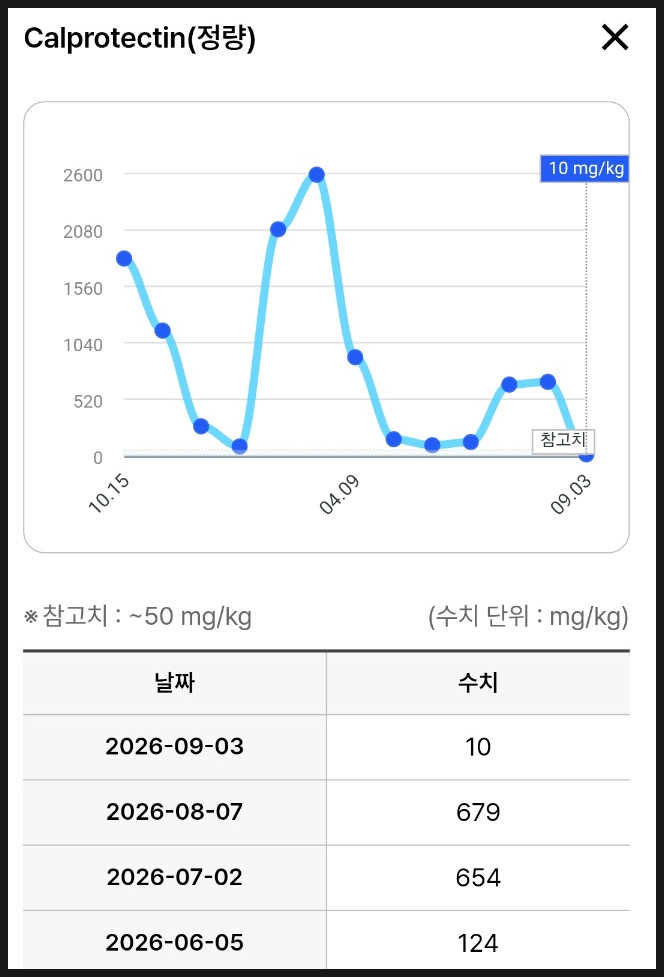
September 3, hospital test. Calprotectin 10.
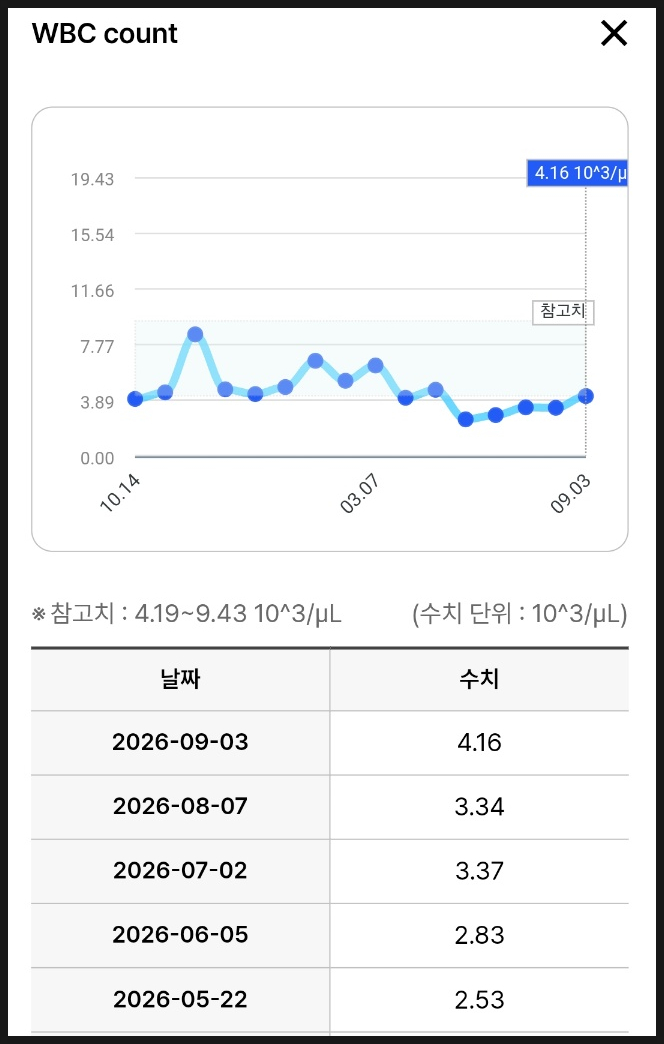
White blood cell count back up to 4.16. Off the immunosuppressant and treated with herbal medicine, her immunity recovered on its own.
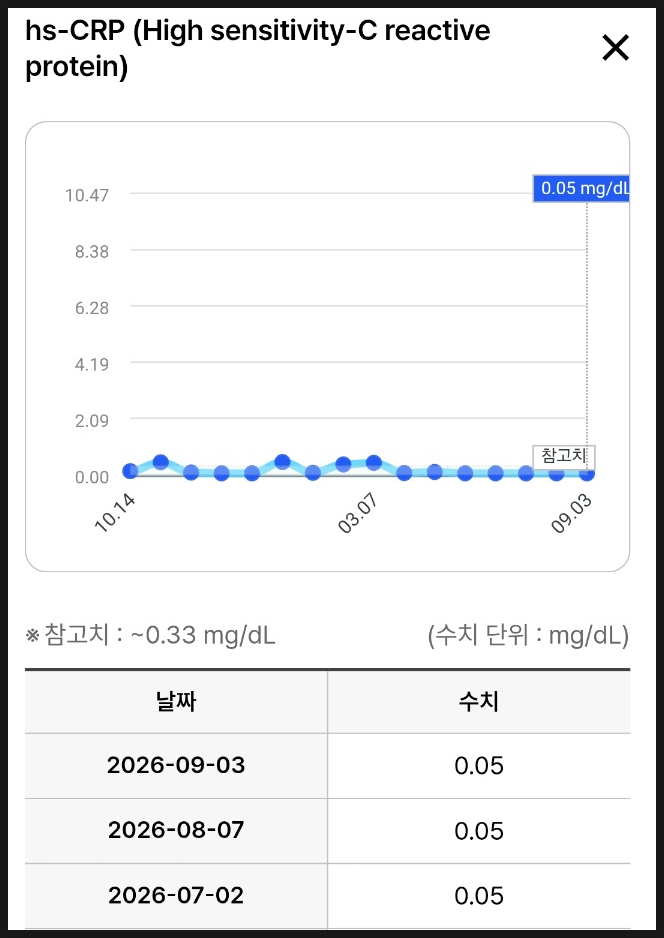
CRP, which was 1.3 at the very beginning, has fallen all the way to hs-CRP 0.05.
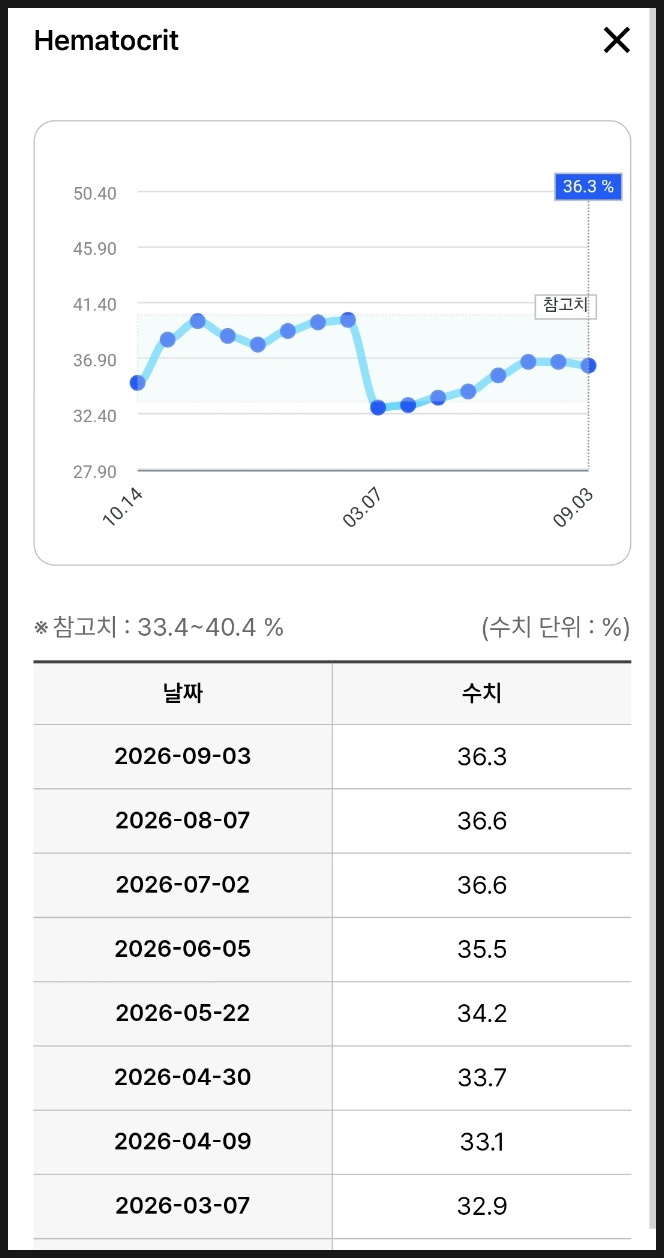
Hematocrit, the anemia index, was only 32.9 in March — it is now 36.3.
She stopped all Western medication in June, and every number has returned to normal.

September 30, 2026. Fecal calprotectin 36. Thoroughly normal.
She has been off Western medication since June, every number is normal, and she is holding full remission.
Because she is a student, we decided to do a colonoscopy during the winter break and then finish treatment.
Let me sum up.
A 16-year-old girl whose inflammation would not come under control on steroids or on Remicade.
Calprotectin 4,958 at the start of treatment.
More than ten episodes of diarrhea a day.
There were two keys to treating this student.
The first is the combination of a steroid and herbal medicine.
In the hardest early stretch, hold the urgent symptoms down with the steroid, and in that window, do the real treatment with herbal medicine.
That is why, when the steroid was tapered and stopped, she did not get worse again.
The second is the order in which the prescription is changed.
Respiratory type for four months, then digestive type, then inflammation type.
When the symptoms are completely good and yet the calprotectin starts creeping up, that is the signal that the next cause is revealing itself.
I changed the prescription to match that signal.
And the result?
Calprotectin from 4,958 to 36.
CRP from 1.3 to hs-CRP 0.05.
White blood cells from 2.53 to 4.16.
Hematocrit from 32.9 to 36.3.
She has not taken a single Western medication since June, and every number is normal.
What is left now is the colonoscopy over the winter break.
When the result comes, I will report back.
I said at the start that there was a secret I had not told you.
The truth is that this student’s uncle is a Korean medicine doctor. He is a friend of mine from university.
He asked me to treat his niece, who had ulcerative colitis.
This was a patient with many difficulties along the way, and I think the reason treatment went so well is that she had a reliable Korean medicine doctor for an uncle.
I have mentioned before that there are teenagers who say, “I don’t believe in Korean medicine.”
That is fine.
It works whether you believe in it or not.
People who don’t believe in salt and don’t believe in sugar still taste salt as salty and sugar as sweet.
Herbal medicine works even if you don’t believe in it.
But here is the problem. You need a minimum of trust — because that is what lets you keep going without giving up when difficult things happen in the middle, as they did here.
Only by not giving up, and going forward one step at a time, do you reach the end of treatment.
If you have questions about adolescent ulcerative colitis or calprotectin testing, please leave them in the comments. I read them, and I take them up as topics.
This is Hanstep Korean Medicine Clinic.
Thank you.
▶️ Watch our YouTube video on this case:
Please turn on subtitles to watch.
HanStep Korean Medicine Clinic – Inflammatory Bowel Disease Clinic
https://hanstep.co.kr/en/


Leave a Reply