Hello. We are Hanstep Korean Medicine Clinic, researching and treating ulcerative colitis and Crohn’s disease since 2007.
A few of you have asked me to explain the mechanism — how herbal medicine can actually treat ulcerative colitis or Crohn’s disease.
The theory of how herbal medicine produces its effect is, in truth, quite complicated.
To start with, you need some understanding of how a herbal prescription is put together in the first place.
When we say “herbal medicine,” we generally mean a prescription.
A prescription is a combination of medicinals.
And a medicinal means a herb.
These are the herbs you are probably familiar with.
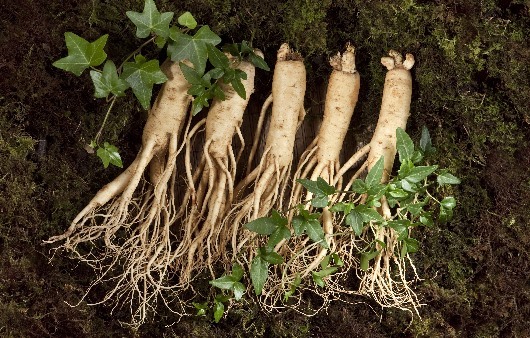
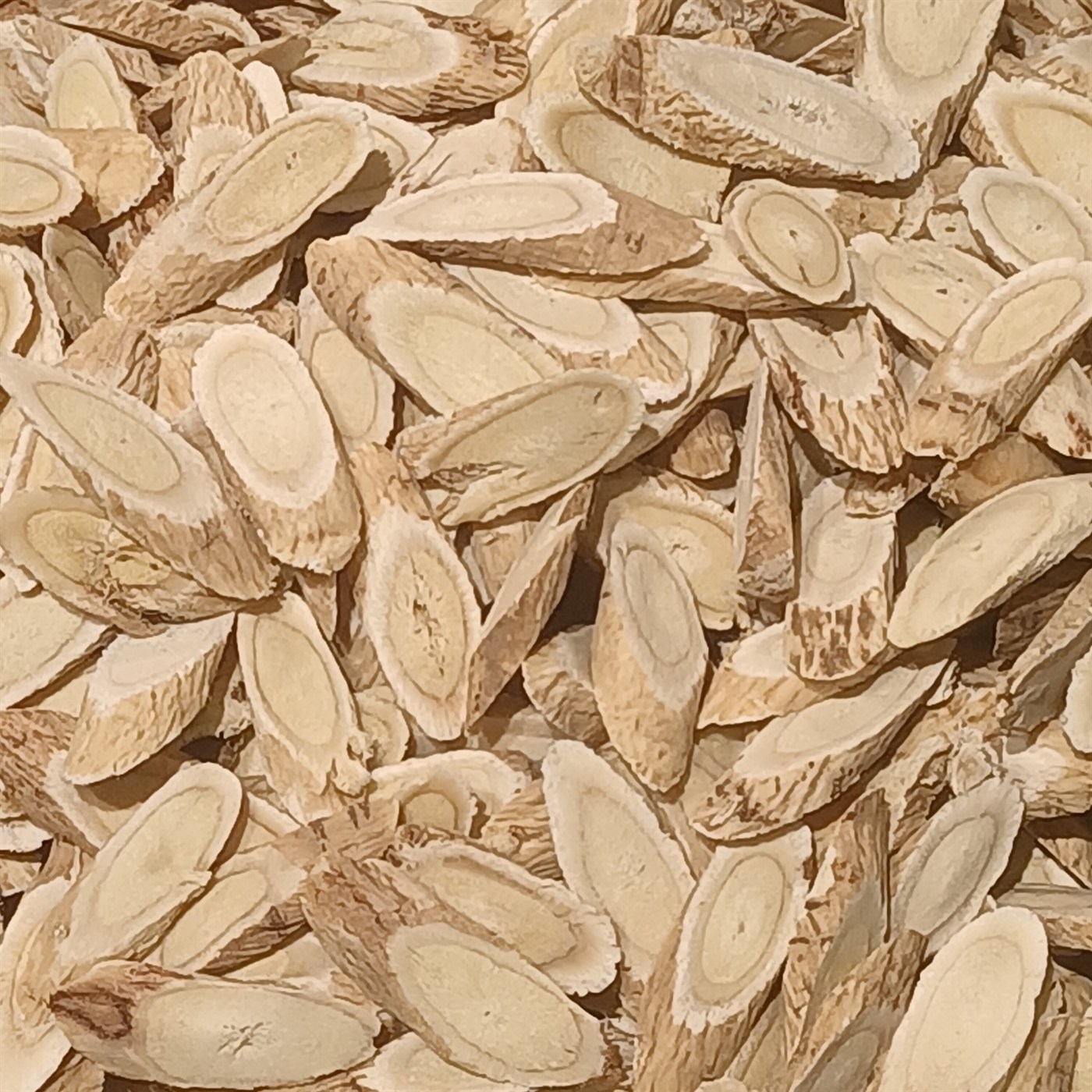
Ginseng, astragalus, angelica, cnidium, ephedra, apricot kernel, cinnamon twig, asarum — these are herbs.
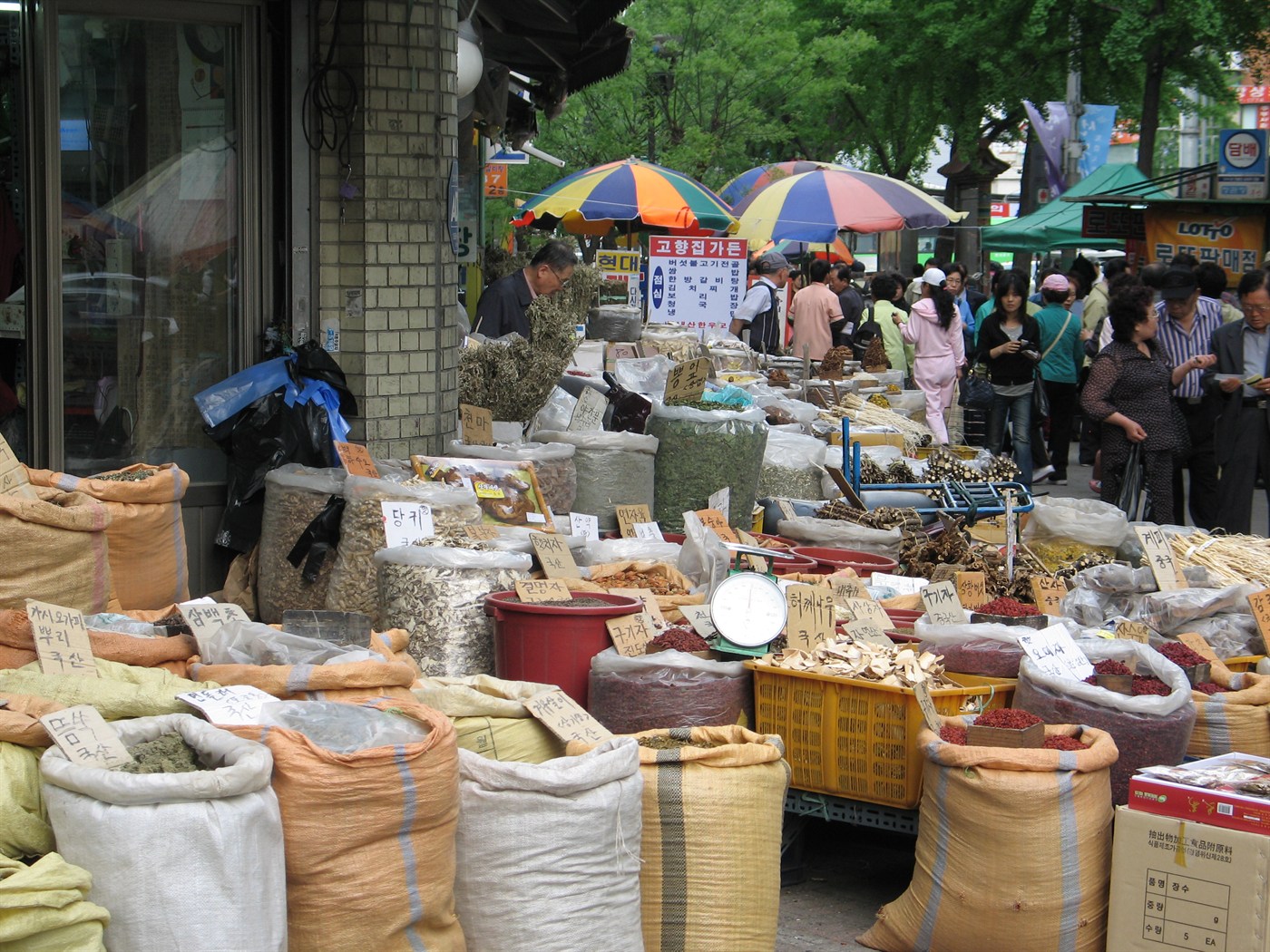
A lot of people still believe that Korean medicine clinics use the sort of herbs you see laid out on the street at places like Gyeongdong Market.
We do not use those herbs.
Using them would be plainly illegal.

Korean medicine clinics are required to use only GMP-certified herbs — herbs that have passed the Ministry of Food and Drug Safety’s testing for heavy metals, toxicity and active constituents.
Using anything else is illegal.
So if you happen to dig up a wild mountain ginseng and come to sell it to me, I won’t buy it. 🙂
The herbs in common use number around 200.
Of course, if you count in all the herbs that are rarely used, it would be well over a thousand.
Let’s label these herbs with lowercase letters — a, b, c, d, and so on.
Combine a+b+c+d and you get prescription A.
Combine a+c+e+f and you get prescription B.
But there is more to it than that. When each herb goes into a prescription, it goes in at a different dose.
Herb a, 15 g. Herb b, 10 g. Herb c, 6 g. Herb d, 4 g — like that.
The herb that plays the main role in the treatment usually carries the largest dose.
The principal medicinal in a prescription is called the monarch — gun (君).
The medicinal that supports the monarch is its minister — sin (臣).
And the ones that help in a supporting role are the assistant and the envoy — jwa (佐) and sa (使).
Taken together, this is called gun-sin-jwa-sa (君臣佐使): monarch, minister, assistant, envoy.
Suppose, for example, that a patient has no energy, cannot digest well, has a cold abdomen and a sluggish bowel.
Then you make ginseng the monarch, dried ginger the minister, and jujube and licorice the assistant and envoy.
And if the lack of energy and the poor digestion are very severe, you raise the dose of the ginseng.
If the cold abdomen is the milder symptom, you bring the dose of the dried ginger down.
The discipline that studies the properties and actions of each individual herb is called materia medica — bonchohak.
The discipline that studies which medicinals to combine, in what composition and at what dose, is called formula studies — bangjehak.
Another distinctive thing about herbal medicine is that 1 + 1 is not 2. It can be 3, or 4.
What do I mean by that?
Say we have a prescription AB, made of two medicinals, a and b.
You would naturally expect the action of prescription AB to be the action of a plus the action of b.
But sometimes the effect of AB is not ab. It comes out as abc — something that seems to arrive from nowhere.
Why does this happen?
Because even a single herb is not one compound. It is made up of many compounds.
So a medicinal can produce a different effect depending on which other medicinal it meets.
Which makes the whole thing far more complex.
This web of complex interrelations is called yakdae (藥對) — the pairing of medicinals.
And studying this, over thousands of years, is precisely what Korean medicine has been doing.
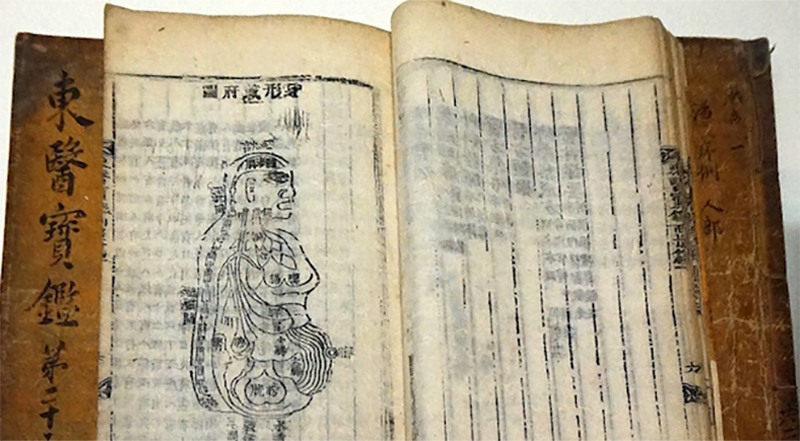
The Donguibogam alone, which you all know of, records some 4,000 prescriptions.
Studying prescriptions of this complexity and variety, and researching their actions and their applications — that is the work of a Korean medicine doctor.
Now, some people will say that the effects of herbal medicine have never been verified.
That is talking without knowing what you are talking about.
First. Herbal medicine is verified by its history itself.
The fact that it has been in use for thousands of years is, in itself, verification.
What is verification of a drug, after all?
It is establishing the drug’s effects and its side effects.
The Western drugs that come out now — FDA approved, and so on.
That is barely 10 or 20 years of verification.
What happens if a side effect appears after 30 years?
Or if it accumulates in the body and the side effect appears after 50?
In the history of Western medicine there is more than one or two such drugs.
Talking about verification on the strength of a history that short is, frankly, the more absurd position.
This is why, in Korea, a prescription recorded in the classical medical texts can come straight to market as a medicine without going through the new-drug development process.
What would be the point of re-verifying for 10 or 20 years a medicine that has been verified for thousands?
And second, this research is slow because there is no pharmaceutical capital willing to fund it.
The prescriptions recorded in the classical texts cannot be patented.
They have been in use since antiquity and are entirely out in the open. Who would you grant the patent to?
So even if you carry out the research, you hold no exclusive rights to the medicine.
And no company is going to put up capital to research a medicine it cannot hold exclusively.
So this research does not happen inside pharmaceutical companies. It happens almost entirely at universities and government-affiliated research institutes.
Which means it is bound to be slow.
Third — and this is an enormously important reason — current science and technology are simply not yet capable of researching the effects of herbal medicine completely.
What does that mean?
Have you read the novel, or seen the series, called The Three-Body Problem?
It is a novel by the Chinese science fiction writer Liu Cixin, and Netflix turned it into a series not long ago.
Why is the novel called The Three-Body Problem?

“Three-body” means three objects. And the three-body problem is this: when you have three objects in motion, the gravitational attraction among them cannot be calculated.
The most advanced field in science today is physics.
And in physics, to this day, the attraction between two moving objects can be calculated — but add just one more object, so that there are three, and the attraction among those three becomes too complex to calculate.
Why have I suddenly brought this up?
The discipline that studies how a drug is metabolized once it enters the body, where it goes and what effect it produces, is called pharmacokinetics.
And in pharmacokinetics too, to this day — when a single drug goes in, how it is metabolized and how it produces its effect can be traced to a reasonable degree.
But once the number of drugs goes past two or three, there is almost no research on how those drugs influence one another and what effect they produce together.
It becomes too complex. The research cannot be done.
And yet, when you go to the hospital, they prescribe Solondo, Azaprin, Mezavant and the rest, along with a digestive aid, just like that.
Do you know how they decide to prescribe these together?
They just do.
Do you know whether there is any research on how those three drugs are metabolized together, and what effect they produce together?
There is no such research.
It was tried, nothing much went wrong, and so it gets used.
In fact, with the 5-ASA agents — Mezavant, Pentasa, Asacol, mesalazine — we do not even know how the effect is produced.
We do not know how it works. But it was tried, and it does work.
So it gets used.
Western medicine uses a great many drugs all at once, doesn’t it?
Older people, for instance, get a blood pressure drug, a diabetes drug, a cholesterol drug, an anti-inflammatory and a painkiller, all prescribed together.
And on any of that, there is no research.
That is the reality.
Modern science is simply not developed enough to account for all of it.
Coming back to herbal medicine — naturally, nobody dares take on research into medicines with a composition this complex.
How would you even research that system?
We are not at that level yet.
And then there is this. To treat ulcerative colitis and Crohn’s disease, does it make sense to follow the Western medical approach exactly as it is?
When Western medicine is failing at it, again and again?
When you go to a hospital and are diagnosed with ulcerative colitis or Crohn’s disease, what is the first thing you are told?
This disease cannot be cured. You will carry it for life. You will have to take Western medication for life.
But here is the problem: taking that medication for life does not mean it is well controlled either.
That is what you are being told, isn’t it?
So if you follow Western medicine’s research exactly where it leads, that same place is where you end up. Is that going to work?
Following an approach that has failed for everyone else is nothing more than saying you intend to fail too.
If everyone else keeps failing, then at the very least you have to come at it from a different angle, from a different perspective, for there to be any possibility of success.
So I approached it from a different perspective. And that is why it is working.
And the body of research Korean medicine has built up over thousands of years is far more complex, and far more logical, than you would imagine — which is why approaching ulcerative colitis and Crohn’s disease through Korean medicine has succeeded.
Now. I have spent all this time saying how very difficult it is to research herbal medicine within modern science.
And yet a great deal of research is already being done.
As I said earlier, there is more research on individual medicinals, which is the easier task, than on prescriptions.
I had originally meant to talk today about what has actually been established regarding the effects of herbal medicine.
But this has run long, so I will leave it here for today.
Next time I will go through, on the basis of the published papers, the mechanisms by which specific herbal medicines treat ulcerative colitis and Crohn’s disease.
This kind of talk is so familiar to me that I don’t feel its importance. And what I will cover next time is more technical, so I thought it would be even less interesting — which is why I had not done it.
But it seems there are people who want to hear it, so I will.
If you have questions about Crohn’s disease, ulcerative colitis, or herbal treatment, please leave them in the comments. I read them, and I take them up as topics.
This is Hanstep Korean Medicine Clinic.
Thank you.
▶️ Watch our YouTube video on this topic:
Please turn on subtitles to watch.
HanStep Korean Medicine Clinic – Inflammatory Bowel Disease Clinic
Photo: Gyeongdong Market, Seoul ⓒ Gaël Chardon, CC BY-SA 2.0, via Wikimedia Commons


Leave a Reply