Hello. We are Hanstep Korean Medicine Clinic, researching and treating Crohn’s disease since 2007.
Today I want to look at a patient who was having a flare roughly once a month even while he was on Remsima.
Remsima is a copy of Remicade — a biosimilar.
Infliximab is the generic name, and the original infliximab product is Remicade.
Remicade’s patent has expired, so copies are now on the market, and one of those copies is Remsima.
Remicade is a drug you normally receive at the hospital, intravenously, like a drip.
But Remsima also comes in a subcutaneous form that you can inject yourself at home.
This patient was on that self-injection.
He has now been off Remsima and off all Western medication for close to two years, and he is doing well.
But there was one disappointing turn along the way.
I will tell you about that too.
He is a young man in his twenties.
In February 2022 he had symptoms of an anal fistula and went to a colorectal clinic.
They said it did not look like a simple fistula, so a colonoscopy was done, and Crohn’s disease was suspected.
He was transferred to a general hospital and diagnosed with Crohn’s disease.
Quite a few patients with Crohn’s disease are first picked up this way — through a fistula.
Why is that?
Crohn’s disease can produce inflammation anywhere in the digestive tract, from the mouth to the anus.
And the inflammation goes through the full thickness of the bowel wall, from the inner lining out to the deep outer layers.
So the inflammation can bore through the bowel wall and open a tract to the outside — and when that happens around the anus, it becomes a fistula.
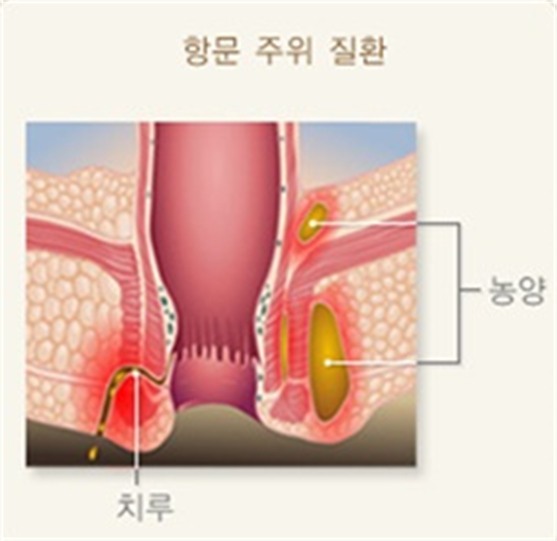
An ordinary fistula is usually cured by surgery. A fistula caused by Crohn’s disease heals poorly, recurs again and again even after surgery, and sometimes several of them appear.
So if a fistula is not healing, or keeps coming back, and there is diarrhea, abdominal pain or weight loss along with it, Crohn’s disease is worth suspecting.
The colorectal clinic did well to catch it.
He took 6 steroid tablets a day for three months, with no effect.
So he was started on Remsima injections.
He improved on Remsima. For about a year he went to the hospital for the infusions, and after that he switched to self-injection every two weeks.
But even on Remsima, a flare came round about once a month.
When a flare came, his abdomen hurt, his stool went loose, and there was blood and mucus.
He got indigestion, heartburn, and acid coming up.
He also felt dizzy when standing up.

On the January 12, 2024 test, calprotectin was 174. He was on Remsima and the number was still somewhat high.
Remsima was holding the inflammation down, but it was not getting on top of it.
Why does this happen?
Think of the body’s immune system as an army.
There is a substance called TNF-alpha, and it works like the radio that carries the order to attack.
A biologic like Remsima is a drug that cuts that radio link.
The order does not get through, so the attack — the inflammation — is reduced and the symptoms improve.
But why the army began mistaking our own bowel for an enemy and attacking it: that cause is still sitting there, untouched.
So around the time the drug wears off, the inflammation comes back up.
And indeed, as he approached the two-week mark after his Remsima injection, he would say his abdomen ached slightly.
Drugs like this also lose effectiveness gradually when they are used over a long period.
So the way I see it, you do not just cut the radio. You find the cause that is shaking the immune system — the imbalance in the body — and you correct it.
Because of these monthly flares, he came to Hanstep Korean Medicine Clinic in May 2024.
He was on Pentasa granules 2 g, Azaprine (an immunosuppressant) 1 tablet, and Remsima by self-injection every two weeks.
When he was under stress his digestion was poor and his chest felt tight.
He often heard water sloshing in his abdomen.
Greasy or spicy food gave him gas and abdominal pain.
Cold food made his abdomen slightly uncomfortable.
Even a small amount of alcohol brought blood in the stool the next day.
During a flare the pain was in the lower right abdomen.
That is the ileocecal region, where Crohn’s disease commonly arises.
For this patient, the digestive side looked like the biggest problem.
So the first prescription I started with was an upper-digestive prescription.

On the May 22, 2024 test, calprotectin was 4.8. Normal.
And more importantly, in that period there was no flare.
This is a man who had been having a flare once a month without fail.
There was no flare in June either, or in July.
In July he ate mala xiang guo and had mild diarrhea, but it did not develop into a flare.
He also ate cold jjamppong and kongguksu with no trouble.
The belching was down by about 50%, and the sloshing sound in his abdomen had almost gone.
On MRI, he was told the fistula also appeared to have closed up.
From August I switched him to an inflammation-type prescription.
And we began stretching out the interval between Remsima injections.
First, while on the herbal treatment, we confirm that he stays stable with no flare for three to four months or more.
Then we lengthen the injection interval little by little and watch how the body responds.
It is a process of checking whether the body has built up the strength to hold on without the drug.
He had been injecting every two weeks, and at the two-week mark his lower abdomen would get slightly uncomfortable.
So he went to three weeks — and the Remsima he received on September 13, 2024 was his last injection.
At the fourth week his abdomen was slightly uncomfortable; by the sixth week even that was gone.
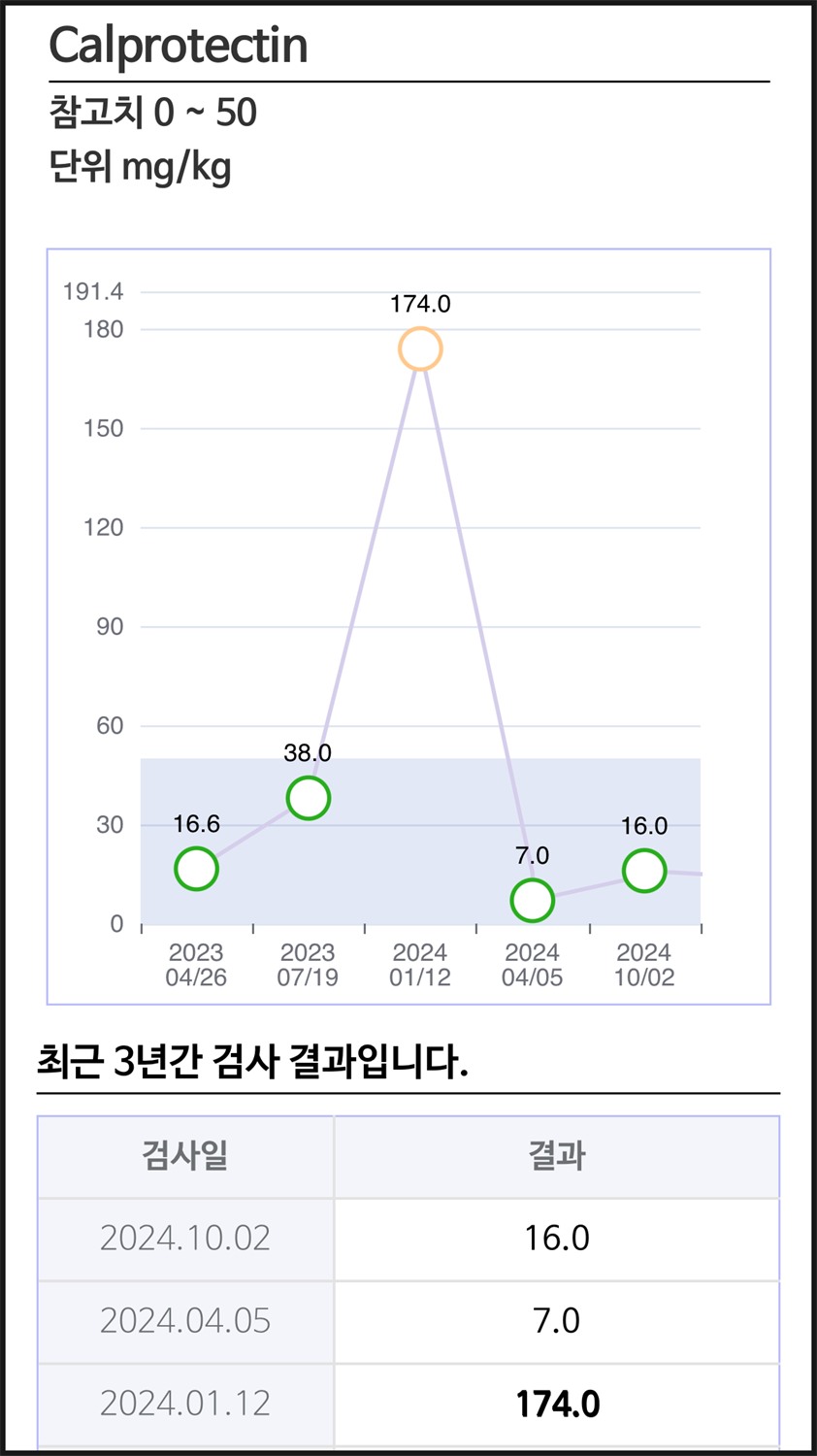
On the October 2, 2024 test, calprotectin was 16. Normal.
In the past, once the injection was overdue his abdomen would have hurt straight away. Now the body was starting to hold on by itself, without the injection.
So we decided not to give any more injections and to keep watching.
And by January 2025 he was using nothing at all — no injection, no Western medication.
He told the hospital that he was not receiving the injections.

On the January 10, 2025 test, calprotectin was 17.
The hospital tests were all normal too.
He had stopped Remsima, Pentasa and Azaprine, and the numbers still came back normal.
So we agreed to test in January, February and March, and if they were all normal, to finish treatment.
I also recommended that he have a colonoscopy.
But at this point the patient simply stopped the treatment.
No symptoms, normal numbers — so he decided he was cured.
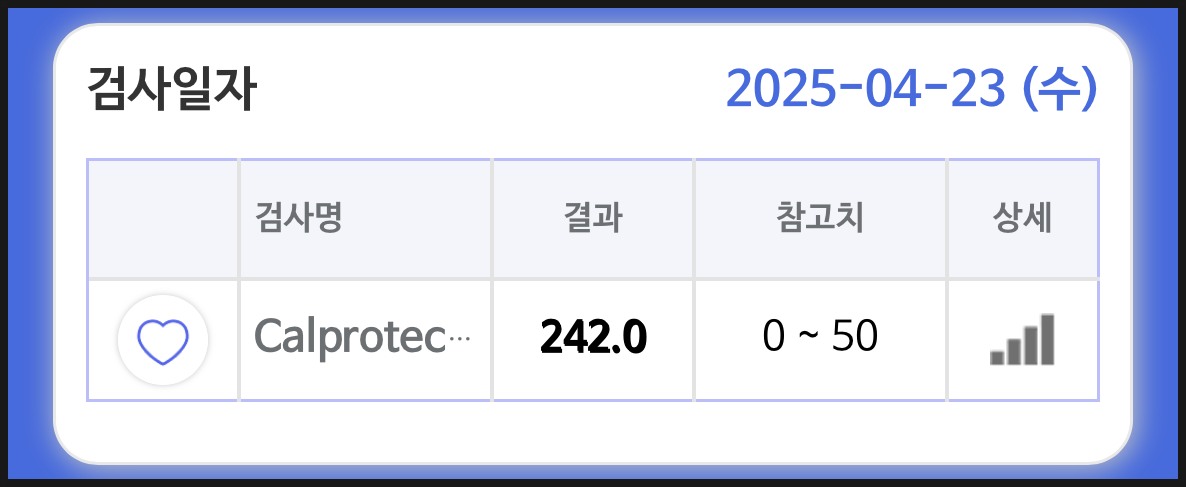
On the April 23, 2025 hospital test, calprotectin was 242.
It had gone back up. So I told him the finish was not complete yet, and that he should take the herbal medicine properly for a while longer.
But he did not resume treatment after that either.

On the August 1, 2025 hospital test, calprotectin was 373. Higher still.
There was some blood in his stool. His digestion was poor, he felt bloated, and his appetite had dropped.
He had a stabbing pain on both sides of his navel.
So in August 2025 we started treatment again.
I treated him with an upper-digestive prescription once more.
In September his digestion improved and his appetite came back.
The pain on both sides of his navel was gone.
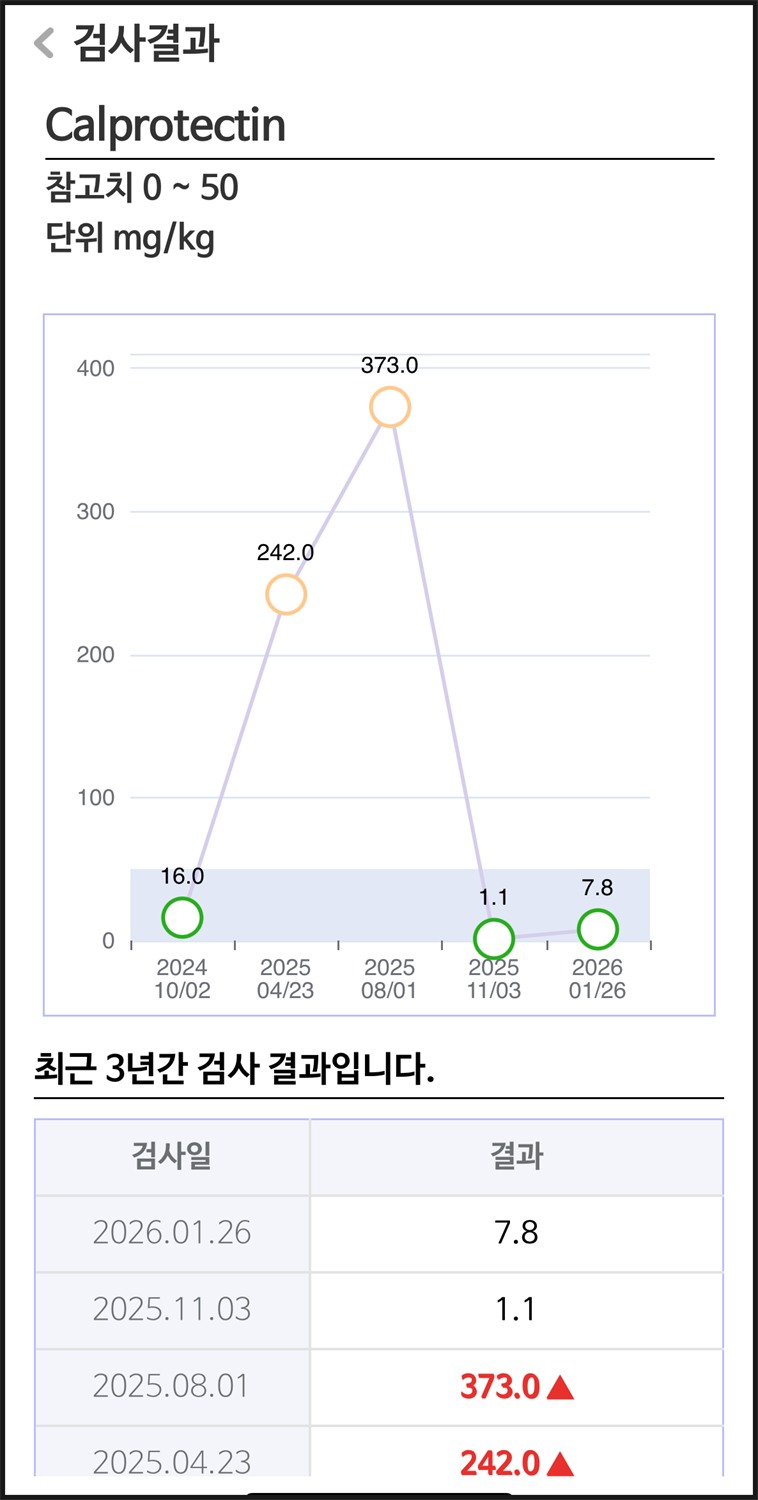
On the November 3, 2025 hospital test, calprotectin was 1.1.
From 373 down to 1.1.
And on the January 26, 2026 test, calprotectin was 7.8.
He also had an MRI, which showed nothing of concern, and the other numbers were all normal.
The hospital said to keep watching without Western medication.
We treated through to March, and then once more in July and August.

On the July 13, 2026 test, calprotectin was 26.
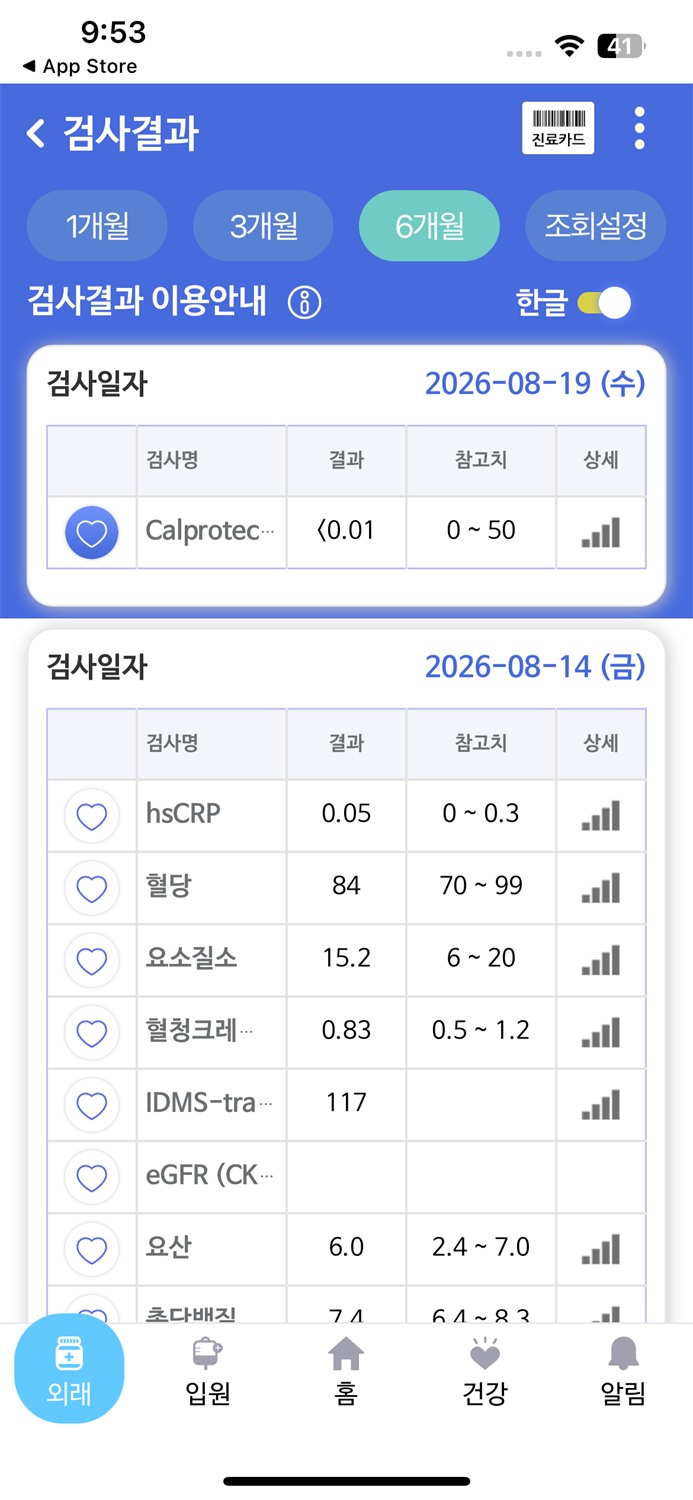
On the August 14, 2026 hospital tests, the bloods were all normal — hs-CRP 0.05, and everything else within range. And on August 19, calprotectin came back at under 0.01.
The hospital said it was good news that he was holding normal.
And in August 2026 we finished treatment.
Let me sum up.
This was a man who was having a flare once a month even while he was on Remsima.
From May 2024, when the herbal treatment started, he did not have a single flare.
His last Remsima injection was on September 13, 2024, and from January 2025 he has used no Western medication at all.
He stopped Remsima, Pentasa and Azaprine, and close to two years later he is still holding well.
Calprotectin, blood tests, MRI — every result is normal.
But there is one thing I regret.
If the finish had been done cleanly in January 2025, the treatment could have ended far earlier.
Having no symptoms and normal numbers does not mean the treatment is over.
If you stop while a small ember is still alight inside the body, that ember can catch again.
And that is what happened here: three months after stopping, the numbers were back up, and at seven months there was blood in the stool.
Treating it again took close to another year.
Fortunately it has finished well this time — but if the finish had been done properly the first time, he would have had a much easier run of it.
If the symptoms are gone and the numbers have come good, you are almost all the way there.
Confirm that last step, and finish the treatment properly.
If you have questions about Crohn’s disease, ulcerative colitis, or biologics like Remsima, please leave them in the comments. I read them, and I take them up as topics.
This is Hanstep Korean Medicine Clinic.
Thank you.
▶️ Watch our YouTube video on this case:
Please turn on subtitles to watch.
HanStep Korean Medicine Clinic – Inflammatory Bowel Disease Clinic


Leave a Reply