Hello.
We are Hanstep Korean Medicine Clinic, researching and treating ulcerative colitis since 2007.
Today I want to walk through the course of one ulcerative colitis patient — how the disease was managed, what changed, and the road to complete remission.
Crohn’s disease and ulcerative colitis are generally described as diseases of the young, mostly appearing between the teens and the thirties.
Recently, though, ulcerative colitis has been showing a rising incidence in older adults as well.
This patient is a woman in her seventies.
In 2023 she was diagnosed with stage 3 non-small cell lung cancer and started chemotherapy.
In June 2024, while she was on immunotherapy, symptoms of ulcerative colitis began.
In October 2024 the gastroenterology department of a university hospital gave her the final diagnosis of ulcerative colitis.
The colitis symptoms became severe enough that her cancer treatment had to be stopped.
She was put on mesalazine, which improved things a little, but not completely.
In November 2024 she came to Hanstep Korean Medicine Clinic.
She was passing stool once a day.
But there was blood and mucus in it, and there was urgency — she could not hold it for five minutes.
Since starting chemotherapy her appetite had dropped a great deal, and she had burning in her stomach when it was empty.
There was moderate pain in the lower abdomen.
When she was tired or under stress, the pain got worse.
She was taking mesalazine 4 tablets a day, plus a mesalazine suppository once a day.
Here is the colonoscopy from October 2024. The state of the bowel is very poor.
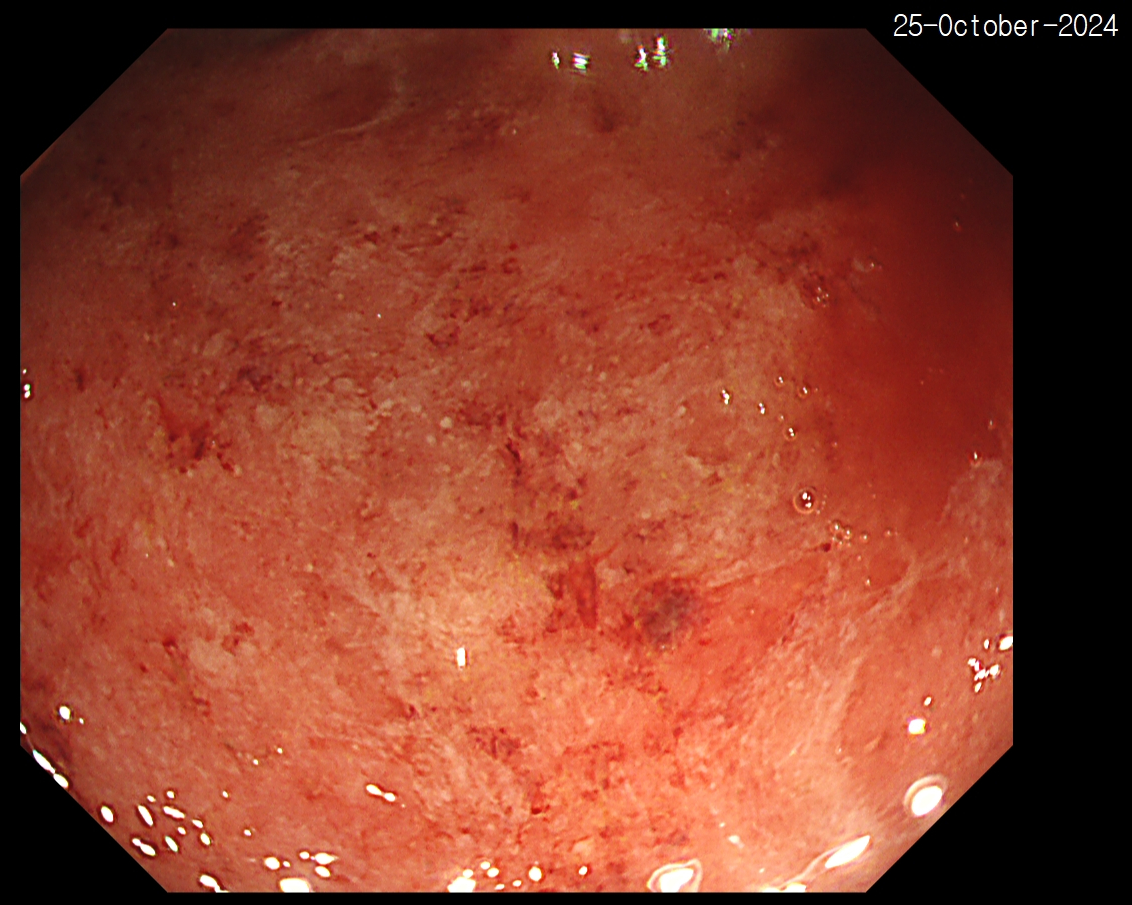
Even at a glance the inflammation is severe.
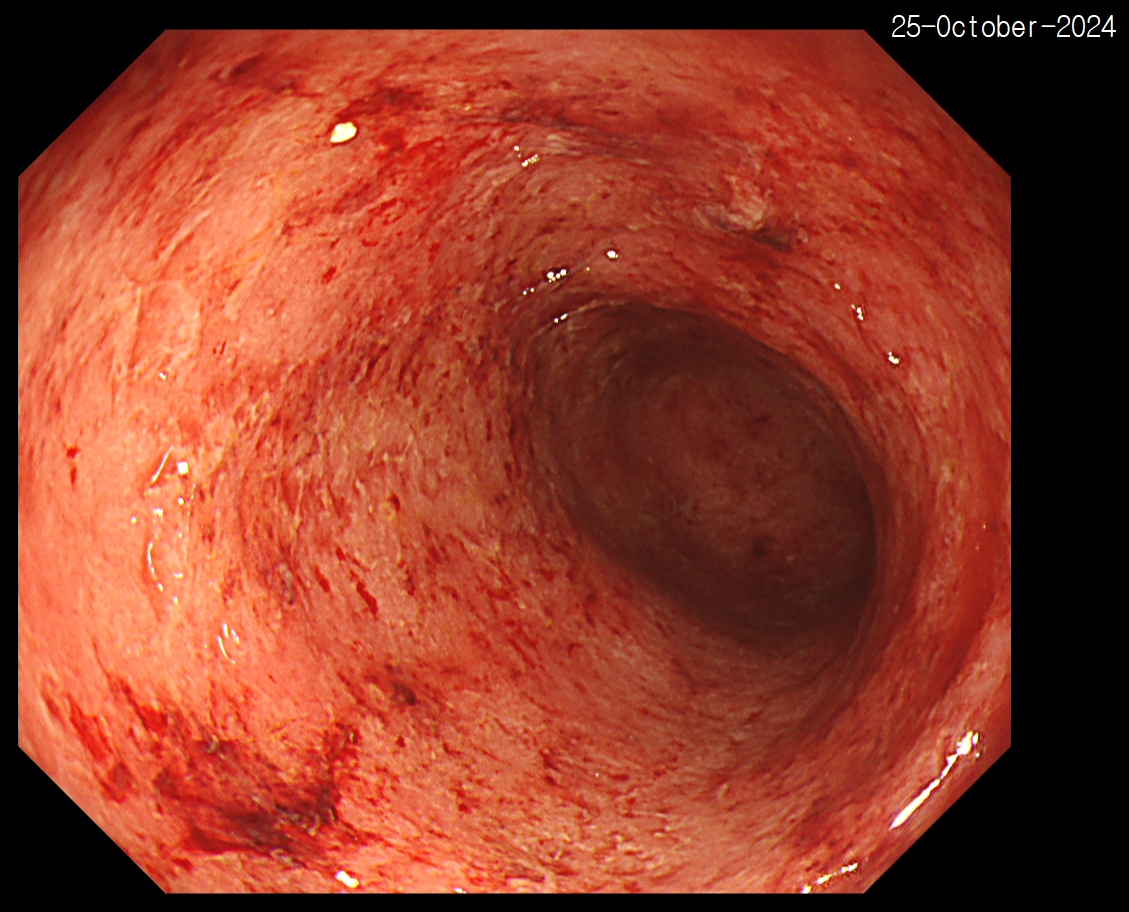
There is bleeding, with blood pooled in the lumen.
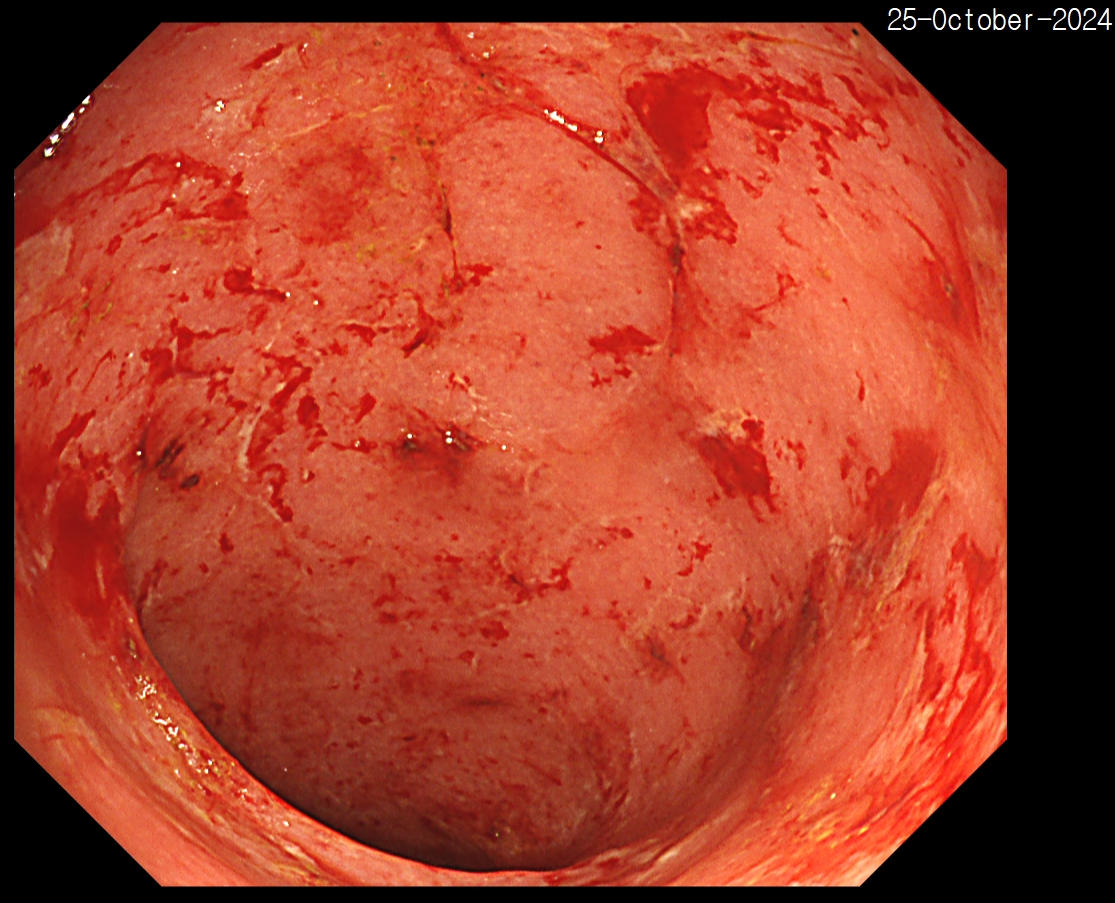
The bowel wall is covered in erosions, and the inflammation and ulceration are bleeding heavily. Blood and mucus are smeared across the surface.
Chemotherapy drugs are harsh.
They are especially hard on the mucosal tissues of the body — the lining of the mouth, the lining of the gut.
Those tissues break down easily and are quick to become a problem.
Now, think about the position she was in. Ulcerative colitis appeared while she was being treated for cancer.
You cannot put a patient like this on steroids or immunosuppressants.
If her immune function drops, that becomes a serious problem for the cancer treatment.
So there was very little that could be done for her — and that is why her family looked for us and brought her in.
Her general condition had deteriorated through the cancer treatment, and on top of that the ulcerative colitis had brought blood and mucus in the stool.

On the blood test of November 18, 2024, the inflammatory marker CRP was 3.2. That is high — under 0.5 is normal.

And AST, one of the liver enzymes, was slightly elevated at 40.
Even in a cancer patient, the treatment is the same.
You raise the body’s own immune function and settle it down.
You clear the inflammation while restoring the intestinal mucosa.
By December 2024, one month into treatment, the blood in her stool was down by 70–80%. The abdominal pain, which had been frequent, was almost gone.
About three months in, by February 2025, her stool was normal, the blood and mucus were gone, and the abdominal pain had disappeared completely.
Her eating and digestion improved.

The hospital repeated the blood tests. CRP had been 3.2 in November; on February 27, 2025 it was 0.06.

AST, which had been slightly high at 40, had come down to 23.
On the herbal treatment the inflammation came down, and the liver enzymes improved as well.
By March she was passing stool once a day, normally formed. The feeling of incomplete evacuation was gone. No blood, no mucus.

On March 26, 2025, fecal calprotectin — the stool inflammation marker — was 15. Completely normal.
A CT scan at the hospital showed the tumour unchanged from before. It had not grown. All of her blood work was normal.
Patients being treated for cancer are often told not to take herbal medicine. In this patient’s case, through the whole period of herbal treatment, the tumour did not grow, her liver enzymes improved, her inflammatory markers improved, the blood and mucus in her stool resolved, and the appetite she had lost to chemotherapy came back.
There is also research on this question. Let me show you one study.
It looked at patients diagnosed with gastric cancer who received adjuvant chemotherapy after surgery, between January 1, 1999 and December 31, 2008.
Traditional Chinese Medicine Enhances Survival in Patients with Gastric Cancer after Surgery and Adjuvant Chemotherapy in Taiwan: A Nationwide Matched Cohort Study
https://onlinelibrary.wiley.com/doi/10.1155/2021/7584631
It is a nationwide study drawing on Taiwan’s National Health Insurance database, following survival through to December 2013, and published in 2021.
A cohort study, analysing ten years of data on a very large scale.
There were 1,701 herbal medicine users and 5,103 non-users.
Patients who took herbal medicine for fewer than 30 days were classified as non-users.
Those who took it for 30 to 179 days were classified as short-term users.
Those who took it for 180 days or more were classified as long-term users.
The result is this graph.
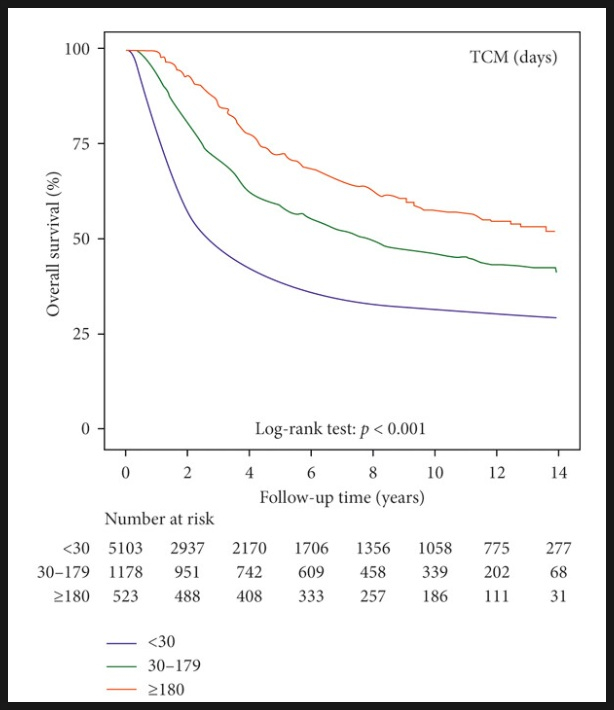
The red line is the long-term group, 180 days or more. Their survival is the highest.
The people who took herbal medicine for a long time are still above 50% survival at ten years.
The blue line at the bottom is the non-user group — fewer than 30 days. That group has the lowest survival, finishing around 30%.
Compared with non-users, the short-term group had a hazard ratio of 0.59 and the long-term group 0.41.
One thing I want to be clear about: that study was done in gastric cancer patients after surgery, and this patient has lung cancer. It is also an observational database study. Please do not start herbal medicine on your own during cancer treatment. It needs to be prescribed by a Korean medicine doctor, with your oncology team informed.
Now, back to this patient.
From this point she stopped the suppository and began reducing the mesalazine.
From the end of April she was off all Western medication.
Six months into treatment all of her symptoms were gone and all of her test results had improved.
So on June 5, 2025, we repeated the colonoscopy.
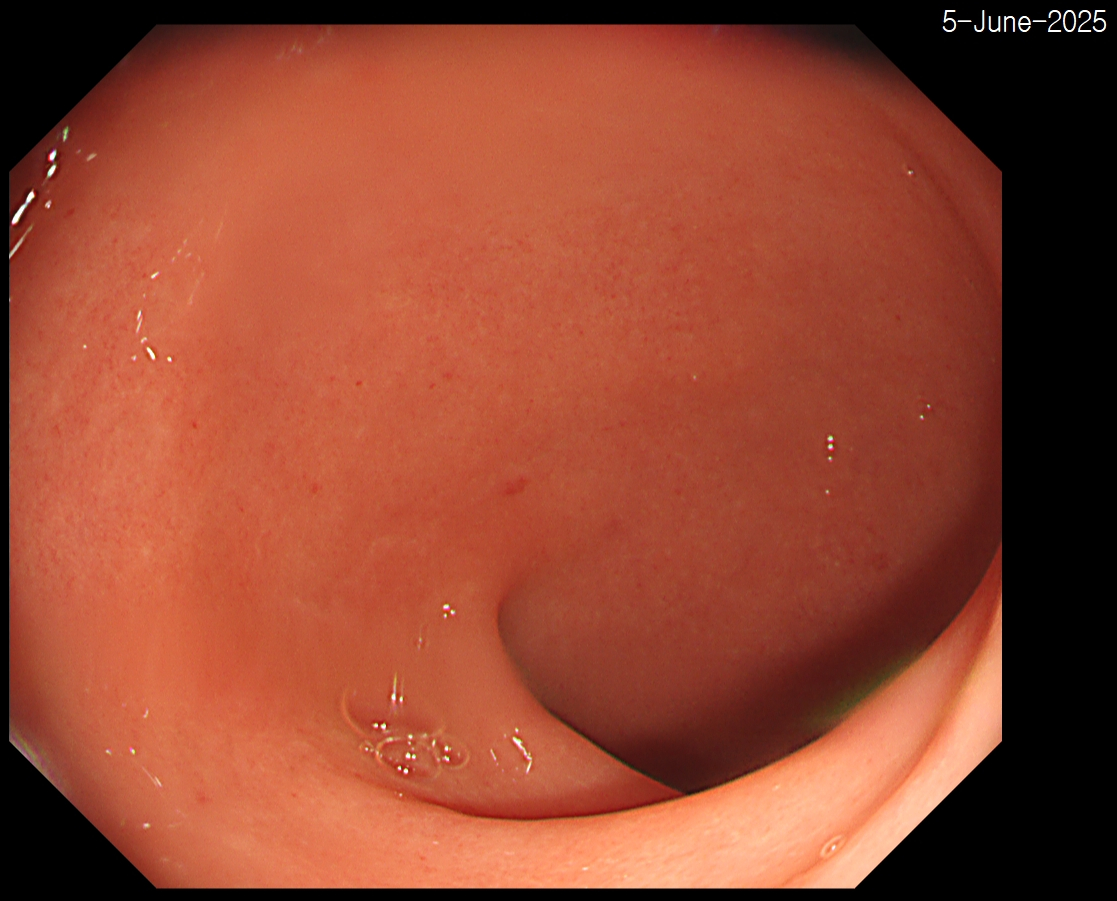
Seven months into herbal treatment, the inflammation is completely gone.
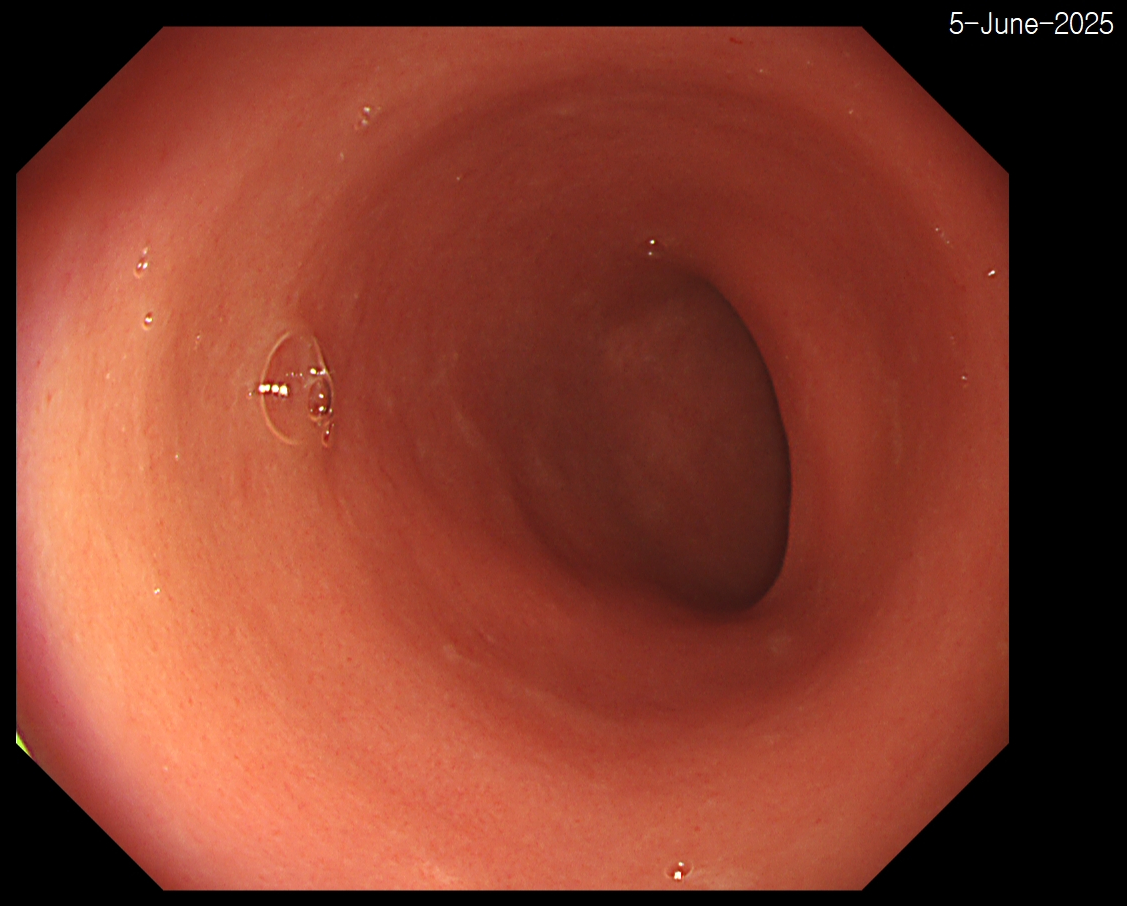
In this view as well, the angry red congestion has disappeared entirely, and so has the bleeding.
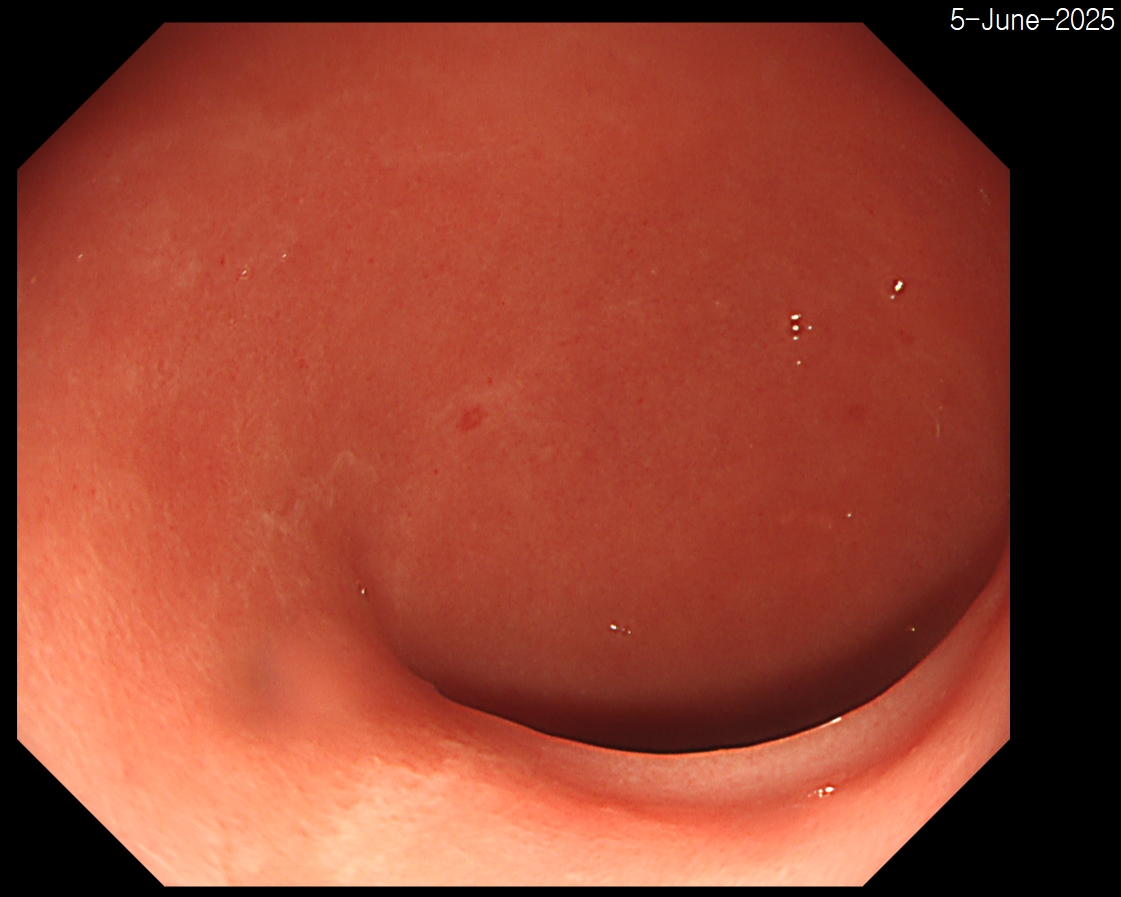
The bowel wall, which had been badly eroded, is completely clean. Even at a glance the change is enormous.
Because she is in her seventies, it was mostly her daughter who kept in contact with me.
After the colonoscopy, her daughter sent this message.
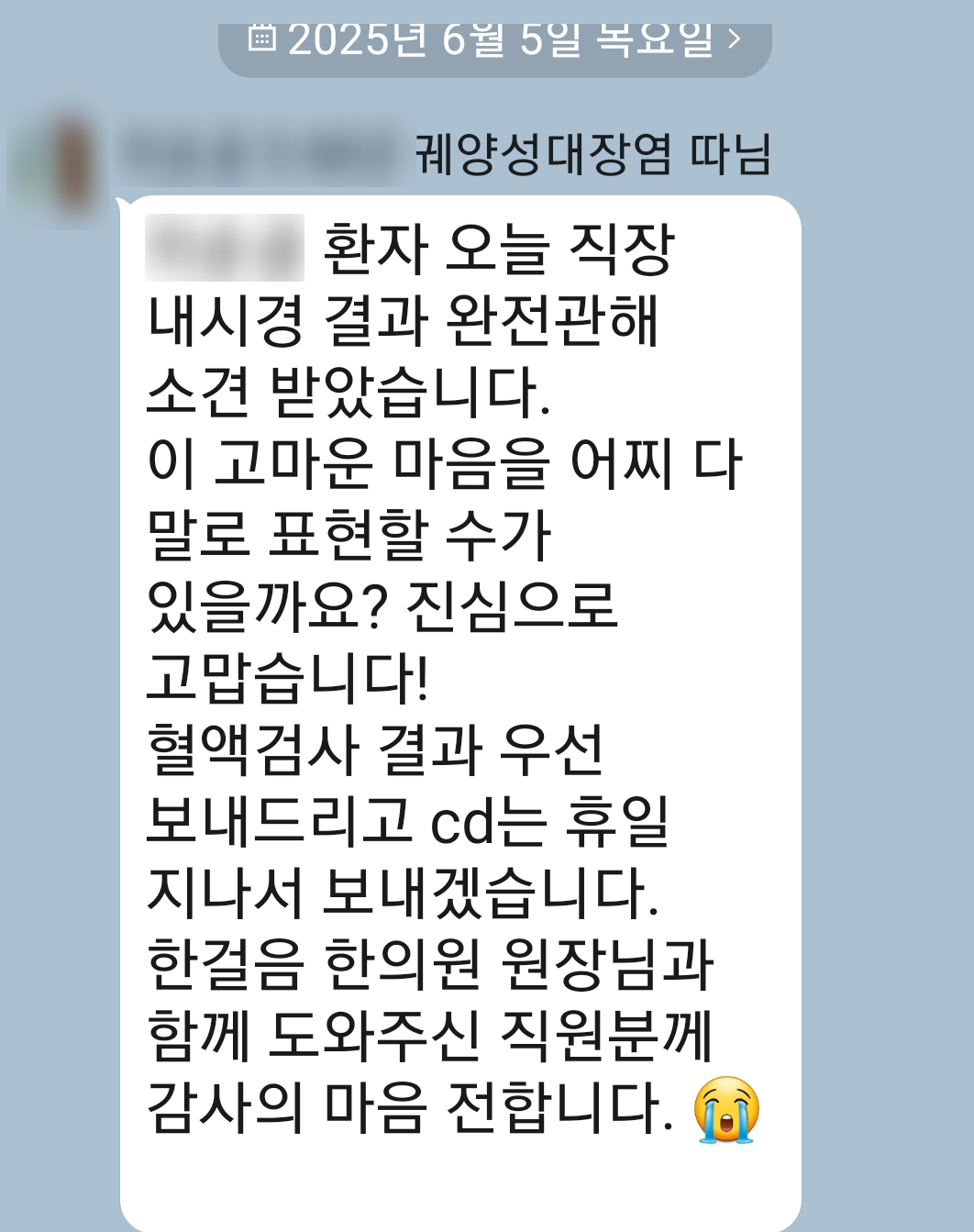
“Today’s endoscopy came back with a finding of complete remission. How could I ever put this gratitude into words? Thank you, truly. I will send the blood test results first, and the CD after the holiday. My thanks to the doctor at Hanstep Korean Medicine Clinic and to the staff who helped us.”
And what did the hospital’s blood tests show?

The inflammatory marker had been 3.2 at the start. The test on June 5, 2025 was 0.12 — completely normal.

The liver enzyme was still at 20, better than the 40 it started at, and holding in the normal range.

Fecal calprotectin was 15 on March 26, 2025, and 36 on May 21, 2025. Both completely normal.
Having confirmed that everything had come good, we finished treatment.
She now takes no medication at all — no Western drugs, no herbal medicine — and is living a normal life.
Her daughter also left a comment on one of our earlier YouTube videos. I will put the link here.
https://www.youtube.com/watch?v=XOeXcN7mjEI
To those of you watching: it is worth thinking carefully about this.
If you are going to the hospital and nothing else, ask your doctor directly what the goal of your treatment is.
Steroids and immunosuppressants are powerful drugs and they may well improve your symptoms. But standard therapy is designed to control inflammation and maintain remission — it is not designed to bring the disease to an end.
That is worth understanding clearly, and worth thinking about when you decide how to approach your own treatment.
This is Hanstep Korean Medicine Clinic.
Thank you.
▶️ Watch our YouTube video on this case:
Please turn on subtitles to watch.
HanStep Korean Medicine Clinic – Inflammatory Bowel Disease Clinic


Leave a Reply