Hello.
We are Hanstep Korean Medicine Clinic, researching and treating ulcerative colitis since 2007.
Today’s patient is in their thirties with ulcerative colitis.
There are a great many ulcerative colitis patients around that age.
In September 2025 they had diarrhea for more than four weeks, and later blood began appearing in the stool.
A colonoscopy was done and ulcerative colitis was diagnosed.
At first they were given a 5-ASA, Mezavant, together with Pentasa suppositories.
About four months later, in January 2026, another colonoscopy was done, and it had not improved much.
These are the images from the September 2025 colonoscopy.
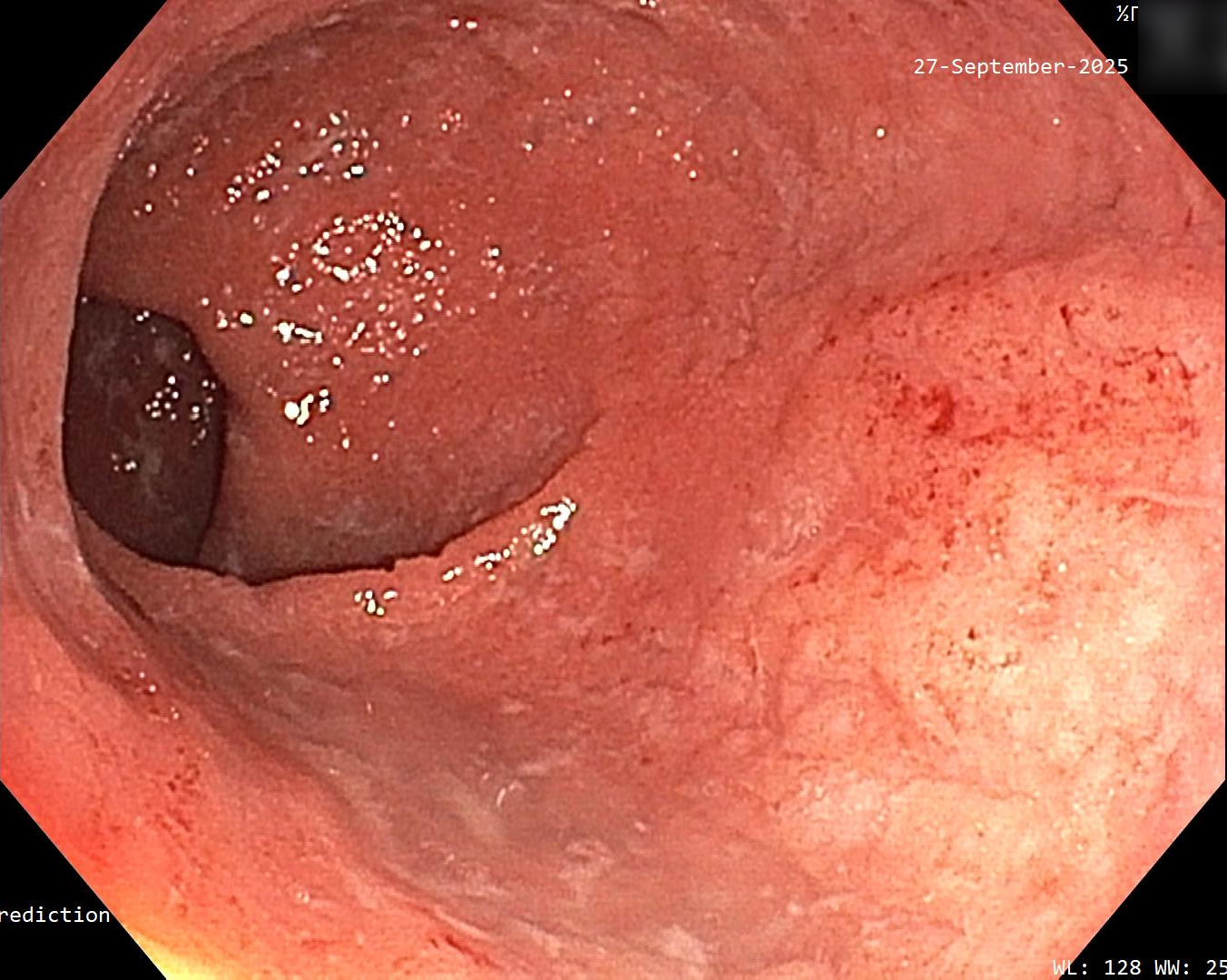
You can see spots of bleeding over on this side.
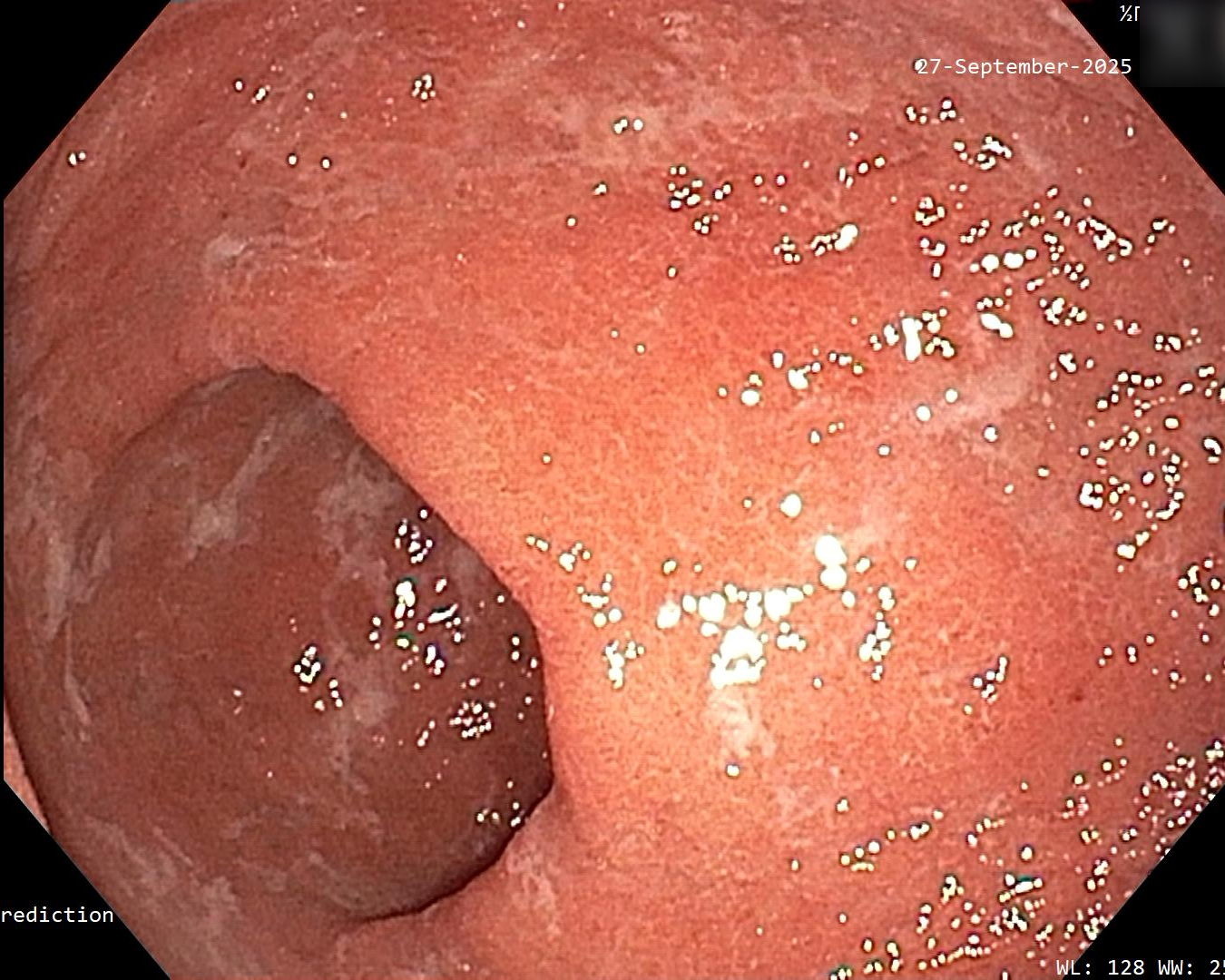
The mucosa here is granular and reddened, and the vascular pattern has been lost.
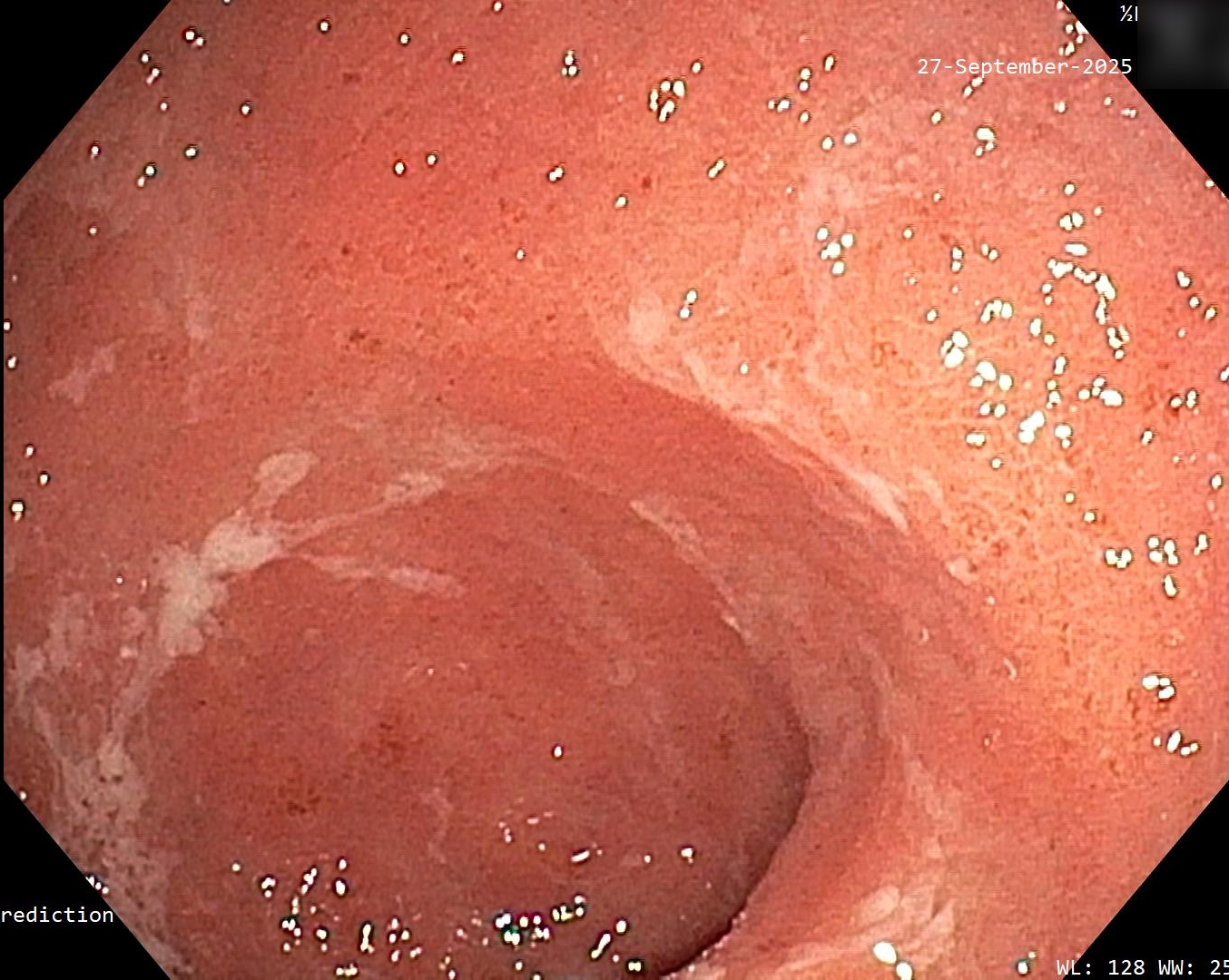
Bleeding points here too, with flecks of mucus from the inflammation.
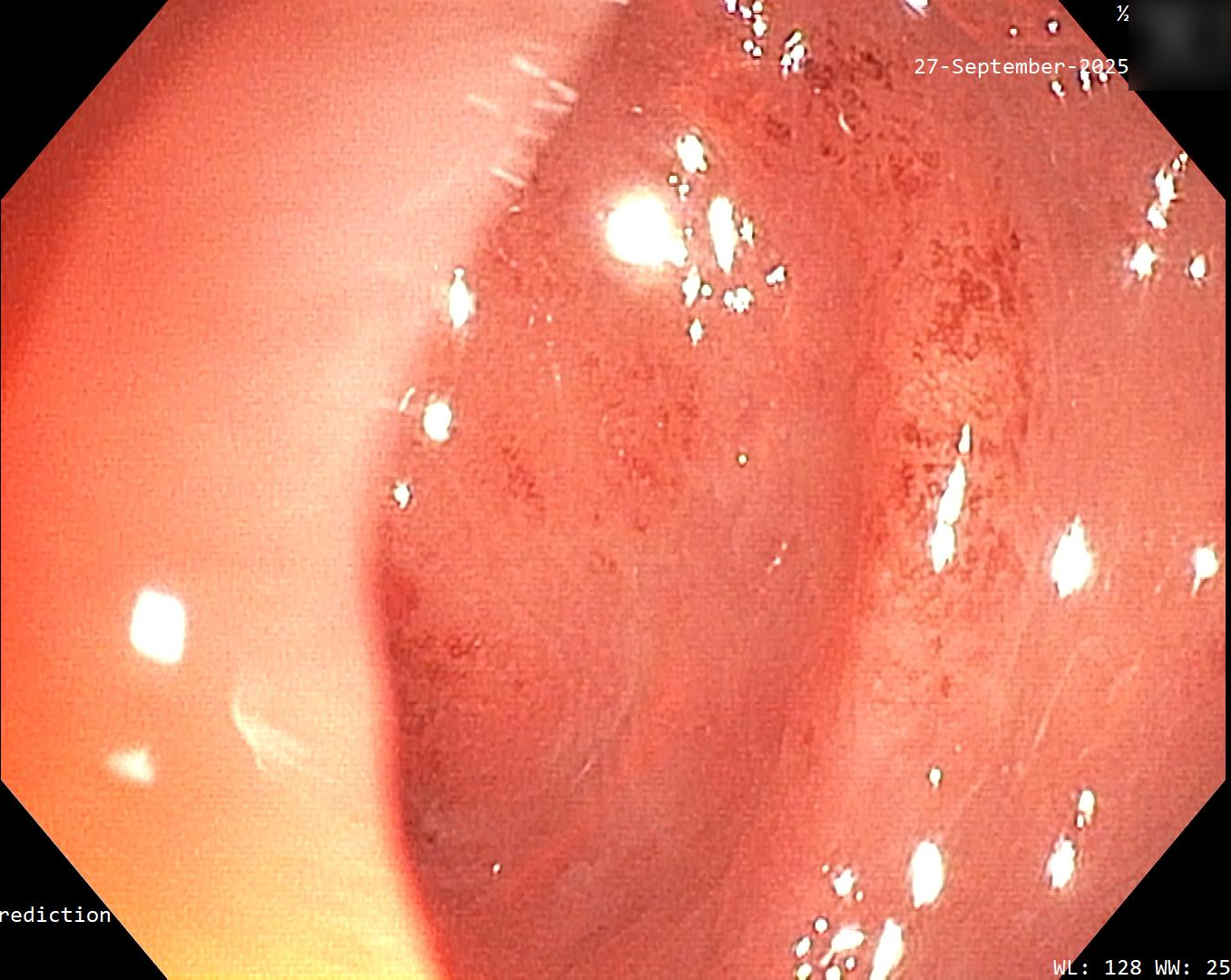
And here the surface is rough and inflamed.
So on February 21, 2026 they came to Hanstep Korean Medicine Clinic.
In early ulcerative colitis there are plenty of patients who get a year or two of remission from a 5-ASA. For this patient it did not do much.
5-ASAs were originally developed as a treatment for arthritis. An effect in ulcerative colitis and Crohn’s disease was discovered later, and these days they are widely used in inflammatory bowel disease.
Exactly how they reduce inflammation is still not fully established, and they are used anyway.
That, I think, is where the problem with Western medication lies.
Because the cause is not known, a drug that treats the cause cannot be used, so a drug that simply reduces the inflammation is used instead.
5-ASAs, steroids, immunosuppressants, biologics — all of them work that way.
The illness is there, the cause is unknown, the inflammation has to come down — so the drugs get tried in sequence.
If one works, good; if it does not, nothing can be done. That is what Western medicine is doing at present.
If it is possible at all, the cause should be identified precisely and then treated. That is when treatment goes well.
I have written papers on this, and I keep saying it on our website and on YouTube: ulcerative colitis has a cause, and it gets better when the medicine is matched to that cause.
At the first visit the patient was taking 4 tablets of Mezavant and 1 Pentasa suppository daily.
Stools 2–5 times a day.
Going to the toilet within an hour of eating.
Gas 10–20 times a day.
Reflux esophagitis, with heartburn after sour food.
Very spicy food brought on diarrhea and a burning anus.
Under stress the chest felt tight and they would sigh.
Chronic fatigue.
Very sensitive to heat, and sweating heavily after hot or spicy food.
And severe allergic rhinitis at the change of season, with pollen, and in cold wind.
A slight feeling of something caught in the throat.
A great many upper-digestive problems.
And rhinitis as well.
So the first prescription I started with was an upper-digestive prescription.
But the first test result, on February 25, was a little odd.

Calprotectin 40. Normal is under 50, so that is normal.
But the fecal occult blood test came back at 281 — positive.
The colonoscopy had not improved, there was blood mixed in the stool, and yet the calprotectin was normal.
Among new ulcerative colitis patients I see this from time to time.
A patient comes in, we test, and the calprotectin comes back normal.
There are a few possible reasons.
The first is the Western medication.
At that point they were taking 4 tablets of Mezavant and a Pentasa suppository every day.
Calprotectin is a substance released by the white blood cells that crowd into the bowel when inflammation develops there.
If Western medication is suppressing the inflammatory response, less of that substance can be released.
A suppository in particular is put directly into the rectum, so it presses down the inflammation in that area immediately.
So it is not that the inflammation had gone. It was being held down by the medication, and the number came out low.
This is seen more often in patients whose remission has been maintained with steroids.
The second is the extent of the inflammation.
In this patient the inflammation ran from the rectum up to about 25cm.
Against the whole of the large intestine, that is a narrow stretch.
When the inflamed area is small, less of it is shed into the stool, and the number may not come out high.
This is not just my impression. A Korean study presented in 2025, covering 165 ulcerative colitis patients and 404 colonoscopies, found that the calprotectin cut-off that best identified endoscopic activity shifted with the extent of disease: 77 in proctitis, 164 in left-sided colitis, 222 in pancolitis. The narrower the disease, the lower the number at which it still means something.
An abstract presented in 2026 went further. In ulcerative proctitis, calprotectin showed no significant correlation with endoscopic activity at all, and at the best cut-off the sensitivity was only 43%. The authors concluded that in proctitis calprotectin cannot replace endoscopic assessment.
Then why was the fecal occult blood test positive?
The two tests are looking at different things.
Calprotectin is a test of the inflammatory response. The fecal occult blood test asks whether there is blood mixed into the stool.
The medication suppresses the inflammatory response to some degree, but it does not completely stop eroded mucosa from bleeding.
And agreement between endoscopic findings and calprotectin is around 80%. In a meta-analysis pooling 49 studies in ulcerative colitis, the sensitivity of calprotectin for mucosal healing was 80.4% and the specificity 81.7%.
So there can be error.
And how the stool sample is taken makes a difference too.
Where the inflammation is confined to the rectum, as it was here, you should scoop the stool from at least three different places for the test. That is how the error comes down.
Looking at how it is done in Korea, hospitals ordering a calprotectin test often just tell the patient to bring in a stool sample.
But for a single scoop from one spot to be accurate, the calprotectin would have to be spread evenly all the way through the stool, wouldn’t it?
And when the inflammation is only in the rectum, it will not be spread evenly.
Then the result is easily in error.
This is not only my own reasoning. A study of 50 IBD patients took samples from three different points of the first stool of the day and found that, within one and the same bowel movement, the result crossed the clinical cut-off in 8% to 23% of cases depending on the threshold used. Between different bowel movements the figure was 13% to 26%. Another study put the median within-day coefficient of variation at 52%, with a range from 4% to 178%.
And an expert recommendation published in 2026 by the Hellenic Group for the Study of Inflammatory Bowel Disease states it directly: four extractions should be taken from four different locations of the stool specimen to give a representative calprotectin value, because extraction from a single location produces high heterogeneity within the same sample.
So when you collect a stool sample, please take it from at least three different places. The same studies are why a first-morning stool is recommended, and why you should collect it the same way each time if the numbers are going to be compared.
And then the two tests have to be read together, and followed steadily over several months, before anything is certain.
So do not be reassured by one number.
Even so, the symptoms did improve little by little.
In March the gas was down to around 10 times a day, and the tightness in the chest had almost gone.
In April the trips to the toilet after meals stopped, and the fatigue was down by about 20%.
But at the end of March the allergic rhinitis came on severely for about three weeks.
Runny nose, sneezing and itchy eyes, all severe.
So on April 23 I switched them to a respiratory-type prescription.
And from that day the Pentasa suppositories were stopped, and from May we agreed to cut the Mezavant to 3 tablets.

Test of April 24. Calprotectin 5.1. The fecal occult blood test was 25 as well — negative.
But three days after stopping the suppositories, a little blood and mucus appeared in the stool.
The numbers were good, and yet blood showed up the moment the suppositories stopped.
That is a sign the suppositories had been holding down the inflammation in the rectum.
On May 18 a rectoscopy was done at the hospital. Where it had been abnormal up to 25cm last time, this time it had come down to about 20cm.
And this is where it gets important.
As the Western medication came down, the numbers started going up.

June 15, calprotectin 59. Just over the normal range.
So on June 17 I switched them to an inflammation-type prescription.

July 13, calprotectin 47. Back into normal.
A CT in July was normal too.
So the Mezavant was reduced further, to 2 tablets and then 1.

And then, on August 10, calprotectin 696.
From 47 to 696 — straight up.
Remember what I said earlier? While the Western medication is being taken, the inflammation is held down and the number can come out low.
As the medication came down, the inflammation that had been held down was exposed.
The calprotectin of 40 at the very first test can be understood the same way.
Now, this is the fork in the road.
The number has gone up, so one option is to put the Western medication back up.
I did the opposite.
From August 13 the Mezavant was stopped completely, and I changed the inflammation-type prescription once more.
Rather than pressing the exposed inflammation back down with Western medication, the point is to treat it properly with herbal medicine.
The result?

September 11, calprotectin 13.
From 696 to 13.
Back to normal in a single month. And this time it is a number produced with no Western medication at all.

October 2, calprotectin 11.
The fecal occult blood test came back at 155 here, slightly positive.

And on the test of November 2, calprotectin 13, fecal occult blood 38 — negative.
Every number normal, with no Western medication.
Stools once or twice a day, normally formed.
The gas had decreased as well, and the sensitivity to heat had almost gone.
Let me sum up.
When this patient first came, their calprotectin was normal.
But that was not because there was no inflammation. It was because the inflammation was being held down by Western medication.
So when the medication was reduced, the number went up to 59, and then to 696.
And when the medication was stopped altogether and the treatment was herbal, it went to 13, 11, 13.
Everything is staying normal without Western medication.
There is something here you really must remember.
While you are taking Western medication, a normal calprotectin is not something to be reassured by.
It is only a real normal if the number is still normal after the medication has been reduced or stopped.
That is why I stop all the Western medication first, confirm it with repeated testing, and finish treatment only after confirming it on colonoscopy at the end.
For this patient the plan is to test every month from here, and if it stays normal, to do a colonoscopy at the end of December or the beginning of January.
I will report back when we have the result.
If you have questions about Crohn’s disease, ulcerative colitis or calprotectin testing, please leave them in the comments. I read them, and I take them up as topics.
This is Hanstep Korean Medicine Clinic.
Thank you.
▶️ Watch our YouTube video on this case:
Please turn on subtitles to watch.
HanStep Korean Medicine Clinic – Inflammatory Bowel Disease Clinic
Sources
Lee J, Kim SJ, Lee MH. Differential Cutoff Values of Fecal Calprotectin Based on Disease Extent of Ulcerative Colitis. Journal of Crohn’s and Colitis. 2025;19(Suppl 1):i820.
https://academic.oup.com/ecco-jcc/article/19/Supplement_1/i820/7967410
Pacheco T, Monteiro S, Barros AR, et al. Faecal calprotectin is not a reliable marker in Ulcerative Proctitis. Journal of Crohn’s and Colitis. 2026;20(Suppl 1):jjaf231.702.
https://academic.oup.com/ecco-jcc/article/20/Supplement_1/jjaf231.702/8433089
Lasson A, Stotzer PO, Ohman L, Isaksson S, Sapnara M, Strid H. The intra-individual variability of faecal calprotectin: a prospective study in patients with active ulcerative colitis. Journal of Crohn’s and Colitis. 2015;9(1):26–32.
https://doi.org/10.1016/j.crohns.2014.06.002
Bromke MA, Neubauer K, Kempinski R, Krzystek-Korpacka M. Faecal Calprotectin in Assessment of Mucosal Healing in Adults with Inflammatory Bowel Disease: A Meta-Analysis. Journal of Clinical Medicine. 2021;10(10):2203.
https://pmc.ncbi.nlm.nih.gov/articles/PMC8161009/
Du L, Foshaug R, Huang VW, et al. Within-Stool and Within-Day Sample Variability of Fecal Calprotectin in Patients With Inflammatory Bowel Disease: A Prospective Observational Study. Journal of Clinical Gastroenterology. 2018;52(3):235–240.
https://pubmed.ncbi.nlm.nih.gov/28009684/
Bamias G, Fessatou S, Kapizioni C, et al. Expert recommendations regarding the use of fecal calprotectin in daily clinical practice: statements of a taskforce process from the Hellenic Group for the Study of Inflammatory Bowel Disease (EOMIFNE). Annals of Gastroenterology. 2026;39(2):161–173.
https://pmc.ncbi.nlm.nih.gov/articles/PMC13004819/
D’Amico F, Nancey S, Danese S, Peyrin-Biroulet L. A Practical Guide for Faecal Calprotectin Measurement: Myths and Realities. Journal of Crohn’s and Colitis. 2021;15(1):152–161.


Leave a Reply