Hello. This is Lee Byunghee, director of Hanstep Korean Medicine Clinic.
Today I would like to walk through the case of a patient with Crohn’s disease.
How the diagnosis came about
A man in his twenties.
In 2020 an anal fissure developed and he had surgery at a proctology clinic. The wound did not close. It was still open at the end of 2022, so he went to a university hospital in Seoul, where CT, MRI, capsule endoscopy and colonoscopy were all performed, and he was diagnosed with Crohn’s disease.
Let us look at the imaging from the time of diagnosis.
These are the capsule endoscopy images.
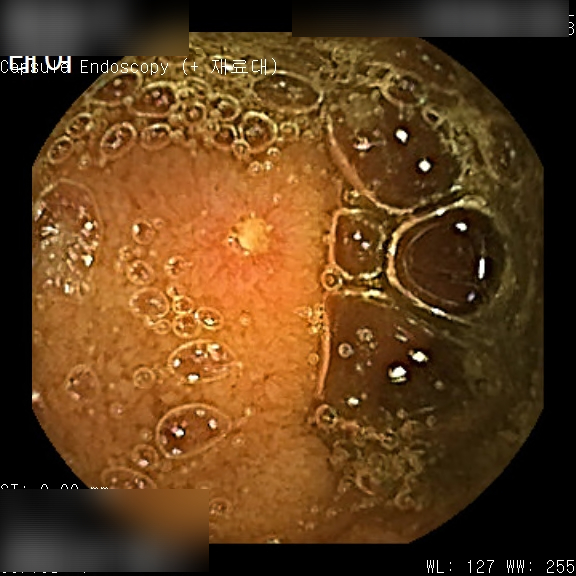
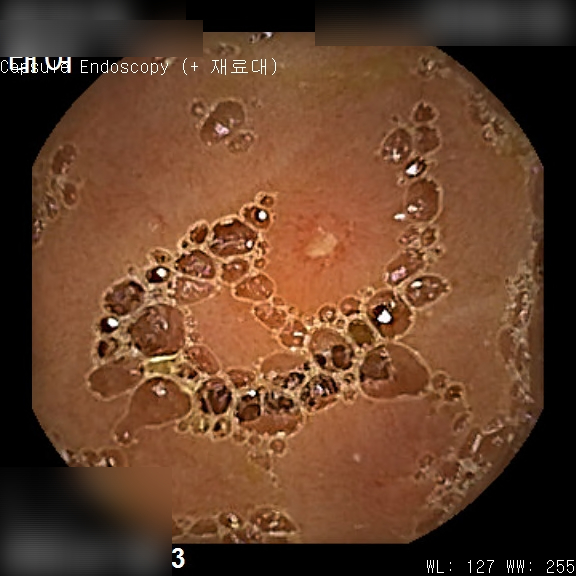
Here, and here, and here — you can see inflammation on the inner surface. The inflammation is in the small intestine.
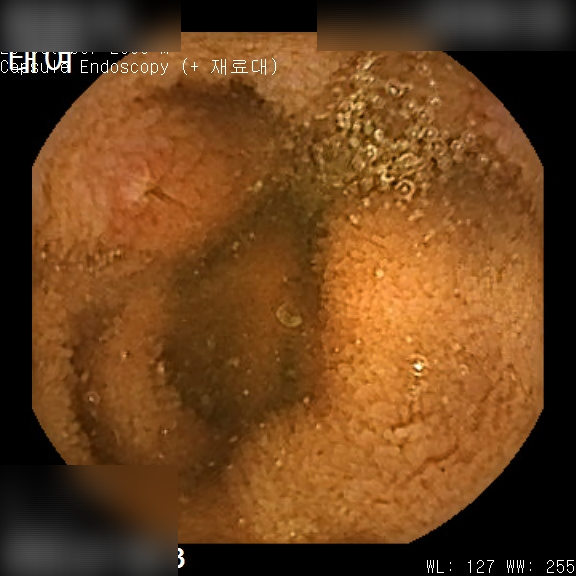
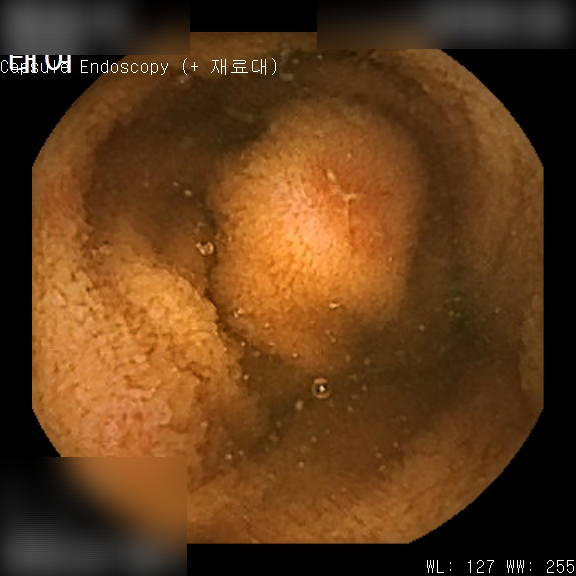
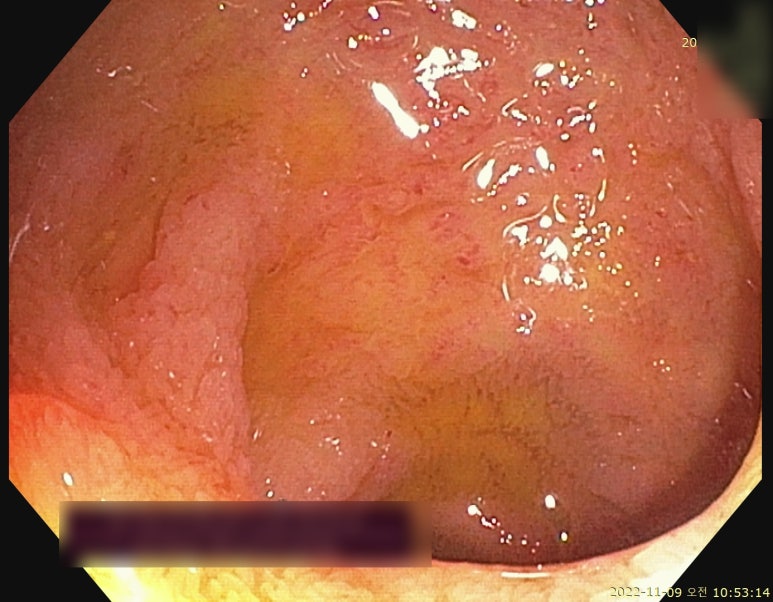
And these are the colonoscopy images. You can see that the vessels in the colon are not visible and that the surface of the colon is considerably swollen.
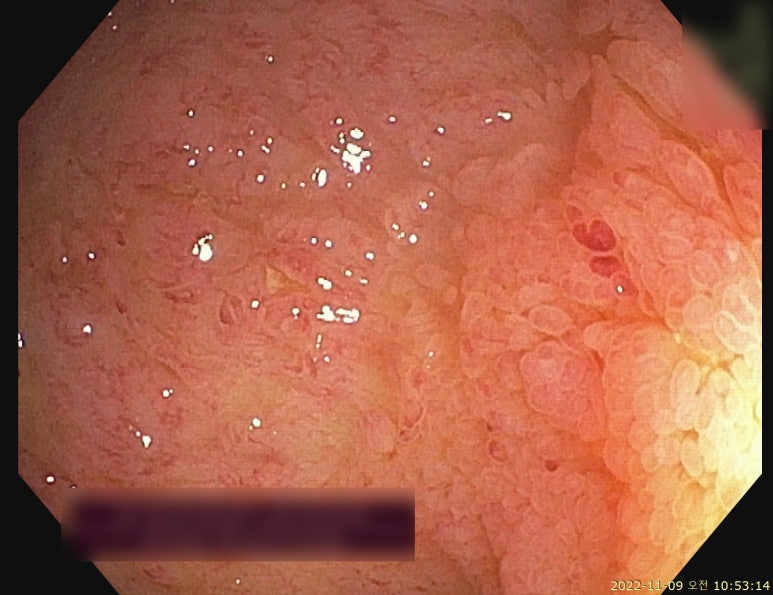
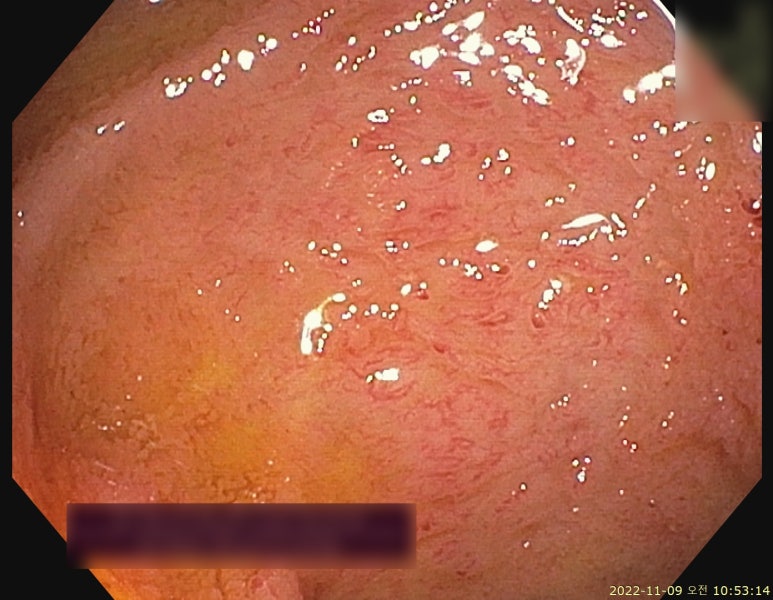
Like this. And you can also see a little bleeding.
Why the wound would not close
The most common complications in Crohn’s disease are anal fistula and anal fissure.
A fistula means an abnormal tunnel forming from the anus to somewhere else. A fissure means a tear at the anus — a laceration.
When such a laceration occurs in a patient with Crohn’s disease, the wound tends not to heal.
Ordinarily, when we operate and put in sutures, the edges sit together and the wound closes if you simply leave it alone. But in Crohn’s disease, with a fistula or a fissure, you can suture the wound and it still does not close.
This patient was the same. He was treated in 2020 and had surgery, and the wound was still open in 2022.
People who have not been through it may think this is just a wound being slow to heal. But a wound at the anus is touched by water every time the patient passes stool, or has something else come into contact with it, and it stings and hurts enormously.
So it interferes with daily life far more than you would imagine.
This patient had surgery in 2020, and by 2022 — three years on — the wound still had not closed. That is when the tests were done and the answer came back: Crohn’s disease.
At the first visit
He was diagnosed with Crohn’s disease at the end of 2022, and came to Hanstep Korean Medicine Clinic around April 2023.
Appetite and digestion were both fine.
Bowel movements were once or twice a day and the stool was normal, but on the second movement something white came away with it. This is what we commonly call mucus in the stool.
He had a feeling of incomplete evacuation every day. Not severe.
There was continuous discharge from the anus, and the surgical wound had not healed in three years. That was his main complaint.
One thing was a little unusual. If he stood for an hour, or sat for more than an hour, a heavy aching pain developed at the anus.
Most of daily life is spent sitting or standing, and after only an hour this pain or discomfort would appear — which, he told me, made ordinary life very difficult.
His medications at the time of the first visit were Pentasa, a 5-ASA (aminosalicylic acid) preparation, three tablets daily, and the immunosuppressant Azafrin (azathioprine), about 2.5 tablets daily.
Stool inflammation levels measured in July and August 2023 were 136 and 115.

Not especially high, but a little above normal.
Three years of living with a fissure that would not heal despite surgery — that must have been very hard.
The treatment
So we started treatment at Hanstep Korean Medicine Clinic, using herbal medicine and pharmacopuncture.
Pharmacopuncture here means injecting a refined herbal extract directly into the wounded area at the anus.
Treatment was once or twice a week. In the early stage he came in diligently, twice a week. After two to three months, as the wound began to close substantially, we moved to once a week, then once every two weeks, then once every four weeks, reducing the frequency step by step.
CRP, the inflammation marker on blood testing, was 0.63 in April — above the normal range. By May it had fallen considerably, to 0.2.
And in December 2023 the fissure wound was completely healed.
From January 2024 the stool inflammation level had fallen to 76.
In January 2024 the immunosuppressant azathioprine was discontinued, and in March Pentasa was stopped completely.
Then on 19 June 2024 the stool inflammation level was 6.7 — fully normal.

In July 2024 a colonoscopy was repeated at the university hospital, and he was told by the doctor that there was no problem at all and no inflammation whatsoever.
This is the colonoscopy from 10 July 2024.
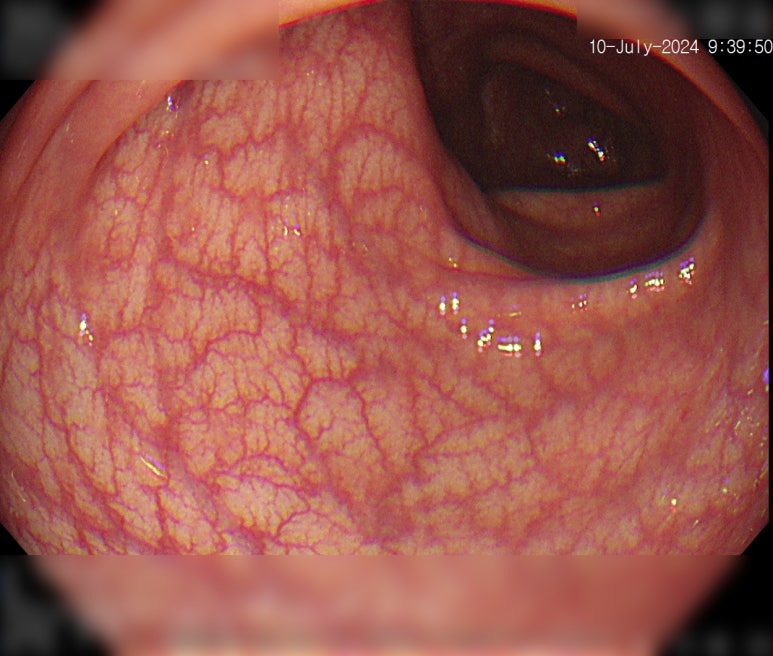
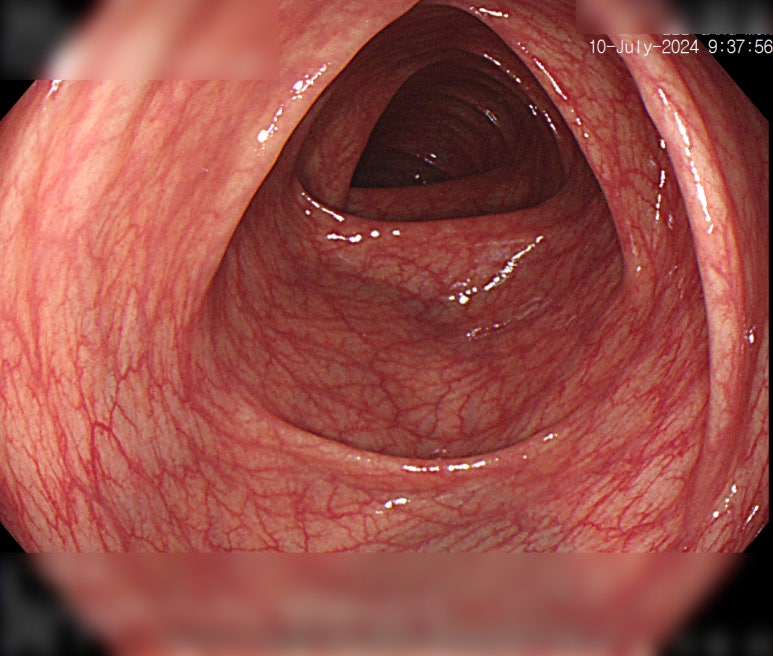
Unlike before, all the capillaries in the colon are clearly visible and no trace of inflammation can be found.
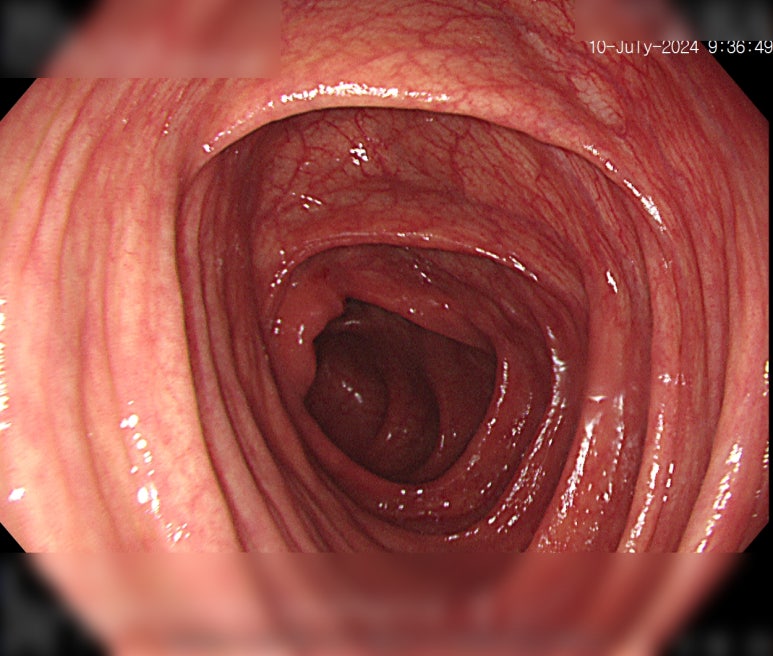
A very good state.
Finishing treatment
So a short while ago, in July, we ended the treatment.
On the final day the patient’s parents came in as well, and told me how grateful they were. I was of course very pleased.
His parents even brought snacks to the clinic for us. We ate them with much gratitude.

To summarise
This was a patient with Crohn’s disease and a fissure that had not healed for three years. With treatment, both the inflammation markers and the fissure returned to normal, and we confirmed that everything was normal both on colonoscopy and on stool inflammation testing.
That is all for today.
Thank you.


Leave a Reply